
Twice-Cooked Pork (Hui Guo Rou)
Twice-Cooked Pork (Hui Guo Rou) features tender pork belly stir-fried with cabbage in a savory sauce.
Contents (5 sections)▾
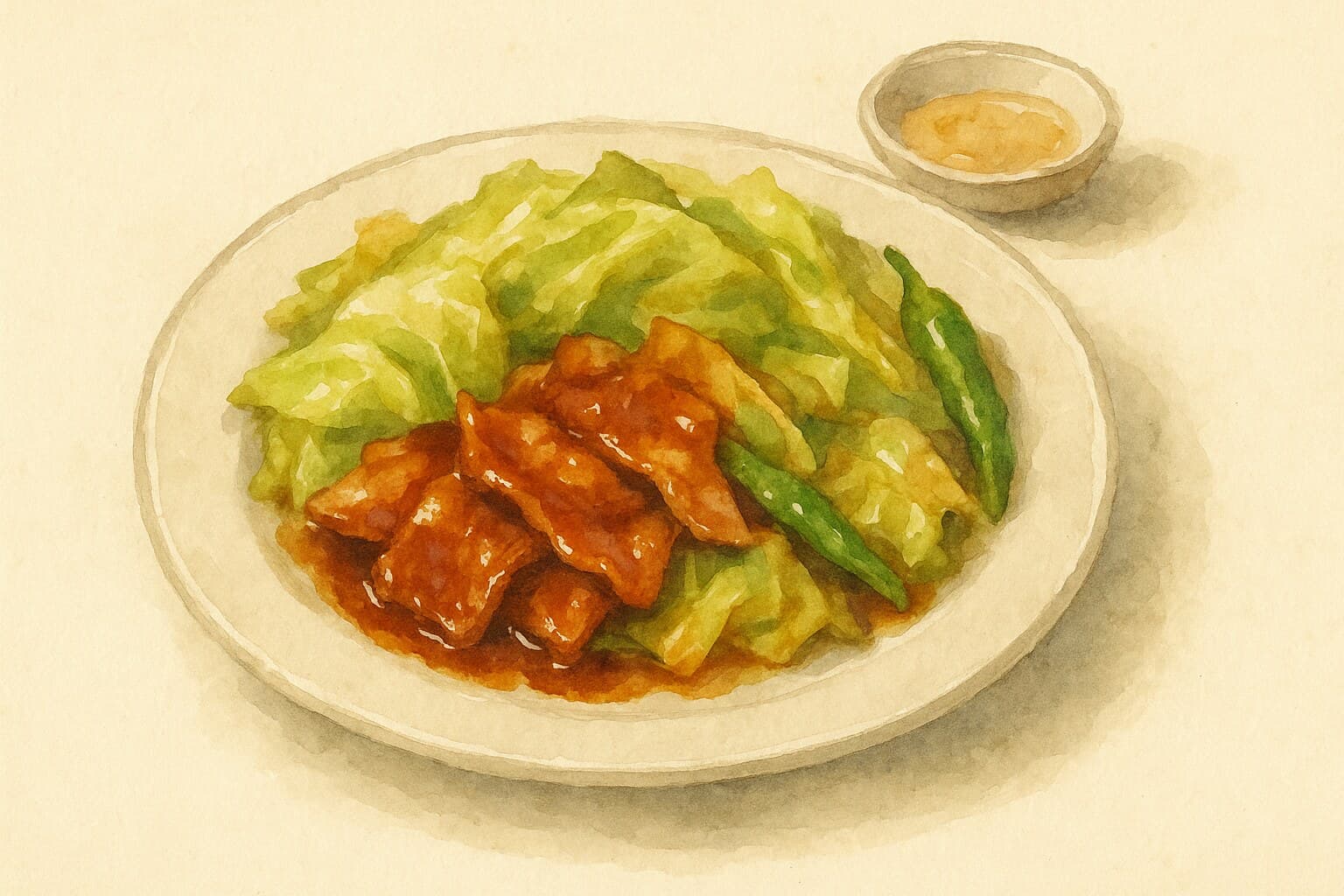
Ingredients
- 600 g pork belly
- 2 tbsp doubanjiang (spicy chili-bean paste)
- 2 tbsp sweet bean sauce
- 200 g cabbage, shredded
- 1 green bell pepper, sliced
- 2 tbsp vegetable oil
- 2 cloves garlic, minced
- 1 tsp ginger, minced
- 1 tbsp soy sauce
- 1 tsp sesame oil
- salt to taste
- pepper to taste
Steps
1. In a pot, simmer pork belly in water for 30 minutes until tender. Remove, cool slightly, and slice thinly.
2. Heat vegetable oil in a wok over medium-high heat, then add garlic and ginger, stir-frying until fragrant (about 30 seconds).
3. Add doubanjiang to the hot oil, stirring to bloom the flavors for about 1 minute.
4. Return the sliced pork to the wok, adding sweet bean sauce, soy sauce, and stir-fry for 3-4 minutes until heated through.
5. Add the cabbage and green pepper, stir-frying over high heat for 2-3 minutes until just wilted but still crisp.
6. Drizzle with sesame oil, season with salt and pepper to taste, and serve immediately.
Why this works
This recipe employs a two-step cooking technique that enhances the pork's flavor and texture. First, pre-cooking the pork belly in water tenderizes it, making it easier to slice thinly for quick stir-frying. This also allows the fat to render out, leading to a more flavorful dish. The doubanjiang is bloomed in hot oil, which intensifies its umami and spiciness, creating a rich base for the stir-fry. The high-heat cooking at the end with the cabbage ensures it remains crisp, preventing it from becoming soggy. If the cabbage seems too watery, increase the heat further to evaporate excess moisture quickly. The balance of flavors and textures achieved through this method makes this dish a standout in Sichuan cuisine.
Common mistakes
-
Skipping or shortcutting the boil. Hui guo rou is, literally, "return-to-the-wok meat." If the meat never went into water first, you're not making this dish.
- Target: Simmer a whole, unsliced piece of pork belly in water with a slice or two of ginger for 25-30 minutes, until a chopstick passes through smoothly.
- Why it matters: The boil cooks the pork fully through, firms the fat for clean slicing, and washes off scum so the final stir-fry tastes clean rather than gamey.
- What to do: Let the boiled pork cool until firm enough to slice paper-thin. Save the strained broth for soup. Only after the meat is fully cooked does the wok come into play.
-
Slicing the pork while it's still warm. Warm belly fat smears under the knife.
- Target: Cool the boiled pork on a board until the fat is firm (15-20 minutes uncovered, or briefly chilled).
- Why it matters: Hui guo rou wants pieces wide enough to curl into the famous "lamp-shade" shape when they hit the wok. Smeared, ragged slices won't do that.
- What to do: Hold the rind with a fork, slice across the grain at a slight bias, 2-3 mm thick, with full strips of fat and lean intact.
-
Burning the doubanjiang (Sichuan fermented chili-broad-bean paste, the dish's flavor backbone). The paste needs to bloom, not scorch.
- Target: Medium heat for 30-60 seconds until the oil turns deep red and the kitchen smells sweet-fermented, not acrid.
- Why it matters: Doubanjiang is the soul of the dish. Burnt, it goes bitter and grainy and there's no rescuing the wok.
- What to do: Lower the heat before the paste hits the oil. Stir constantly, watch the colour, and add the pork the moment the oil is properly red — never wait for visible smoke.
-
Crowding the wok with watery vegetables. Too much cabbage at once turns the stir-fry into a braise.
- Target: Cook the cabbage in one or two quick handfuls over the highest heat you have, and finish in 60-90 seconds.
- Why it matters: Cabbage releases a lot of water; once the wok stops sizzling, the sauce dilutes and the pork stops crisping.
- What to do: If liquid pools at the bottom, push everything to the sides and let the puddle evaporate before tossing — or finish the cabbage separately and combine at the very end.
What to look for
- A chopstick sliding through the boiled belly with no resistance — the pork is fully cooked and ready to slice.
- Oil turning glossy brick-red as the doubanjiang blooms — that's the sign the paste is sweet, not scorched.
- Pork slices curling at the edges into shallow lamp-shade shapes when they hit the hot wok — the fat is rendering properly.
- Cabbage still bright green with crisp ribs after tossing — wilted, not stewed.
A note on history
Hui guo rou (回鍋肉, "return-to-the-wok meat" — pork belly boiled first, then stir-fried with cabbage and fermented chili paste) is one of the canonical home dishes of Sichuan cuisine. The cooking method is widely traced to older Chinese ritual practice, in which whole pork was first boiled as an offering and then sliced and re-cooked afterward — the "return" of the name describing the meat's second pass through the heat. The modern Sichuan version, built around fermented broad-bean paste (doubanjiang) from Pixian and sweet bean paste, took its present shape after broad-bean paste production matured in the Qing dynasty and is now treated as one of the defining dishes of the region.
Get the essays in your inbox — free
Weekly notes on flavor, fermentation, and food history — the writing behind the Atlas of Flavor. No spam; unsubscribe anytime.