
Bulgogi
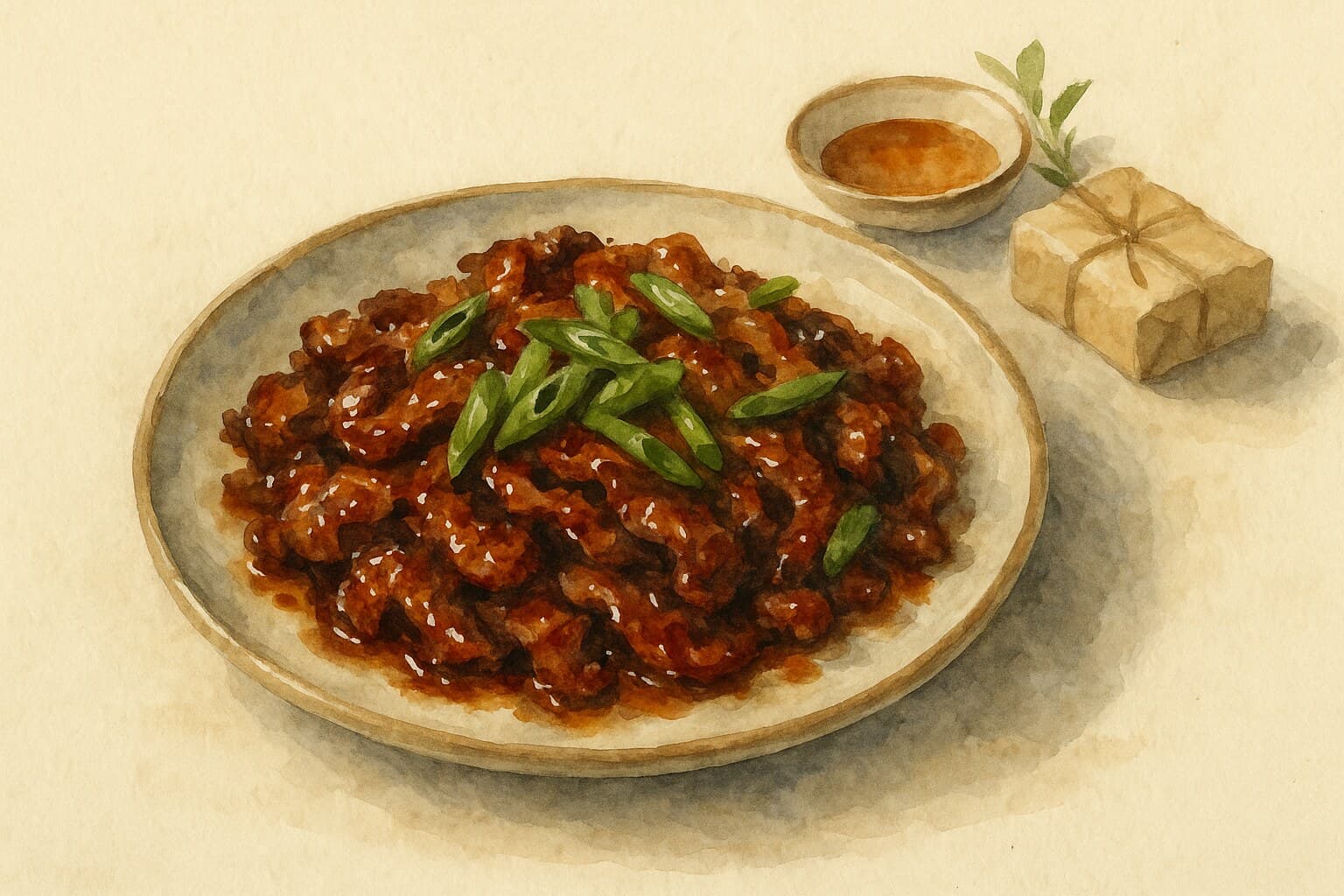
This bulgogi recipe features thin-sliced beef marinated in a soy–pear–garlic blend and seared to caramelized perfection.
Contents (5 sections)▾
Ingredients
- 500 g thin-sliced beef (sirloin or ribeye)
- 60 ml soy sauce
- 1 medium Asian pear, grated
- 3 cloves garlic, minced
- 30 ml sesame oil
- 1 tbsp sugar
- 2 scallions, chopped
Steps
In a bowl, combine soy sauce, grated pear, minced garlic, sesame oil, and sugar. Mix well to create the marinade.
Add the thin-sliced beef to the marinade, ensuring each piece is well-coated. Let it marinate for at least 20 minutes.
Heat a cast-iron skillet over high heat until it’s screaming hot. This is crucial for achieving caramelization.
Add a small portion of the marinated beef to the pan, making sure not to crowd it. Sear for about 1-2 minutes on each side until caramelized and no longer pink.
Remove the cooked beef and repeat with the remaining batches, adjusting heat as necessary to maintain a high temperature.
Once all the beef is cooked, return it to the pan with the scallions and stir-fry briefly to combine.
Tools you'll want
- · Cast-iron skillet (Lodge, 6.5–10in)
Why this works
The key to perfect bulgogi lies in the marinade and the searing technique (cooking the surface fast on very high heat so it browns). The combination of soy sauce, grated Asian pear, garlic, and sesame oil not only infuses the beef with deep flavor but also leverages the natural enzymes in the pear to tenderize the meat. When you sear the beef in a screaming-hot cast-iron skillet (a heavy iron pan that holds heat well), the high temperature causes the sugars in the marinade to caramelize, creating that desirable golden-brown crust. If the beef seems to steam instead of sear, it’s likely because the pan is overcrowded. Always cook in small batches to ensure each piece has enough space to brown properly. This not only enhances the flavor but also improves the texture, preventing it from turning grey and chewy. Remember, thin slices cook quickly, so keep a close eye on them to avoid overcooking, which can lead to dryness.
Common mistakes
Leaving the beef in the pear marinade for hours.
Target: 20 minutes to about 2 hours in the refrigerator — not overnight.
Why it matters: Grated Asian pear contains enzymes (natural proteins that cut other proteins apart) that keep working the whole time the meat sits. Twenty minutes gives you tenderness; several hours turns the outside of each slice soft and mealy, and it falls apart in the pan instead of browning.
What to do: Set a timer. If you need to prepare further ahead, mix the soy sauce, garlic, sesame oil and sugar now, and stir the grated pear in only 20–30 minutes before cooking.
Crowding the skillet.
Target: A single layer with visible gaps — roughly one third of the 500 g per batch.
Why it matters: Beef releases water as it heats. In a crowded pan that water can't evaporate, the temperature drops, and the meat simmers in its own juice — grey, floppy, and slightly tough instead of browned. This is the single most common reason home bulgogi disappoints.
What to do: Cook in three batches. Move each finished batch to a plate and let the pan come back up to temperature before the next one goes in.
Tipping the marinade into the pan with the beef.
Target: Lift the slices out with tongs and let the excess drip off for a couple of seconds.
Why it matters: The marinade is mostly liquid. Poured into the skillet it instantly floods the surface, and the beef boils rather than sears (browning the surface fast on very high heat). You lose the caramelized edges that define the dish.
What to do: Drain each batch briefly against the side of the bowl. Save a spoonful of the leftover marinade to add at the very end with the scallions if you want more sauce.
Letting the burnt sugar build up between batches.
Target: A pan that looks brown, not black, when the next batch goes in.
Why it matters: The tablespoon of sugar in the marinade caramelizes (browns and turns nutty as sugar heats) quickly and then burns, which tastes acrid and will carry into every later batch.
What to do: If the pan floor looks dark and smells sharp, take it off the heat, wipe it with a folded paper towel held in tongs, add a thin film of oil, and carry on.
Using thick-cut beef.
Target: Slices about 2–3 mm thick, cut across the grain (the direction the muscle fibers run).
Why it matters: Bulgogi cooks in one to two minutes per side. A thick slice can't cook through in that window, so you either serve it underdone or overcook it into chewiness. Thin slices cut across the fibers stay tender because the fibers are already short.
What to do: Buy pre-sliced beef labeled for shabu-shabu or bulgogi, or firm a piece of sirloin in the freezer for 30–45 minutes and slice it thin yourself.
What to look for
- Marinade before the beef goes in: cloudy pale brown, slightly thick from the grated pear, no gritty sugar at the bottom. Rub a drop between your fingers — it should feel smooth, not sandy.
- Skillet ready to sear: a drop of water flicked in skitters and disappears in about a second, and a lightly oiled surface shows the first faint wisp of smoke.
- The moment the beef lands: a loud, continuous, high sizzle. A soft hiss that fades to silence means the pan is too cool — pull the beef out, reheat, and start again.
- Sear developing: edges turning deep mahogany brown while the middle is still reddish. Roughly 1–2 minutes on the first side; move the slices only once so the crust can form.
- Doneness: no pink left anywhere in the slice, and the meat has firmed and shrunk slightly. Thin beef gets there fast — check the thickest slice and take the batch out immediately.
- Finished dish: the sauce clings to the meat as a glossy coating, with no watery pool in the pan; the scallions are just wilted and still bright green, and the smell is toasty and sweet rather than sharp or burnt.
A note on history
Bulgogi's direct ancestor is neobiani — "thinly spread" meat — a Joseon-era preparation of thinly sliced, marinated, grilled beef that was largely the food of the court and the wealthy, since beef was scarce and expensive. As beef became affordable in twentieth-century Korea, that aristocratic dish broadened into the bulgogi eaten everywhere today, which is why the marinade still carries a courtly sweetness. (Sources: Neobiani — Wikipedia, Bulgogi — Wikipedia)
Get the essays in your inbox — free
Weekly notes on flavor, fermentation, and food history — the writing behind the Atlas of Flavor. No spam; unsubscribe anytime.