
Sweet and Sour Pork
This crispy Sweet and Sour Pork combines tender pork shoulder with a glossy sauce and fresh vegetables.
Contents (5 sections)▾
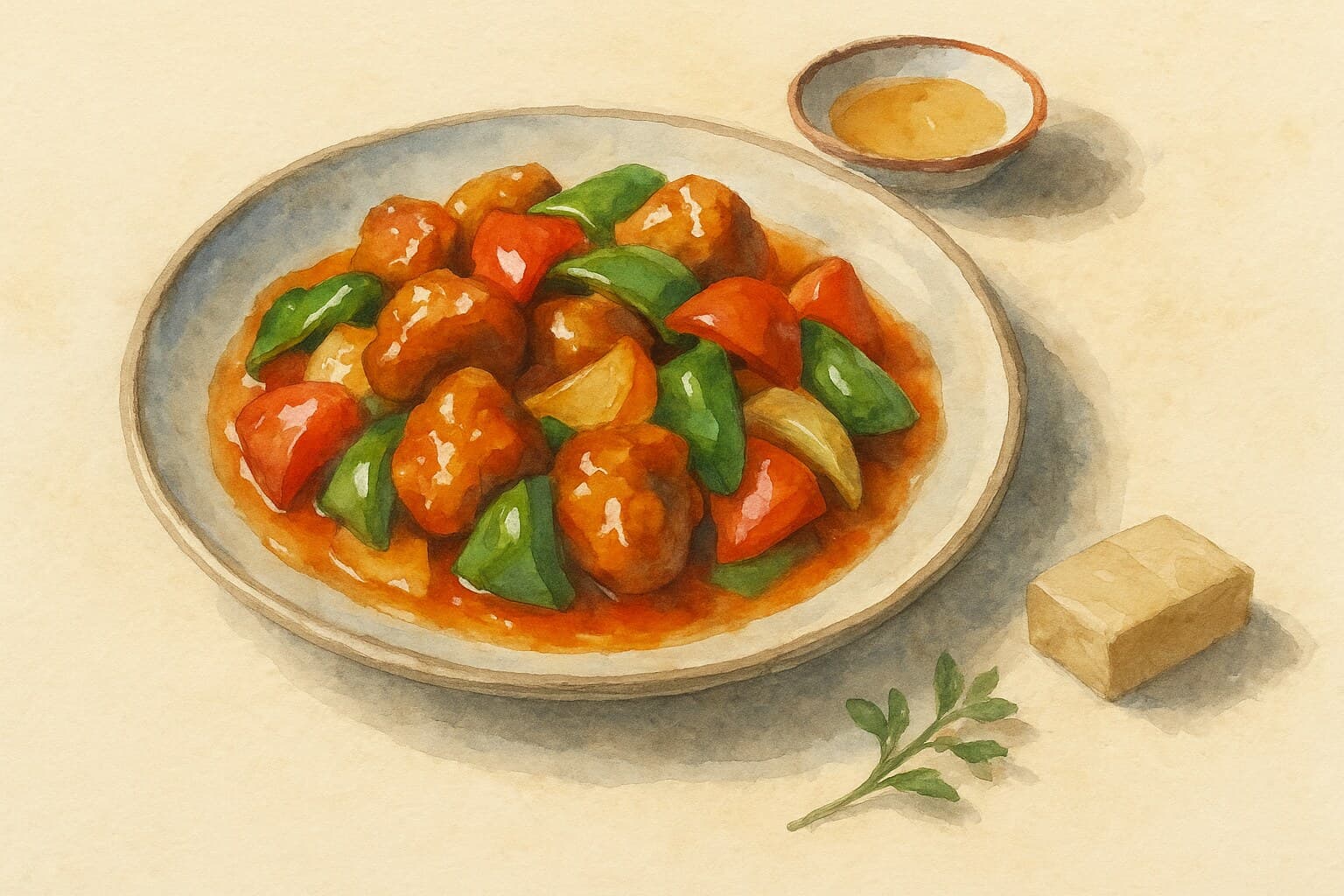
Ingredients
- 500 g pork shoulder, cut into bite-sized pieces
- 100 g cornstarch
- 1 bell pepper, cut into chunks
- 1 onion, cut into chunks
- 200 g pineapple chunks (fresh or canned)
- 80 ml ketchup
- 50 ml white vinegar
- 50 g sugar
- Salt and pepper to taste
- Oil for frying
Steps
Heat oil in a deep fryer or heavy pot to 160°C (320°F).
Toss pork pieces in cornstarch to coat evenly. Fry the pork in batches for about 5-6 minutes until cooked through, reaching an internal temperature of 63°C (145°F). Drain and set aside to rest.
Increase the oil temperature to 190°C (375°F). Fry the pork again in batches for another 2-3 minutes until golden and crispy. Drain on paper towels.
In a separate pan, combine ketchup, vinegar, sugar, and a pinch of salt. Heat gently while stirring until sugar dissolves.
Off the heat, toss the crispy pork with the bell pepper, onion, pineapple, and sweet-sour sauce to coat evenly without losing the crunch.
Tools you'll want
- · Cast-iron skillet (Lodge, 6.5–10in)
Why this works
The technique of twice-frying the pork ensures that it is cooked through while maintaining a crispy exterior. The first fry at 160°C allows the pork to reach a safe internal temperature without browning too much, ensuring it is fully cooked and juicy. Resting after this fry helps to retain moisture. The second fry at 190°C creates a crunchy shell, as the high temperature quickly crisps up the batter without overcooking the inside. It is crucial to toss the fried pork with the sauce off the heat; this prevents the crust from becoming soggy. If the batter seems too thick, adjust by adding a little water to achieve a lighter coating. Conversely, if the pork is not crispy enough after the second fry, ensure your oil temperature is accurate, as too low a temperature can result in greasy pork instead of a delightful crunch.
Common mistakes
Going straight from the first fry to the second.
Target: At least 5 minutes of rest on a rack between the 160°C fry and the 190°C fry.
Why it matters: The rest is doing two jobs. Heat trapped in the crust keeps travelling inward, so the pork finishes cooking gently instead of being blasted; and steam escapes from the coating, leaving it dry. A dry surface crisps in the second fry — a damp one just steams again.
What to do: Spread the first-fry pieces on a wire rack in a single layer while you bring the oil up to 190°C and mix the sauce. Don't stack them.
Dredging pork that is wet on the surface.
Target: Pieces patted dry, tossed in cornstarch, pressed, then shaken free of loose powder — and left 5 minutes before frying.
Why it matters: Cornstarch sticks to a slightly tacky surface, not a wet one. On wet pork it turns to slurry, slides off in the oil, and leaves bald patches with no crunch — while the loose powder that never stuck burns in the oil and makes it bitter.
What to do: Blot with paper towel, coat, shake, and let the dredged pieces sit a few minutes. The starch pulls in a little surface moisture and grips.
Checking doneness by cutting and looking.
Target: 63°C (145°F) in the middle of a large piece after the first fry, then a rest.
Why it matters: Pork shoulder cut into cubes cooks unevenly, and color is an unreliable guide — pork can look done while the center is still under temperature, or be perfectly safe and still faintly pink. A thermometer is the only honest answer, and 63°C plus a rest keeps the meat juicy rather than dry.
What to do: Use an instant-read thermometer in the thickest cube. The second fry at 190°C carries the temperature higher still, so don't extend the first fry to be "sure."
Reducing the sauce until it is thick, or cooking it long.
Target: Heated gently only until the sugar has dissolved and the mixture is glossy and pourable.
Why it matters: Vinegar's sharpness is volatile — boil it hard and the brightness that balances the ketchup and sugar evaporates, leaving a flat, over-sweet coating. The sauce should taste noticeably sharp in the pan, because the pork and pineapple will soften it on the plate.
What to do: Warm and stir, taste, take it off. If it does thicken too far, loosen it with a spoonful of water rather than more vinegar.
Tossing everything together over the heat.
Target: Pan off the burner, tossed for a few seconds, served immediately.
Why it matters: Held over heat, the sauce keeps evaporating and concentrating, and it soaks into the crust — which is why restaurant sweet and sour pork sometimes arrives soft. Off the heat, the sauce clings as a thin film instead of being absorbed.
What to do: Have plates ready. Kill the heat, add pork, peppers, onion and pineapple, toss to coat, and go straight to the table.
What to look for
- Oil at 160°C: a cube of pork lowered in sends up steady medium bubbles, not a violent eruption; the coating stays pale.
- End of the first fry: pale straw-colored, barely tinged with gold, and the pieces ride noticeably higher in the oil than when they went in — they have lost water and become lighter. About 5–6 minutes; confirm 63°C.
- After the rest: the surface looks matte and dry rather than glistening, and the vigorous steaming has stopped.
- Oil at 190°C: a pinch of dry cornstarch dropped in fizzes instantly and disappears; the oil surface shimmers and moves in visible currents.
- End of the second fry: deep golden brown, and the crust sounds hard — a light tap with tongs gives a distinct click. The bubbling is finer and quieter than the first fry. 2–3 minutes, no more, or the meat dries.
- The sauce: glossy, deep red-orange, thin enough to fall from a spoon in a stream rather than a blob; it smells brightly of vinegar with the sugar rounding it out.
- On the plate: the coating still clicks against a fork, the peppers are bright and crunchy, and there is no puddle of sauce collecting under the pork.
A note on history
Sweet and sour pork in this cubed, battered form is Cantonese — 咕嚕肉 (gu lou yuk) — and grew out of an older sweet-and-sour pork rib dish served in Guangzhou during the era of foreign trade there. Western traders disliked eating around bones, so cooks in Guangdong switched to boneless cubes; the pineapple, tomato ketchup and bell peppers we now think of as essential are all New World ingredients that arrived through those same trade routes. (Sources: Sweet and sour pork — Wikipedia, South China Morning Post: Legends — Sweet and Sour Pork)
Get the essays in your inbox — free
Weekly notes on flavor, fermentation, and food history — the writing behind the Atlas of Flavor. No spam; unsubscribe anytime.