
Scallion Oil
Learn how to make fragrant scallion oil using a gentle infusion technique.
Contents (5 sections)▾
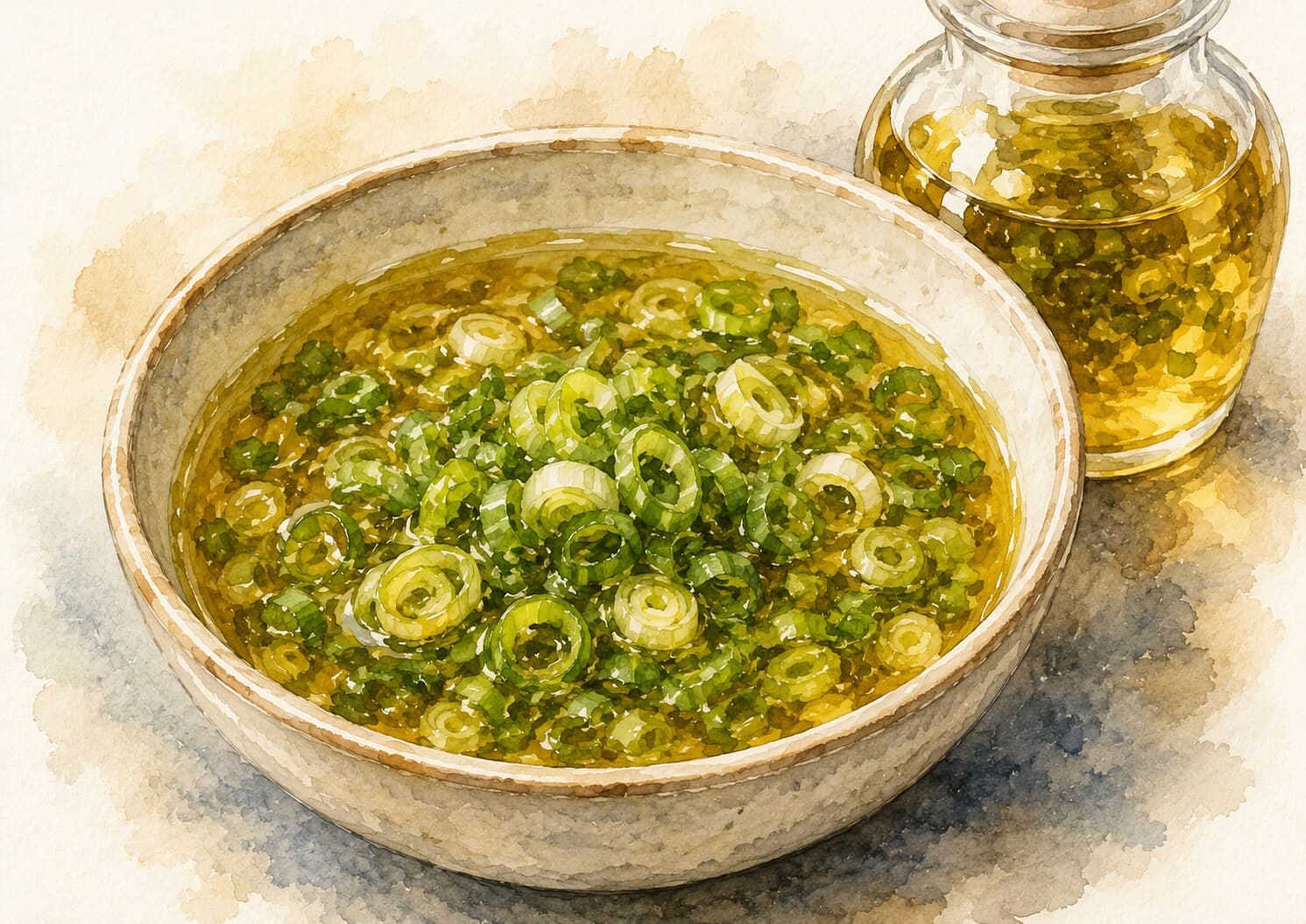
Ingredients
- 200 ml neutral oil
- 100 g scallions, chopped
- 20 g ginger, sliced
Steps
In a small saucepan, combine the neutral oil, chopped scallions, and sliced ginger. Heat over low heat (around 60°C) for about 15 minutes. This low temperature allows the flavors to gently infuse without burning.
After 15 minutes, remove the saucepan from heat and let the oil cool to room temperature, allowing the infusion to continue for a few more minutes.
Strain the oil through a fine mesh sieve into a clean bottle, discarding the solids. This clarified oil keeps the infused flavors while preventing any unwanted texture from the scallions and ginger. Refrigerate the oil and use it within 3-4 days — never store aromatics-in-oil at room temperature.
Why this works
Infusing oil at a controlled low temperature is crucial for extracting the delicate flavors of scallions and ginger without burning them, which can lead to bitterness. The gentle heat allows the essential oils and aromas to meld, creating a rich, aromatic oil perfect for drizzling over dishes or using as a base for dressings. If the oil starts to smoke or bubble aggressively, it indicates that the heat is too high. In such cases, immediately reduce the heat or remove the pan from the heat source to prevent burning, which would ruin the flavor. The resulting scallion oil should have a vibrant aroma and a light green hue, indicating successful infusion.
Safety note — aromatics in oil. Scallions and ginger are low-acid aromatics; left in oil at room temperature they can grow Clostridium botulinum, the bacterium that causes botulism. Infuse the oil gently, cool it, then keep it refrigerated and use it within 3-4 days. Never leave aromatics-in-oil at room temperature.
Common mistakes
Heat creeps above gentle infusion temperature.
- Target: oil holds at 60-80°C; aromatics (the flavor-carrying alliums and roots like scallion and ginger) sizzle quietly, never crackle or smoke.
- Why it matters: above 100°C the scallion and ginger compounds shift from sweet and grassy to bitter and burnt, and you cannot pull a burnt oil back.
- What to do: use the lowest stable flame, or move the pan on and off the heat to hold temperature. If it starts crackling, pull the pan immediately.
Aromatics left in oil at room temperature.
- Target: oil cooled, strained and into the refrigerator within 1-2 hours of finishing.
- Why it matters: scallions and ginger are low-acid; oil at room temperature is the classic Clostridium botulinum environment. The toxin is colorless, odorless and tasteless — you cannot see, smell or taste contamination, so strict time-and-temperature control is the only safety lever you have.
- What to do: strain into a clean refrigerated container the moment it cools. Never leave the bottle on the counter "for the next meal." Never gift unrefrigerated.
Used past the 3-4 day window.
- Target: discard anything older than 4 days, even refrigerated.
- Why it matters: refrigeration slows but does not eliminate botulinum risk in low-acid infused oils; the safe window is genuinely short.
- What to do: label the bottle with the date you made it and throw out the remainder at day 4, no exceptions.
Aromatics not fully submerged or strained.
- Target: scallions and ginger covered by oil during infusion; strained completely afterward, no plant matter left in the bottle.
- Why it matters: any solid plant matter sitting in oil — even refrigerated — extends the botulism risk window. Exposed bits also oxidize and turn fishy.
- What to do: make sure aromatics are submerged while heating, then strain through a fine mesh into a clean bottle, leaving zero solids behind.
What to look for
- the oil takes on a light green-gold tint without ever darkening to brown
- scallion whites turn translucent and slightly limp, never crisp or scorched
- the surface barely shimmers — no rolling bubbles, no hiss, no smoke
- after cooling, the bottle goes straight into the refrigerator with the date written on it
A note on history
Flavored oils — oil gently coaxed to carry the aroma of an allium (the onion family, including scallions, garlic and shallots) or root — are one of the foundational moves in Chinese home cooking. Scallion oil in particular is sometimes called a Chinese "mother sauce," ubiquitous across regional kitchens and especially associated with Shanghai and the wider Jiangnan region of eastern China, where it forms the backbone of dishes like cong you ban mian (scallion oil noodles).
Get the essays in your inbox — free
Weekly notes on flavor, fermentation, and food history — the writing behind the Atlas of Flavor. No spam; unsubscribe anytime.