
Orange Chicken
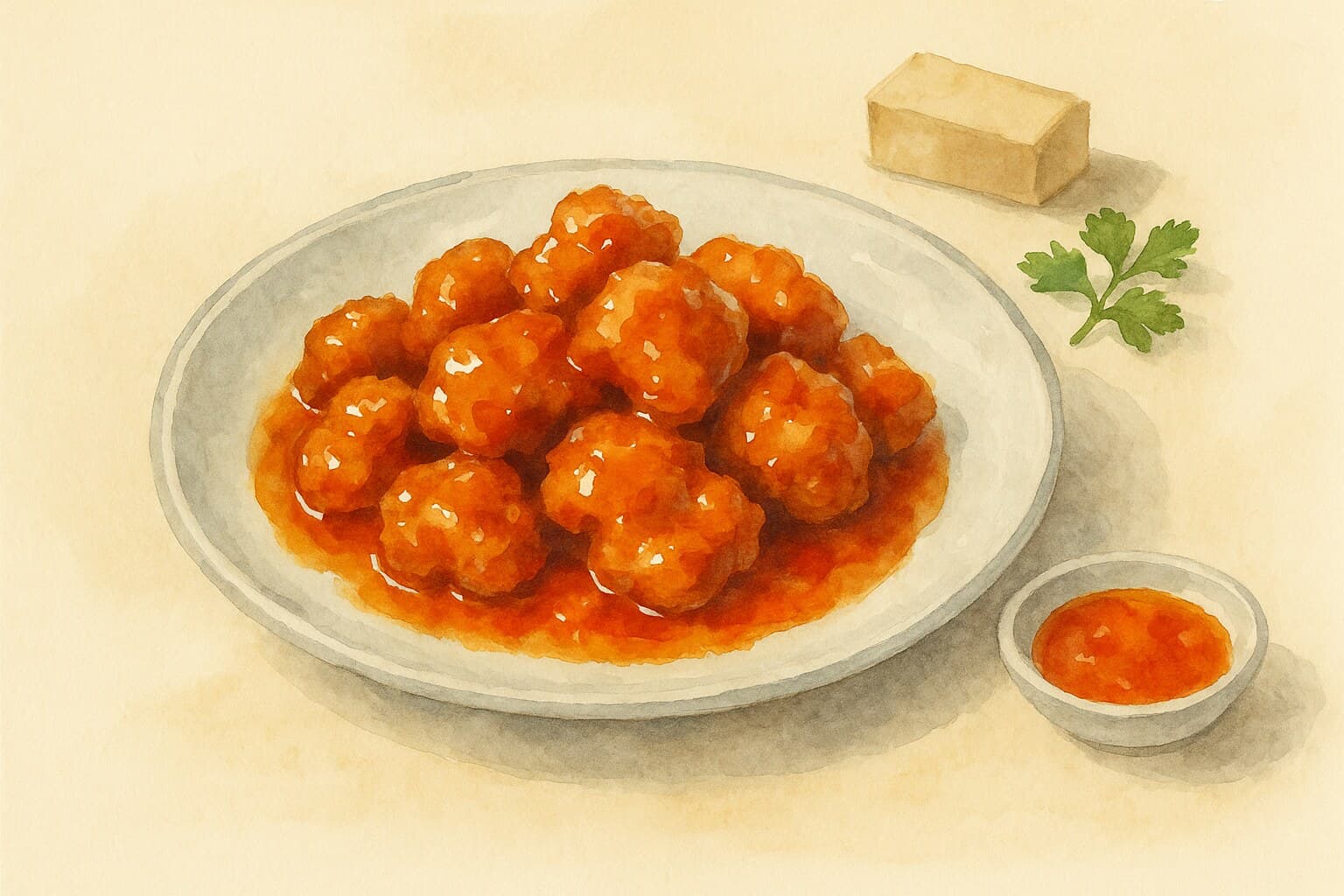
This Orange Chicken recipe features crispy battered chicken tossed in a bright citrus glaze for a refreshing take on a classic dish.
Contents (5 sections)▾
Ingredients
- 500 g chicken thigh, boneless and skinless
- 100 g cornstarch
- 150 ml fresh orange juice
- 1 tbsp orange zest
- 100 g sugar
- 50 ml soy sauce
- 30 ml rice vinegar
- 500 ml vegetable oil, for frying
Steps
Cut the chicken thighs into bite-sized pieces and coat them in cornstarch. This helps create a crispy outer layer.
Heat vegetable oil in a deep fryer or a heavy pot to 175°C. Use a thermometer to ensure accuracy as the right temperature is crucial for crispy results.
Fry the chicken in batches for about 5-7 minutes or until it reaches a core temperature of 74°C. This ensures the chicken is fully cooked while maintaining a crisp texture.
In a saucepan, combine the fresh orange juice, sugar, soy sauce, and rice vinegar. Bring to a boil and reduce heat to simmer until the mixture thickens into a lacquer, about 5-7 minutes.
Remove the saucepan from heat and stir in the orange zest. This helps retain the fresh citrus aroma, enhancing the overall flavor.
Toss the fried chicken in the orange glaze while off heat, ensuring the chicken remains crisp before serving immediately.
Tools you'll want
Why this works
The technique of frying the chicken at 175°C allows for a crispy exterior while ensuring the meat reaches a safe internal temperature of 74°C. Coating the chicken with cornstarch helps to create a light, crispy texture rather than a heavy batter. The glaze, made from fresh orange juice and strained for clarity, is reduced (simmered down so it thickens and the flavor concentrates) to a lacquer that clings well to the chicken without making it soggy. Adding the orange zest (the colored outer layer of the peel, grated finely) at the end preserves its bright aroma, which can diminish during cooking. If the glaze seems too thin, continue simmering it to concentrate the flavors and achieve the desired consistency. Conversely, if it thickens too much, stir in a bit of water to adjust it back to a pourable state. The off-heat tossing of chicken in the glaze is crucial for preventing the crispy coating from becoming soggy, ensuring every bite retains that satisfying crunch.
Common mistakes
Coating wet chicken in the cornstarch.
Target: Thigh pieces patted dry with paper towel, then tossed in cornstarch and shaken so only a thin, even film remains.
Why it matters: Water turns cornstarch into paste. Instead of the light, sandy shell that fries up brittle, you get thick gummy patches that slump off in the oil and leave bare chicken behind. Loose water in hot oil also spits, which is a burn risk.
What to do: Blot the cut pieces, toss them in the starch, then lift each one and shake it. If you see damp grey clumps rather than a dry dusty surface, the chicken was too wet — blot again and re-coat.
Letting the oil temperature crash.
Target: 175°C, recovering to 175°C between batches.
Why it matters: Below roughly 160°C the starch shell stops sealing quickly, so the chicken sits absorbing oil instead of crisping — the classic heavy, greasy result. Too hot and the outside darkens before the inside reaches a safe temperature.
What to do: Fry a few pieces at a time, not the whole 500 g. Keep the thermometer in the oil and wait for it to climb back before the next batch. Lower pieces in gently, away from you.
Cooking the glaze past the lacquer point.
Target: Reduced for about 5–7 minutes to a syrup that coats a spoon — glossy and flowing, not sticky-stiff.
Why it matters: There is 100 g of sugar in this glaze. Sugar syrups thicken slowly and then very suddenly: the moment most of the water is gone, the temperature climbs fast, the sugar begins to caramelise and then scorch, and a scorched glaze is genuinely bitter. It also sets rock-hard on the chicken as it cools.
What to do: Reduce over a gentle heat and watch the bubbles rather than the clock. When they slow and turn large and glassy, test on a cold spoon — if it flows like warm honey, stop. Remember it thickens more off the heat as it cools.
Adding the orange zest while the glaze is still boiling.
Target: Zest stirred in only after the pan is off the heat.
Why it matters: The bright smell of orange comes from volatile oils in the peel — "volatile" simply meaning they evaporate easily. In a boiling pan they escape as steam within seconds, and what stays behind is only sweetness and a faint bitterness. Off the heat, the residual warmth releases the aroma into the glaze instead of into your kitchen.
What to do: Take the pan off the heat, wait about half a minute, then stir the zest in. Zest with a fine grater and take only the coloured layer — the white pith underneath is bitter.
Tossing the chicken in a pan still over heat, or saucing it ahead of time.
Target: Combined off the heat, tossed quickly, served immediately.
Why it matters: The fried shell is porous and will drink any liquid it sits in. Toss fast in a slightly cooled glaze and the sauce clings as a thin coat over a crust that stays crisp; keep it over the flame or let it stand, and steam plus liquid together turn that crust soft within minutes.
What to do: Have rice, plates and everyone at the table before you combine. Toss for about 15–20 seconds — just enough for every piece to shine — then serve. If you must hold the components, keep chicken and glaze separate and combine at the last second.
What to look for
- Chicken ready to fry: the cornstarch layer looks dry and powdery-matte, clinging evenly, with no wet grey patches and no thick clumps at the folds.
- Oil at 175°C: a pinch of cornstarch dropped in sizzles immediately and rises, and a test piece bubbles vigorously the moment it enters. If it sinks and sits quietly, wait.
- Frying in progress: loud steady bubbling that slowly quietens as moisture leaves the chicken. The pieces float higher as they cook.
- Chicken done: pale to light gold, firm to a tap with tongs, and 74°C on a thermometer pushed into the thickest piece. Colour alone is not proof — chicken thigh can look golden while the middle is still underdone, so check the temperature.
- Glaze at the right point: bubbles have gone from small and foamy to large, slow and glassy; the colour has deepened to a clear amber. Draw a spoon through and the trail closes slowly rather than instantly.
- Glaze gone too far: it pulls into thick threads, smells faintly burnt-sugar-sharp, and stiffens on the spoon. Rescue it by stirring in a spoonful of warm water off the heat.
- The finished dish: every piece evenly glossy, with no sauce pooling in the bottom of the bowl, and an audible light crunch on the first bite.
A note on frying safely: fill the pot no more than one-third with oil, keep a lid nearby, and never add water or wet food to hot oil. If it starts to smoke, turn off the heat and let it cool.
A note on history
Orange chicken is an American dish with Chinese roots rather than a Chinese one. It is credited to Andy Kao, a Taiwanese-born, French-trained chef at Panda Express, who created it in 1987 while helping open the chain's first Hawaii location — drawing on tangy tangerine-peel chicken dishes from Hunan and on the sweet-savoury logic of General Tso's chicken. His original version was bone-in and unbattered; the boneless, crisp-coated form came later, in response to what customers asked for.
Source: Orange chicken — Wikipedia · NBC News: Panda Express' orange chicken changed the game for American Chinese food
Get the essays in your inbox — free
Weekly notes on flavor, fermentation, and food history — the writing behind the Atlas of Flavor. No spam; unsubscribe anytime.