
Egg Fried Rice
This egg fried rice recipe transforms cold day-old rice into a deliciously toasty dish using high-heat stir-frying.
Contents (5 sections)▾
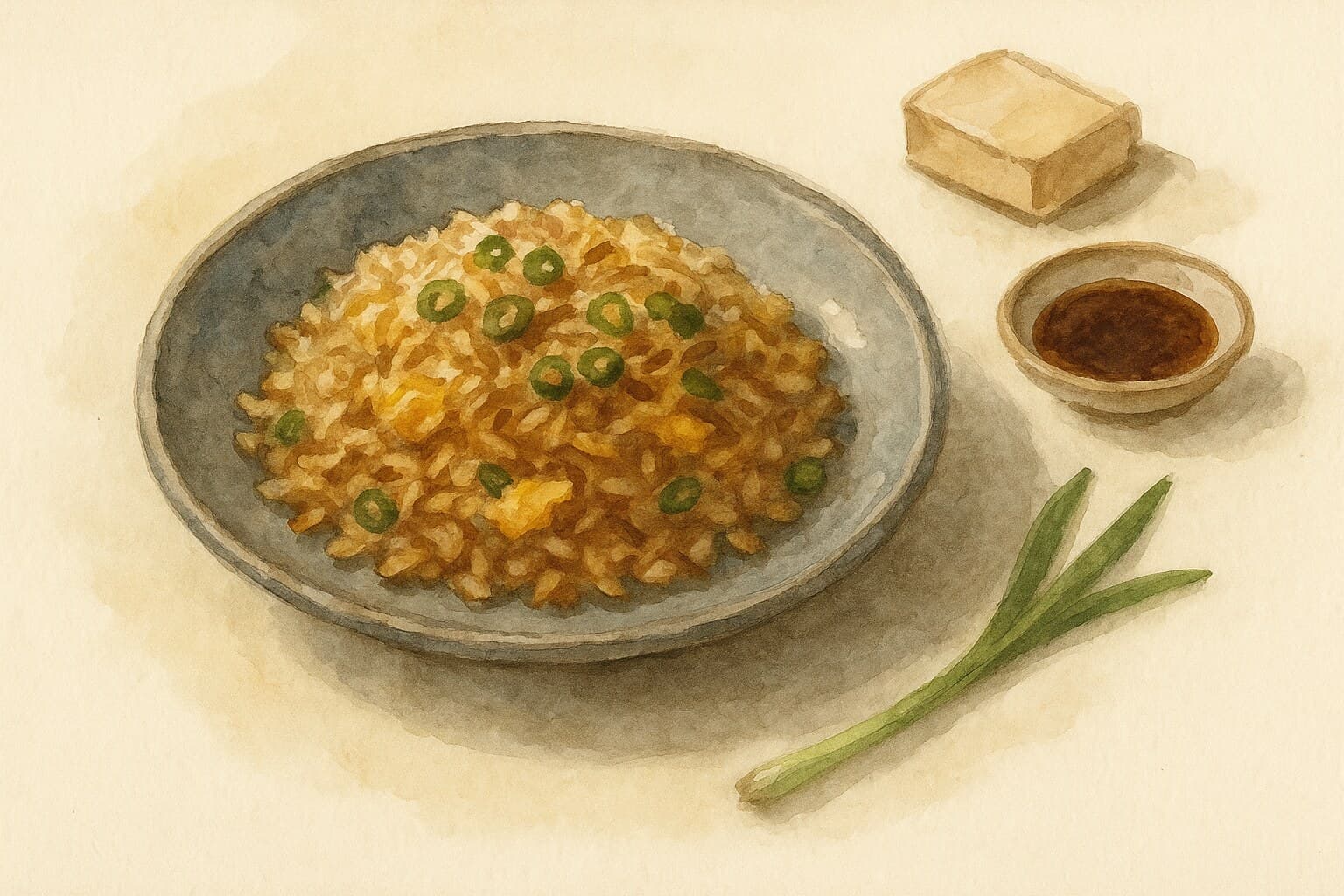
Ingredients
- 2 cups cold day-old cooked rice
- 2 large eggs
- 2 scallions, finely sliced
- 2 tbsp soy sauce
- 2 tbsp neutral oil
Steps
Heat a wok or heavy skillet over high heat until very hot, about 3-5 minutes. This high temperature is crucial for toasting the rice.
Add 1 tablespoon of neutral oil to the hot pan, swirling to coat. The oil should shimmer immediately.
Crack the eggs into the pan and scramble quickly, cooking until just set, about 1 minute. This ensures they are fluffy and not overcooked.
Add the cold rice, breaking up any clumps. Stir-fry vigorously for 4-5 minutes, allowing the rice to toast. Avoid overcrowding the pan.
Add the soy sauce and scallions, continuing to stir-fry for another 2 minutes until everything is heated through and well combined.
Tools you'll want
- · Cast-iron skillet (Lodge, 6.5–10in)
Why this works
High-heat frying is key to achieving that coveted toasty flavor and separate grains in egg fried rice. Cold day-old rice has a lower moisture content, which prevents clumping and ensures a crisp texture. The intense heat of the wok (a deep, round-bottomed pan that gets very hot very fast) or skillet allows the rice to sear quickly (sear = brown fast on hot metal), forming a slight crust while preventing it from steaming. If the rice seems too sticky, make sure your pan is hot enough and avoid adding too much rice at once; this will ensure it fries rather than steams. Remember to cool leftover rice quickly and refrigerate it within an hour to minimize the risk of Bacillus cereus, a bacteria that can thrive in improperly stored rice. When reheating, ensure the rice is piping hot throughout for safe consumption.
Common mistakes
Using rice that is still warm, or freshly cooked.
Target: Rice cooked at least the day before, chilled uncovered-then-covered in the fridge, cold and firm to the touch when it goes in the pan.
Why it matters: Warm rice carries a lot of free moisture, and the starch on the outside of each grain is still soft and sticky. In a hot pan that moisture turns to steam, and the grains glue themselves together into a clump. As rice chills, the starch tightens and the grain surface dries slightly, so the grains stay separate and can toast rather than steam.
What to do: Spread the cooked rice thin on a tray so it cools fast, refrigerate, then break it into loose lumps with damp hands right before cooking. In a pinch, spread hot rice on a tray in front of a fan for 20 minutes and chill it — not as good as overnight, but far better than warm.
Not preheating the pan long enough.
Target: The full 3–5 minutes on high heat. A drop of water flicked onto the surface should skitter and disappear in about a second.
Why it matters: Two things happen only at high heat. The moisture leaving the rice boils off instantly instead of pooling, and the surface of the grains and the egg brown through the Maillard reaction (the browning reaction between proteins and sugars that creates toasty, savory smells). A lukewarm pan gives you neither — it gently steams the rice into porridge.
What to do: Heat the empty pan first, then add the oil. Oil added to a cold pan just sits there heating slowly and can pass its smoke point (the temperature at which oil starts to break down and smell acrid) while you wait.
Cooking a double batch in one pan.
Target: 2 cups of rice per panful, in a wok or skillet wide enough that the rice sits in a thin layer.
Why it matters: Cold rice pulls a lot of heat out of the metal. Twice the rice drops the pan temperature below the point where water flashes off, and the rice releases moisture faster than the pan can drive it away — so it steams and turns soft and sticky. This is the single most common reason home fried rice comes out mushy.
What to do: Cook in two batches and combine at the end, or use the largest pan you own. If the rice starts looking wet and heavy, spread it out, stop stirring for 30 seconds, and let the pan recover its heat.
Pouring the soy sauce into the middle of the rice.
Target: 2 tbsp drizzled around the hot rim of the pan, not onto the rice pile.
Why it matters: A puddle of soy sauce landing on rice cools that spot, soaks a few grains, and leaves the rest bland — you get salty clumps and plain clumps. Poured down the hot side of the pan, the soy sauce sizzles, some of its water evaporates, and its sugars and amino acids brown for a second before they hit the rice. That is where the roasted umami (the deep savory taste, the one in soy sauce and dashi) note comes from.
What to do: Drizzle in a thin circle around the edge, then toss immediately and keep the rice moving.
Stirring constantly from start to finish.
Target: Toss, then let the rice sit still for 15–20 seconds, then toss again — repeat through the 4–5 minutes.
Why it matters: Toasting needs contact time. Grains that never stop moving never stay against the metal long enough to brown; you end up with hot rice rather than toasty rice. But leaving it entirely still scorches the bottom layer. The rhythm of contact-and-turn is the whole technique.
What to do: Listen for the sound. Vigorous crackling means the rice is drying and toasting; a quiet hiss means it is just sitting there wet.
What to look for
- Pan ready: a faint wisp of smoke rising from the dry metal, and a flicked drop of water that dances and vanishes almost at once. If the drop sits and slowly bubbles, wait longer.
- Oil ready: the oil thins out and shimmers with moving ripples within a second or two of hitting the pan. Thick, still, slow-moving oil means the pan is too cool.
- Eggs just set: soft folds that have lost their wet gloss but are still glistening and pale gold — about a minute. Rubbery, dry, deep-brown curds mean they went too far; they will only get firmer as they finish with the rice.
- Rice frying, not steaming: a continuous crackle and pop, and grains that bounce and separate when you toss them. Silence, clinging clumps, and a dull wet sheen mean the pan lost its heat.
- Nearly done: the rice smells nutty and slightly popcorn-like, individual grains land separately when tossed, and the pan surface looks dry rather than glossy.
- Finished and safe: the rice is steaming hot the whole way through — hot enough that steam rises when you cut into the middle of the pile, not just from the surface. Reheated rice should always be brought right up to piping hot, never just warmed.
- Scallions: add them at the end and stop while they are still bright green and just softened. Once they go dull olive, their fresh aroma is gone.
A note on history
Fried rice in China is closely tied to the city of Yangzhou in Jiangsu province, and the best-known version, Yangzhou fried rice, is named for it. Traditional accounts credit an early egg-and-rice dish — "golden sand rice," so called because the egg coats the grains — to the Sui-dynasty official Yang Su, though these attributions are handed down as legend rather than documented record. What is not in doubt is the practical logic that has kept the dish alive: it began as a way to use yesterday's cooked rice, which is exactly why cold rice works better here than fresh (source: Yangzhou fried rice, Wikipedia).
Get the essays in your inbox — free
Weekly notes on flavor, fermentation, and food history — the writing behind the Atlas of Flavor. No spam; unsubscribe anytime.