
Sweet & Sour Sauce
This sweet and sour sauce balances tangy vinegar with sugar for a perfect dipping or cooking sauce.
Contents (5 sections)▾
Ingredients
- 150 ml vinegar
- 100 g sugar
- 50 g ketchup
- 150 ml water
- 1 tbsp cornstarch
Steps
In a saucepan over medium heat, combine the vinegar, sugar, and ketchup, stirring until the sugar dissolves, about 5 minutes.
In a separate bowl, mix the cornstarch with water to create a slurry. This will help thicken the sauce.
Once the sugar has dissolved, slowly add the cornstarch slurry to the saucepan while stirring constantly. This prevents lumps.
Continue to cook the sauce for an additional 5-10 minutes, or until it thickens to your desired consistency. Keep the heat steady to avoid burning.
Taste the sauce and adjust the balance of sugar and vinegar as needed, adding more sugar for sweetness or vinegar for tang.
Why this works
Sweet and sour sauce achieves its signature flavor through the careful balance of acidity and sweetness. Vinegar provides the necessary tang, while sugar counteracts this acidity, creating a harmonious blend that tantalizes the taste buds. Ketchup adds complexity and a hint of umami, enriching the sauce's profile. The use of cornstarch as a thickening agent allows the sauce to attain a silky texture without becoming overly heavy. If the sauce seems too thick, adding a little more water can help reach the desired consistency. Conversely, if it appears too thin, continue cooking to allow more water to evaporate or add a little more cornstarch slurry. This flexibility ensures a perfect sauce every time, tailored to your liking.
Common mistakes
Pouring in cornstarch that has settled.
Target: A smooth, fully suspended slurry (cornstarch stirred into cold water until milky, used to thicken the sauce), stirred again right before it goes in.
Why it matters: Cornstarch sinks to the bottom of the bowl within a minute. Tip in the clear water on top and add the dense paste underneath, and you get either no thickening or a few rubbery lumps.
What to do: Stir the slurry to a uniform milk just before adding, and pour it into the pan in a thin stream while stirring constantly.
Not bringing the sauce up to a simmer after adding the slurry.
Target: The sauce returns to a gentle bubble and turns from cloudy to glossy.
Why it matters: Cornstarch only sets and clears once it reaches a near-boil; the granules have to swell and burst to thicken. Hold it below that and the sauce stays thin and tastes starchy and raw.
What to do: After stirring in the slurry, keep the heat on and stir until the sauce bubbles, thickens, and turns translucent rather than milky.
Letting it boil hard or sit too long.
Target: A brief simmer to thicken, then off the heat.
Why it matters: Prolonged hard boiling can break a cornstarch bond and thin the sauce back out, and the sugar-heavy mixture scorches easily at the bottom of the pan.
What to do: Thicken just to the consistency you want, stirring the bottom, then pull it off the heat — it will firm up a little more as it cools.
Judging the balance while it is piping hot.
Target: Taste after it has cooled slightly before adjusting sugar or vinegar.
Why it matters: Heat blunts both sweetness and the sharp top note of vinegar, so a sauce that tastes balanced boiling hot can turn too sweet or too sour once it cools onto the food.
What to do: Let a spoonful cool for a moment, taste, and only then nudge it with more vinegar for tang or more sugar to round it.
What to look for
- Before the slurry: the sugar has fully dissolved and the liquid looks clear, not grainy, with no sugar crystals on the spoon.
- The slurry going in: the sauce turns milky and cloudy at first — this is the raw starch, not the finished texture.
- Properly thickened: the cloudiness clears to a glossy translucence, and the sauce coats the back of a spoon and holds a line when you draw a finger through it.
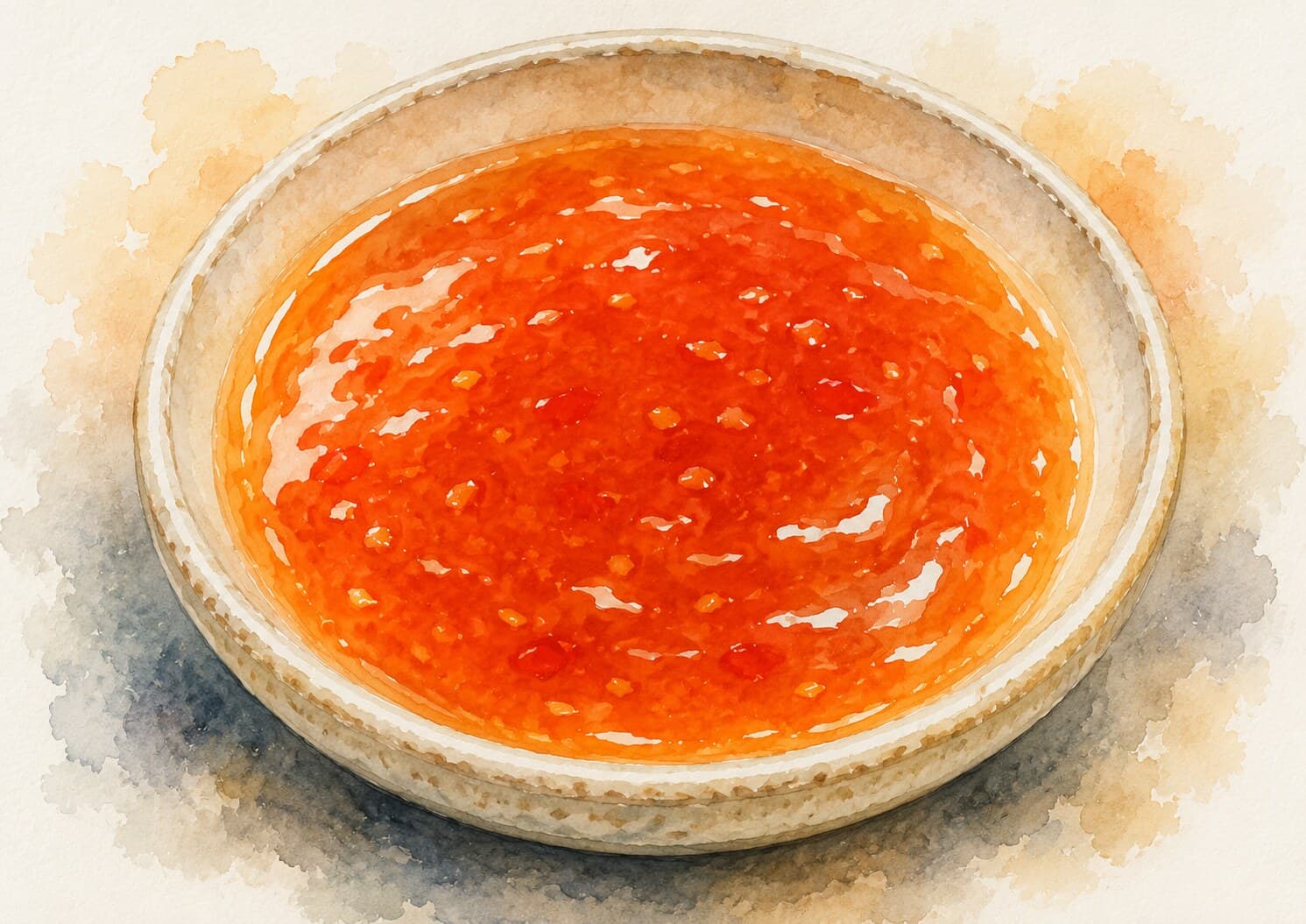
- Finished sauce: smooth, shiny, and pourable but clingy — thick enough to nap food, not gluey or paste-like.
A note on history
The bright-red, ketchup-based sweet and sour sauce familiar in the West descends from Cantonese cooking and is usually traced to the late nineteenth century, when it developed around dishes like gu lou yuk (sweet and sour pork). As Chinese cooks emigrated and traditional souring agents such as the shanzha (hawthorn) berry were hard to find, ketchup came to supply both the tang and the signature red color, with cornstarch giving the sauce its body. (Wikipedia, Tasting Table)
Get the essays in your inbox — free
Weekly notes on flavor, fermentation, and food history — the writing behind the Atlas of Flavor. No spam; unsubscribe anytime.