
Menemen (Turkish Eggs with Tomato)
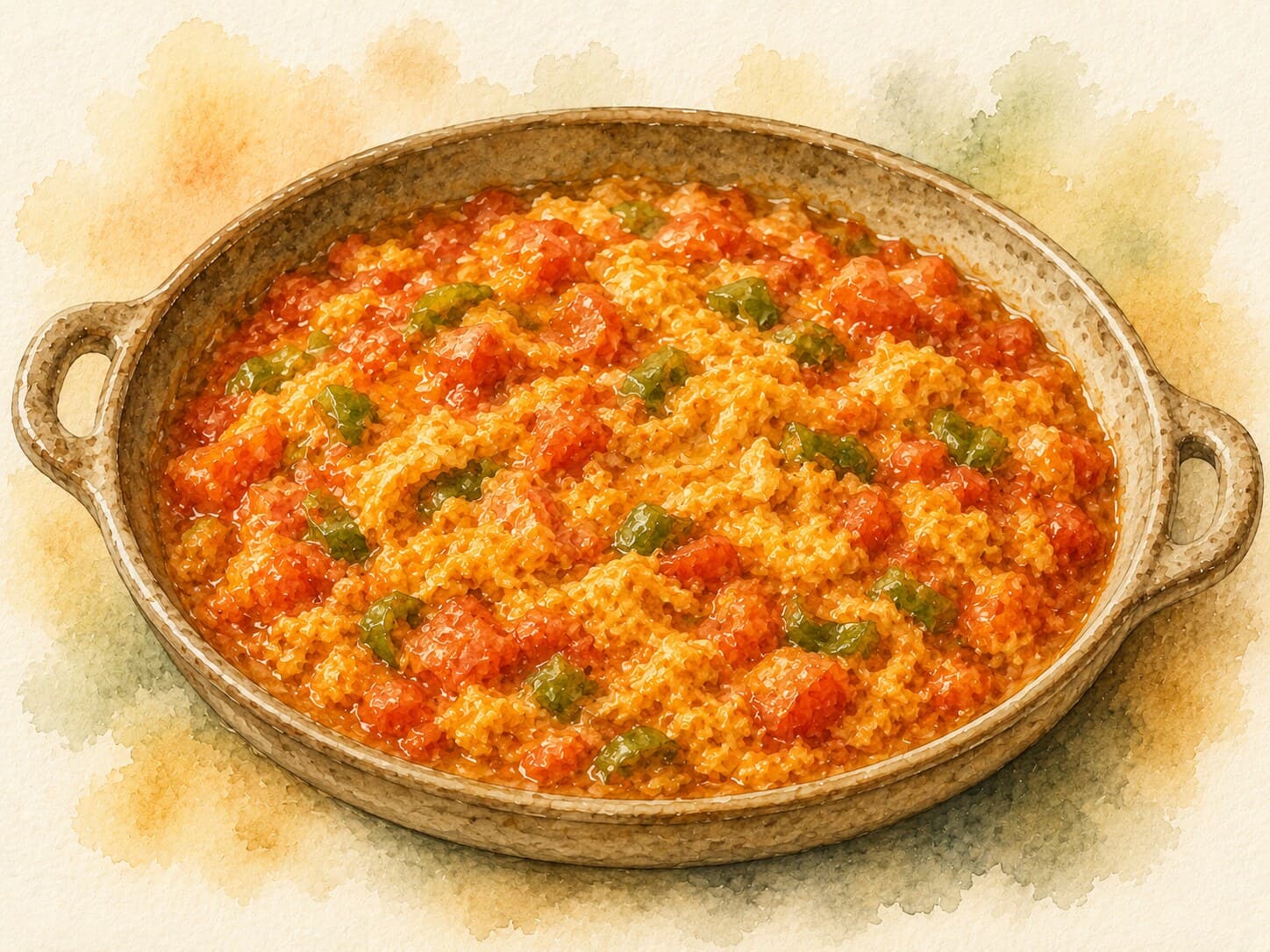
Menemen is a rich Turkish dish of eggs and tomatoes that achieves a delicate, custardy texture with simple ingredients.
Contents (6 sections)▾
Ingredients
- 4 large eggs
- 2 medium tomatoes, diced
- 1 medium green bell pepper, diced
- 1 small onion, finely chopped
- 2 tablespoons olive oil
- 1 teaspoon salt
- 1/2 teaspoon black pepper
- 1/2 teaspoon red pepper flakes (optional)
- fresh parsley, chopped, to taste
Steps
Heat olive oil in a skillet over medium heat. Once hot, add onions and bell pepper and sauté for 5-7 minutes, until softened and translucent.
Add diced tomatoes to the skillet along with salt, black pepper, and red pepper flakes (if using). Cook for an additional 5-7 minutes until the mixture is jammy and fragrant.
Reduce the heat to low and crack the eggs directly into the tomato-pepper mixture. Gently stir to combine, ensuring the eggs remain soft and custardy. Cook for 3-5 minutes, pulling the eggs as they set.
Cook the eggs through until just set — not runny; for a softer, creamier set use eggs pasteurized in the shell. Garnish with chopped parsley and serve immediately with crusty bread.
Why this works
Menemen relies on the careful balance of cooking time and temperature to create a dish that is both rich and texturally pleasing. The technique of softening the peppers and tomatoes to a jammy base ensures that the flavors meld beautifully while providing a base that's not too watery. Cooking the eggs over low heat is crucial; it allows for a gentle setting that keeps them soft and custardy, avoiding the rubbery texture that can occur when overcooked. If the mixture appears too thick or dry, a splash of water or broth can help maintain the desired consistency without compromising flavor. Remember, the goal is to embrace the creaminess of the eggs and the tanginess of the tomatoes — achieving this harmony defines a perfect Menemen.
Common mistakes
-
Skipping the long pepper sauté (cooking gently in fat to release flavor). The dish starts with the peppers, and they need real time to sweeten.
- Target: 6-8 minutes over medium heat, until the green pepper bends limp and smells sweet rather than grassy.
- Why it matters: Raw green pepper gives menemen a sharp, vegetal bite that dominates the eggs. A proper sauté turns that edge into mellow sweetness.
- What to do: Cut peppers small, salt them lightly to draw moisture, and don't rush — wait for the colour to deepen and the kitchen to smell sweet before adding tomato.
-
Adding the eggs while the pan is too hot. High heat scrambles the eggs hard and fast, the opposite of menemen's character.
- Target: Lower the heat so the tomato base is no longer bubbling vigorously — just steaming — before the eggs go in.
- Why it matters: Egg proteins set rapidly above 70 °C; on a screaming-hot pan they pebble into dry curds instead of softly thickening with the tomato.
- What to do: Drop the heat, wait 20-30 seconds for the pan to settle, then crack the eggs in. Fold slowly with a wooden spoon.
-
Overstirring the eggs. Constant scraping breaks the structure into uniform curds and dries them out.
- Target: Three or four slow folds total, leaving visible streaks of yolk and white in the tomato base.
- Why it matters: Menemen is meant to look marbled — molten orange ribbons through red — not homogenously yellow. Overworking the eggs erases that contrast and the soft texture with it.
- What to do: Stir only enough to bring uncooked egg toward the heat. Pull from the burner while it still looks slightly underdone; residual heat finishes the set.
-
Cooking the eggs too soft for the table. Menemen wants soft-custard eggs, but the eggs must be set through, not raw.
- Target: The whites fully opaque and just barely glossy; no liquid-clear egg white visible.
- Why it matters: Soft-set eggs are the dish's character, but underdone whites carry the same Salmonella risk as raw egg — especially for children, pregnant cooks, or anyone immunocompromised.
- What to do: If serving vulnerable guests, cook the eggs a little further until both whites and yolks are firm, and serve immediately.
What to look for
- Peppers and onion collapsed to a soft, glossy heap before the tomato joins — that's a proper base, not a quick fry.
- Tomato cooked down until a spoon dragged through the pan leaves a brief trail before filling back in — jammy, not watery.
- Egg ribbons folding into the tomato in slow, soft sheets — never tight curds.
- A finished surface that looks marbled rather than blended — distinct streaks of orange yolk through the red base.
A note on history
Menemen (a Turkish skillet dish of eggs softly cooked into a tomato-and-pepper base) takes its name from the town of Menemen in the İzmir Province of western Türkiye, in a region long known for sweet tomatoes and long green peppers (sivri biber). The dish became the breakfast staple it is today as it spread out of the Aegean and into Istanbul and Ankara during the 20th century. A common origin story credits Cretan Turks who resettled in the area after the early-20th-century population exchanges with reshaping older egg-and-vegetable preparations into the modern menemen, though the attribution is debated.
Safety — the egg
Softly-set, runny or barely-cooked egg carries a Salmonella risk that freshness, a trusted or premium source, a clean shell, a hot pan and residual (carryover) heat do not remove. To keep the egg soft, use eggs pasteurized in the shell (heat-treated through to the contents) or a pasteurized egg product; otherwise cook the egg through until set. For children, pregnant people, older adults and anyone immunocompromised, use pasteurized egg or cook it fully.
<!-- beginner-glossed v1 -->Get the essays in your inbox — free
Weekly notes on flavor, fermentation, and food history — the writing behind the Atlas of Flavor. No spam; unsubscribe anytime.