
Menemen
Menemen is a delightful Turkish dish featuring soft scrambled eggs cooked with a flavorful tomato and pepper base, perfect for any meal.
Contents (6 sections)▾
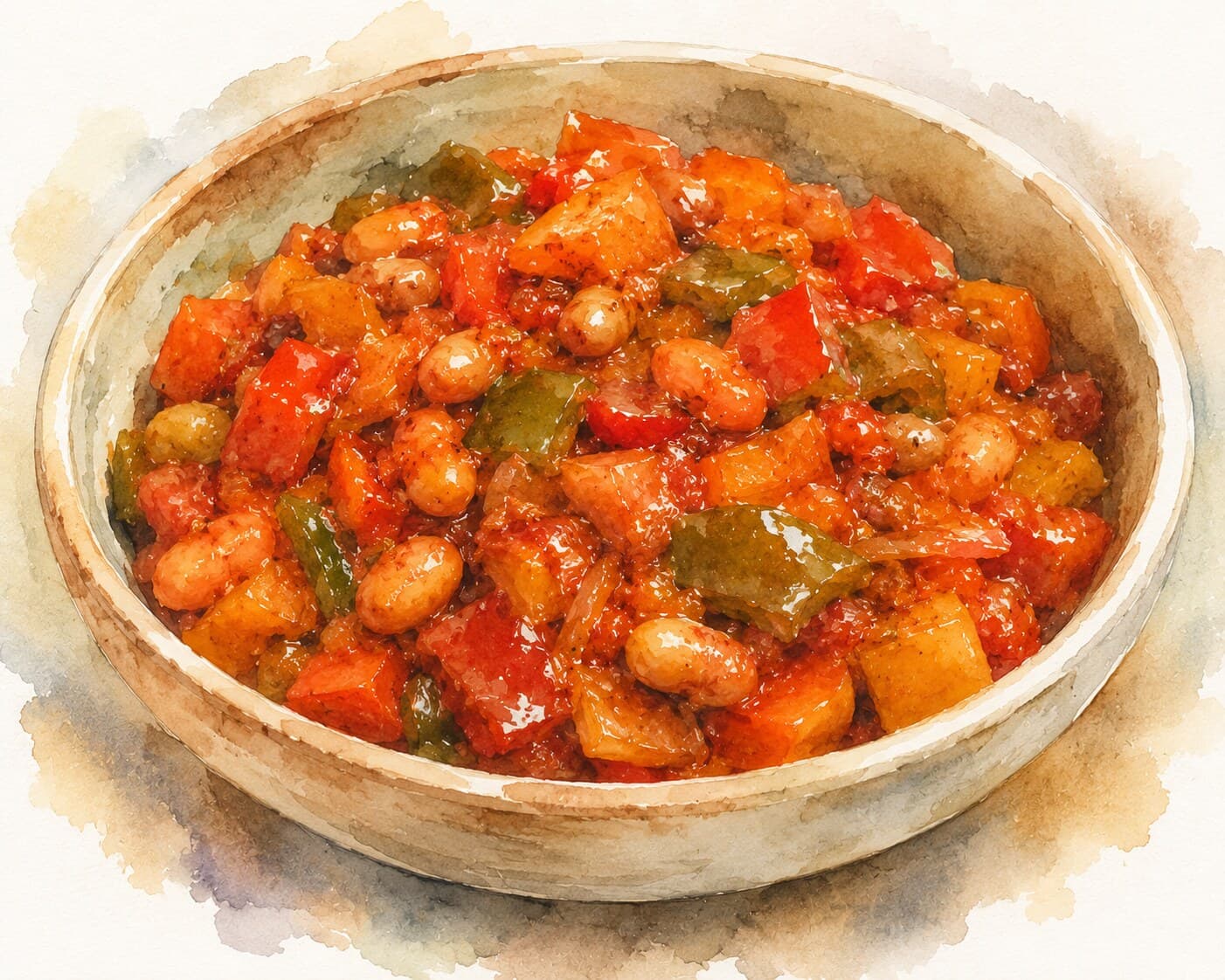
Ingredients
- 4 large eggs
- 2 tablespoons olive oil
- 1 medium onion, finely chopped
- 1 green pepper, diced
- 2 medium tomatoes, chopped
- 100 grams white cheese, crumbled (optional)
- Salt to taste
- Black pepper to taste
Steps
In a skillet, heat olive oil over medium heat for about 2 minutes until hot but not smoking.
Add the chopped onion and green pepper, sautéing for 5-7 minutes until softened and translucent.
Stir in the chopped tomatoes, cooking for an additional 5 minutes until they break down and form a sauce.
Reduce heat to low and crack the eggs directly into the skillet. With ordinary (non-pasteurized) eggs, stir gently with a spatula for about 3–4 minutes until the eggs are fully set throughout, with no runny or liquid egg remaining. For the traditional soft, creamy finish, use eggs pasteurized in the shell (heat-treated through to the contents) or a pasteurized egg product — for everyone, not only high-risk diners; residual pan heat sets texture, it is not a Salmonella kill step.
If using, sprinkle the crumbled white cheese over the top and season with salt and black pepper to taste. Cook for an additional 1-2 minutes until the cheese slightly melts.
Why this works
The key to menemen lies in cooking the tomato-and-pepper base down until it's almost a jam, then folding the eggs in toward the end. Sautéed onion and green pepper build a flavor base, while the tomatoes add moisture and acidity that reduces away. Stir the eggs gently into the hot vegetable base, off-heat or on low — they should reach firm-set throughout, not runny — and serve immediately. The optional white cheese adds richness, enhancing the flavor without overpowering the fresh ingredients.
A note on egg doneness: This recipe takes the eggs to firm-set — fully cooked, not soft or runny. For children, pregnant cooks, the elderly, and anyone immunocompromised, undercooked egg is not safe; cook the eggs through and serve hot. If you want a softer texture, use eggs pasteurized in the shell and shorten the egg phase — a trusted source, fresh eggs or residual heat do not make undercooked egg safe; the default here is firm.
Common mistakes
Adding the eggs before the tomato base has reduced enough.
Target: Cook the tomatoes down until much of their liquid has evaporated and the mixture looks thick and jammy before adding the eggs.
Why it matters: Eggs stirred into a watery base end up steeping in liquid rather than setting properly, making it hard to reach a fully cooked, firm texture without either overcooking the vegetables or ending up with a thin, soupy dish.
What to do: Let the tomatoes cook down until the excess liquid has mostly disappeared before cracking in the eggs.
Keeping the heat too high once the eggs go in.
Target: Lower the heat to low or medium once the eggs are added, and stir gently and evenly so they cook through at the same rate all over the pan.
Why it matters: High heat sets eggs unevenly — the edges can overcook and turn tough while the center lags behind, sometimes leaving pockets that are still undercooked even though the rest looks done.
What to do: Turn the heat down before adding the eggs, stir continuously with a spatula, and check the center of the pan as well as the edges before deciding they're done.
Judging the eggs done from a quick glance at the surface.
Target: Cook the eggs until they are uniformly firm-set throughout the pan, including the center, with no glossy or wet-looking patches left.
Why it matters: Eggs can look set on top while still being loose or undercooked just beneath the surface, and since undercooked egg is a food-safety concern, it's worth checking rather than guessing.
What to do: Gently push the eggs aside with a spatula partway through to check that no raw egg is pooling underneath, and keep cooking until everything looks set, top and bottom.
Adding the cheese too early or letting the dish stand before serving.
Target: Fold in the crumbled white cheese right at the end and bring the dish to the table immediately.
Why it matters: Menemen keeps firming up from residual heat (carryover cooking) even after it's off the stove, so a pan left standing can turn from tender to tough within a few minutes, and cheese added too early can turn stringy or greasy instead of melting in gently.
What to do: Stir in the cheese at the last moment, off the heat if needed, and serve the skillet right away rather than letting it wait.
What to look for
- Eggs that are uniformly firm-set, with no glossy or wet-looking pools remaining. Push the eggs aside gently with a spatula to check the pan floor is clear of any raw egg — that's the sign menemen is properly and safely cooked through, not the loose, flowing curds of a French-style soft scramble.
- A tomato base cooked down to a thick, jammy consistency before the eggs go in. Watery, still-soupy tomatoes make it harder for the eggs to set evenly.
- A moist but dry-looking finish, not a pool of liquid on top. Properly cooked menemen looks glossy from the olive oil and tomato, but shouldn't be weeping liquid once it's plated.
A note on history
Menemen takes its name from the town of Menemen in İzmir Province, on Turkey's Aegean coast, though the dish itself is eaten as a breakfast and casual meal across the country. It belongs to a wider family of egg-and-tomato dishes found around the Mediterranean and Middle East — shakshuka, cooked with similar tomatoes and peppers but usually more heavily spiced, is the dish most often compared to it — and cooks and food writers sometimes debate how closely related the two really are, or which came first. Rather than one being a copy of the other, both likely reflect a shared regional habit of cooking eggs directly into a simmered vegetable base, each adapted with local spicing and produce.
Within Turkey, menemen stays closely tied to home cooking and is usually kept simple — tomatoes, green pepper, and egg — with the presence of onion, cheese, or extra spice varying by household and region rather than following one fixed recipe.
Safety — the egg
Softly-set, runny or barely-cooked egg carries a Salmonella risk that freshness, a trusted or premium source, a clean shell, a hot pan and residual (carryover) heat do not remove. To keep the egg soft, use eggs pasteurized in the shell (heat-treated through to the contents) or a pasteurized egg product; otherwise cook the egg through until set. For children, pregnant people, older adults and anyone immunocompromised, use pasteurized egg or cook it fully.
<!-- beginner-glossed v1 -->Get the essays in your inbox — free
Weekly notes on flavor, fermentation, and food history — the writing behind the Atlas of Flavor. No spam; unsubscribe anytime.