
Manti (Turkish Dumplings in Yogurt)
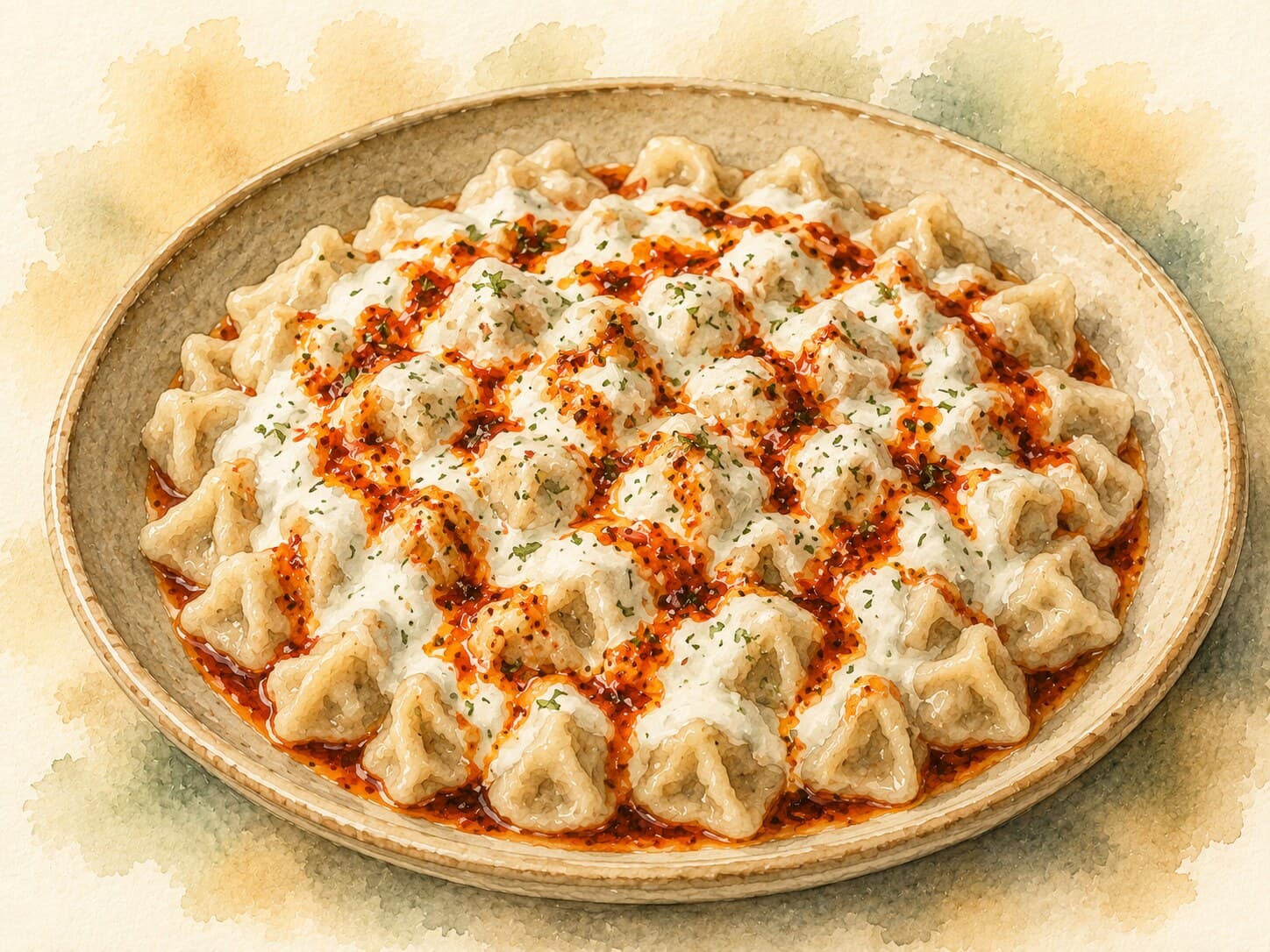
Manti are tiny meat dumplings served in garlic yogurt and finished with paprika-chili butter, a staple of Turkish cuisine.
Contents (5 sections)▾
Ingredients
- 500 g ground lamb or beef
- 1 medium onion, finely chopped
- 2 cloves garlic, minced
- 1 tsp salt
- 1/2 tsp black pepper
- 1/2 tsp paprika
- 300 g all-purpose flour
- 1 large egg
- 100 ml water
- 300 g plain yogurt
- 2 cloves garlic, minced (for yogurt)
- 50 g butter
- 1 tsp paprika (for butter)
- 1/2 tsp chili flakes (for butter)
Steps
In a mixing bowl, combine the ground meat, chopped onion, minced garlic, salt, pepper, and paprika. Mix well until fully combined.
In a separate bowl, mix the flour, egg, and water until a dough forms. Knead for about 5 minutes until smooth. If the dough feels too dry, add a little more water.
Roll out the dough on a floured surface to about 2 mm thick. Cut into 5 cm squares. Place a small spoonful of the meat mixture in the center of each square.
Fold the corners of the square to the center, pinching them to seal the dumpling. Ensure there are no air pockets inside, as they can cause the dumplings to break while boiling.
Bring a large pot of salted water to a boil. Carefully drop the dumplings in batches and boil for about 8-10 minutes, or until they float to the surface. The filling is raw ground meat, so floating is a dough cue, not a meat cue — cut one dumpling open to confirm the filling is no longer pink and reaches 71 °C / 160 °F on an instant-read thermometer before serving the rest.
While the dumplings are cooking, prepare the garlic yogurt by mixing the yogurt with minced garlic and a pinch of salt.
In a small saucepan, melt the butter over low heat. Add paprika and chili flakes, stirring until fragrant.
Once the dumplings are cooked, drain them and serve them on a plate. Generously spoon the garlic yogurt over the dumplings and drizzle with the paprika-chili butter.
Why this works
The key to perfect Manti lies in the balance of flavors and textures. The meat filling must be well seasoned to penetrate the delicate dumpling skin, which should be thin enough to cook quickly but sturdy enough to hold the filling without breaking. If the dumplings seem too dry while mixing the dough, adding a little extra water will help create a pliable consistency. During boiling, the dumplings will expand slightly and should float when done. This method ensures they remain tender yet firm. The garlic yogurt provides a cooling contrast to the rich, warm dumplings, while the paprika-chili butter adds a flavorful kick. Together, these elements create a harmonious dish that embodies the essence of Turkish cuisine.
Common mistakes
-
Rolling the dough too thick. A heavy wrapper smothers the filling and turns gummy in the yogurt (cold whipped strained-cream-style fermented milk).
- Target: 2 mm or thinner, translucent enough to faintly see the work surface through it.
- Why it matters: The pleasure of manti is the ratio of tender skin to seasoned meat. Thick dough flips that balance and makes every bite doughy.
- What to do: Rest the dough at least 20 minutes before rolling so the gluten relaxes; roll in sections and keep the rest covered to prevent drying.
-
Underseasoning the meat. The filling is only a teaspoon per square, so it has to carry the seasoning alone.
- Target: Salt the raw mix until a small pinch fried in a pan tastes seasoned on its own, not "almost there."
- Why it matters: Yogurt and butter on top are mild and cooling; if the meat is bland, the whole plate tastes flat.
- What to do: Mix salt, pepper, and grated onion into the meat by hand until tacky, then test-fry a small patty and adjust before filling.
-
Crowding the pot. Boiling too many dumplings at once drops the water temperature and they stick.
- Target: A wide, rolling boil with dumplings moving freely; cook in batches of roughly 40-50 at a time.
- Why it matters: A slack boil makes the wrappers swell unevenly and the seams pop open, spilling the filling.
- What to do: Use the widest pot you have, salt the water well, stir gently as soon as you drop them in, and lift them out as soon as they float and the filling looks set through.
-
Pouring butter onto cold yogurt. The contrast is the whole point, and it dies in 30 seconds.
- Target: Yogurt at room temperature, butter foaming hot and just turning fragrant with paprika.
- Why it matters: Cold yogurt seizes the butter into greasy beads; tepid yogurt accepts the hot fat and the paprika blooms across the surface.
- What to do: Pull yogurt out while the dumplings boil, warm the serving plates, and assemble — dumplings, yogurt, hot butter — in one quick sequence at the table.
What to look for
- A dough that springs back slowly when poked, not snap-quick — that's the gluten relaxed enough to roll thin.
- Dumplings bobbing to the surface and holding there for 30 seconds — the wrapper is set and the meat is cooked through.
- The paprika-butter foaming and turning brick-orange, but not yet smoking — that's the moment to pour.
- A pooled spoonful that shows three distinct layers — warm dumpling, cool yogurt, hot red butter — that's the dish in balance.
A note on history
Manti (tiny Turkish meat-filled dumplings dressed with garlic yogurt and paprika-chili butter) traveled west from Central Asia along the Silk Road with Turkic and Mongol horsemen, who carried dried or frozen dumplings as portable rations. The earliest written Ottoman recipe appears in a 15th-century cookbook by Muhammed bin Mahmud Shirvani, where it is steamed with a minced lamb and crushed chickpea filling spiced with cinnamon. Records from Topkapı Palace include the often-repeated claim that Sultan Mehmed II, conqueror of Constantinople in 1453, was so fond of manti that he ate it for breakfast for 28 days running. The yogurt-and-paprika-butter service that defines the modern Turkish dish belongs to the later Ottoman elaboration, not the nomadic original.
Get the essays in your inbox — free
Weekly notes on flavor, fermentation, and food history — the writing behind the Atlas of Flavor. No spam; unsubscribe anytime.