
Soya Chunk Curry (Meal Maker Masala)
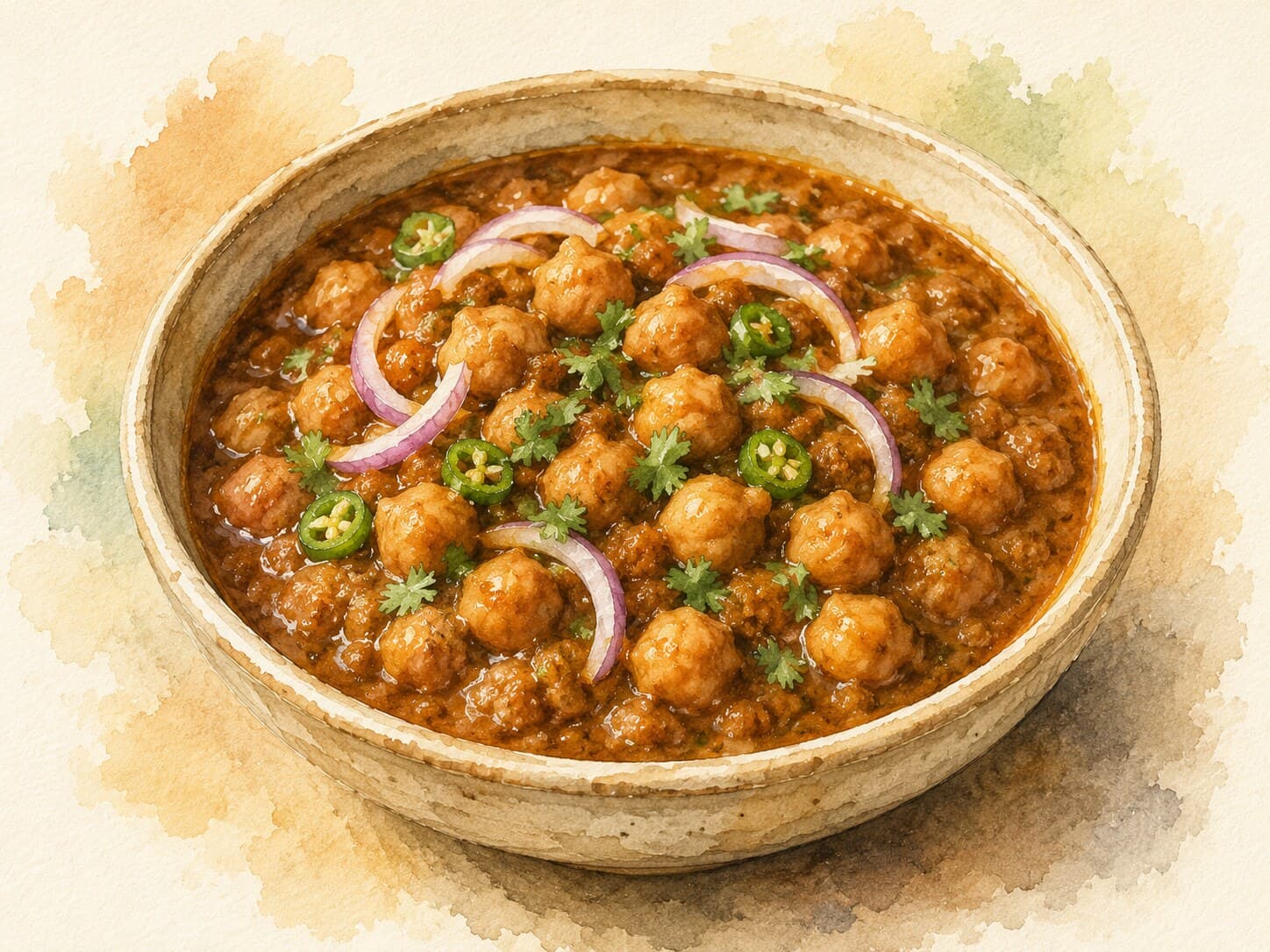
This Soya Chunk Curry features rehydrated textured vegetable protein simmered in a rich onion-tomato masala.
Contents (5 sections)▾
Ingredients
- 200 g soya chunks
- 2 tbsp vegetable oil
- 1 large onion, finely chopped
- 2 medium tomatoes, pureed
- 1 tsp ginger-garlic paste
- 1 tsp cumin seeds
- 1 tsp coriander powder
- 1/2 tsp turmeric powder
- 1 tsp garam masala
- 1-2 green chilies, slit
- Salt to taste
- Fresh cilantro for garnish
- Red onion rings for garnish
Steps
In a bowl, soak 200 g of soya chunks in hot water for 15 minutes to rehydrate them, ensuring they become soft and spongy.
Heat 2 tbsp vegetable oil in a pan over medium heat, add 1 tsp cumin seeds, and let them sizzle for a few seconds to release their aroma.
Add 1 large finely chopped onion to the pan, sauté until golden brown (about 5-7 minutes), which enhances the flavor base of the curry.
Mix in 1 tsp ginger-garlic paste and sauté for another minute until the raw smell disappears.
Pour in the pureed tomatoes (from 2 medium tomatoes) and cook until the oil separates, about 5 minutes, which indicates that the rawness of the tomatoes is cooked out.
Add 1 tsp coriander powder, 1/2 tsp turmeric powder, and salt to taste; stir well and cook for a couple of minutes.
Once the spices are well integrated, add the rehydrated soya chunks and 1 tsp garam masala; mix thoroughly and cook for another 5 minutes, allowing the chunks to absorb the flavors.
Garnish with fresh cilantro and red onion rings before serving. Pair with rice or bread.
Why this works
The key to a successful Soya Chunk Curry lies in the technique of rehydrating the soya chunks and then braising them in a flavorful onion-tomato masala. Soaking in hot water allows the textured vegetable protein to expand and absorb moisture, making it spongy and ready to absorb flavors. The sautéing of onions until golden brown creates a rich, sweet foundation that balances the acidity of the tomatoes. The layering of spices during cooking builds a complex flavor. If the curry seems too thick, add a splash of water to adjust the consistency without losing the rich taste. Conversely, if the texture appears too soupy, cook it uncovered for a few more minutes to evaporate excess moisture. This dish is versatile and can be adjusted according to your taste preference by varying spice levels or adding vegetables.
Common mistakes
-
Skipping the squeeze-rinse-squeeze step after rehydration.
- Target: rehydrate in hot water 10-15 minutes, then squeeze out the soaking liquid, rinse in fresh water, squeeze again until the chunks are barely damp.
- Why it matters: the first soaking water carries the "raw soy" beany smell and a slightly bitter back-note. If you skip the squeeze the curry tastes flat and faintly unpleasant — most home cooks who dislike soya chunks have been served unsqueezed ones.
- What to do: drain, rinse with cold water, press between your palms or against the sieve until the chunks no longer drip. They should still be spongy, just not waterlogged.
-
Adding chunks before the masala has cooked out.
- Target: cook the onion-tomato base until you see oil separate at the edges of the pan — usually 8-12 minutes total after the tomatoes go in.
- Why it matters: raw tomato gives the curry a sharp, acidic edge, and the chunks will absorb that rawness exactly as they would absorb a finished masala. Once the chunks are in, you can't fix the base.
- What to do: wait for the visible oil-separation cue (small pools of orange-red oil at the rim). Only then add the squeezed chunks.
-
Under-salting and adding salt at the end.
- Target: salt the masala before adding the chunks, and again after they've simmered for 5 minutes.
- Why it matters: soya chunks are nearly flavourless until they absorb seasoned liquid. Late salt sits on the outside and they taste bland in the centre, which feels like the recipe failed.
- What to do: salt the base, taste, add chunks, simmer, taste again, and only then adjust. The chunks need time to drink the seasoned liquid in.
-
Boiling hard so the chunks turn rubbery.
- Target: a low simmer for 8-12 minutes after the chunks go in.
- Why it matters: TVP (textured vegetable protein — the defatted soy-flour product that soya chunks are made from) overcooks the same way over-kneaded gluten does — the spongy bite turns squeaky and tough.
- What to do: keep the heat low after the chunks are in; if the gravy thickens too much, add a little hot water rather than turning the heat up.
What to look for
- the rinse water running clear and the chunks no longer foamy — that's the soy-funk gone.
- red-orange oil pooling at the edge of the masala — the classic "tel chhutna" (Hindi for "oil leaves" — the cook's visual cue that the spice base is fully cooked) signal that the base is cooked.
- the chunks doubling in size and going from chalky pale to deep brown all the way through — they've taken on the gravy.
- a gravy that coats the back of a spoon but slides off in a heavy drip, not a stiff smear — the body Indian home cooks call out as "right".
A note on history
Soya chunks are dried textured vegetable protein (TVP) — a defatted soy-flour by-product of soybean oil extraction, developed industrially in the mid-20th century as a low-cost meat alternative and extender. In India, they were widely adopted from the 1970s and 1980s onward and are now common pantry staples sold under names like Nutrela (the leading Indian soya-chunk brand) and informally as meal maker. The onion-tomato masala that surrounds them is the standard North Indian curry base, and the dish's popularity reflects both vegetarian household economics and the way TVP slots cleanly into existing curry technique.
Get the essays in your inbox — free
Weekly notes on flavor, fermentation, and food history — the writing behind the Atlas of Flavor. No spam; unsubscribe anytime.