
Sarson ka Saag (Punjabi Greens)
A traditional Punjabi winter dish featuring slow-cooked mustard greens enriched with cornmeal and ghee.
Contents (5 sections)▾
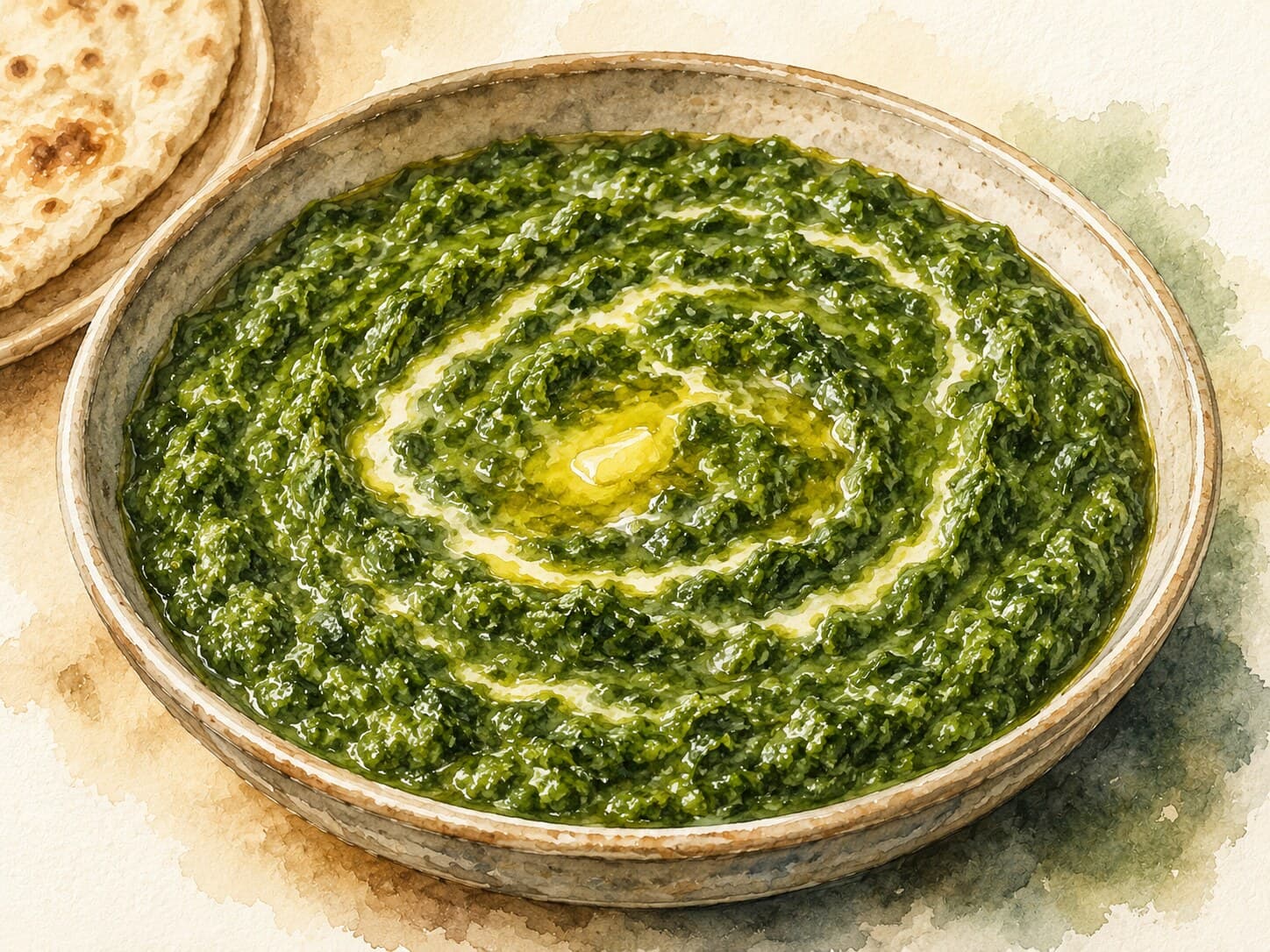
Ingredients
- 500 g mustard greens, chopped
- 250 g spinach, chopped
- 1 cup water
- 2 tbsp cornmeal
- 3 tbsp ghee
- 4 cloves garlic, minced
- 1 tsp salt, to taste
- 1/2 tsp red chili powder, to taste
Steps
In a large pot over medium heat, combine mustard greens, spinach, and water. Cook for about 15 minutes until greens are tender.
Transfer the cooked greens to a blender and blend until smooth. If it seems too thick, add a little more water.
Return the blended greens to the pot. Mix in cornmeal and simmer on low heat for 10 minutes, stirring frequently to prevent sticking.
In a separate pan, heat ghee over medium heat. Add minced garlic and sauté until golden brown, then pour over the greens.
Why this works
This recipe capitalizes on the deep, earthy flavors of mustard greens (sarson, the peppery leaves of the mustard plant), a staple in Punjabi cuisine, especially in winter. The slow cooking process helps break down the fibrous nature of the greens, allowing their natural bitterness to mellow and develop a richer taste. Blending the greens creates a creamy consistency, while the cornmeal acts as a thickening agent, providing a heartier texture without overpowering the dish. If the mixture seems too thick after adding cornmeal, simply add a splash of water to achieve your desired consistency. The final tempering (a quick hot-fat infusion called tarka in Indian cooking, where spices and aromatics are bloomed in fat) of ghee (clarified butter with the milk solids removed) and garlic enhances the flavor. This method ensures that all the flavors meld beautifully, creating a comforting meal that pairs perfectly with makki di roti, another quintessential Punjabi staple.
Common mistakes
Cutting the slow-cook short.
- Target: A bare simmer of 15–20 minutes on the first pot of greens, then a further 10 minutes once the cornmeal goes in, with the greens silky and the mustard sharpness mellowed.
- Why it matters: Mustard greens carry a peppery bite that only softens with time and gentle heat. Stop too early and the saag tastes raw and aggressively bitter; the body also stays watery instead of cohering into a single sauce.
- What to do: Cook the greens until a spoon glides easily through them, then keep simmering with the cornmeal until the saag holds a shape on the spoon for a beat before sliding off.
Blending while hot in a sealed jug.
- Target: A short cooling rest before blending, or blending in batches with the lid vented.
- Why it matters: Hot greens build steam pressure inside a sealed blender and can blow the lid off — a real burn risk — and over-blending hot greens also turns the colour dull grey-green rather than deep emerald.
- What to do: Let the pot stand off-heat for 5 minutes, then blend in batches with the lid vented and a folded towel held on top, pulsing in short bursts.
Dumping cornmeal into the pot in one heap.
- Target: The cornmeal goes in as a steady rain while you stir, then simmers 10 minutes with frequent stirring.
- Why it matters: Tipped in all at once, cornmeal clumps into raw, grainy lumps that never hydrate and leave the saag tasting dusty.
- What to do: Lower the heat, sprinkle the cornmeal in gradually with one hand while stirring with the other, and keep stirring as it simmers so it doesn't catch on the bottom.
Burning the garlic in the final ghee tarka.
- Target: Minced garlic taken to a light golden brown — straw-coloured, not dark brown — over medium heat.
- Why it matters: Garlic turns sharply bitter in the seconds between golden and burnt, and once it does, that bitterness rides through the entire dish when you pour the ghee over.
- What to do: Heat the ghee first, add the garlic, watch it constantly, and tip the whole tarka onto the saag the moment the garlic shifts to pale gold.
What to look for
- The first pot of greens collapses from a bushy mound into a glossy, dark-green slurry.
- After blending, the saag is a deep, even emerald — not grey or olive.
- With the cornmeal cooked in, a spoonful holds its shape on the spoon for a second before slowly falling back.
- In the final pan, the garlic crackles in the ghee and turns the colour of straw just before it goes onto the greens.
A note on history
In Hindi, saag is a generic word for leafy greens, while palak specifically means spinach — so saag refers to a broader family of leafy-green dishes (often featuring mustard greens, fenugreek, and other leaves), and palak dishes are typically built on spinach alone. The mustard-heavy Punjabi version, sarson ka saag, is associated above all with winter in Punjab, traditionally paired with makki di roti (cornmeal flatbread) and a spoon of fresh butter.
Get the essays in your inbox — free
Weekly notes on flavor, fermentation, and food history — the writing behind the Atlas of Flavor. No spam; unsubscribe anytime.