
Chole (Spiced Chickpea Curry)
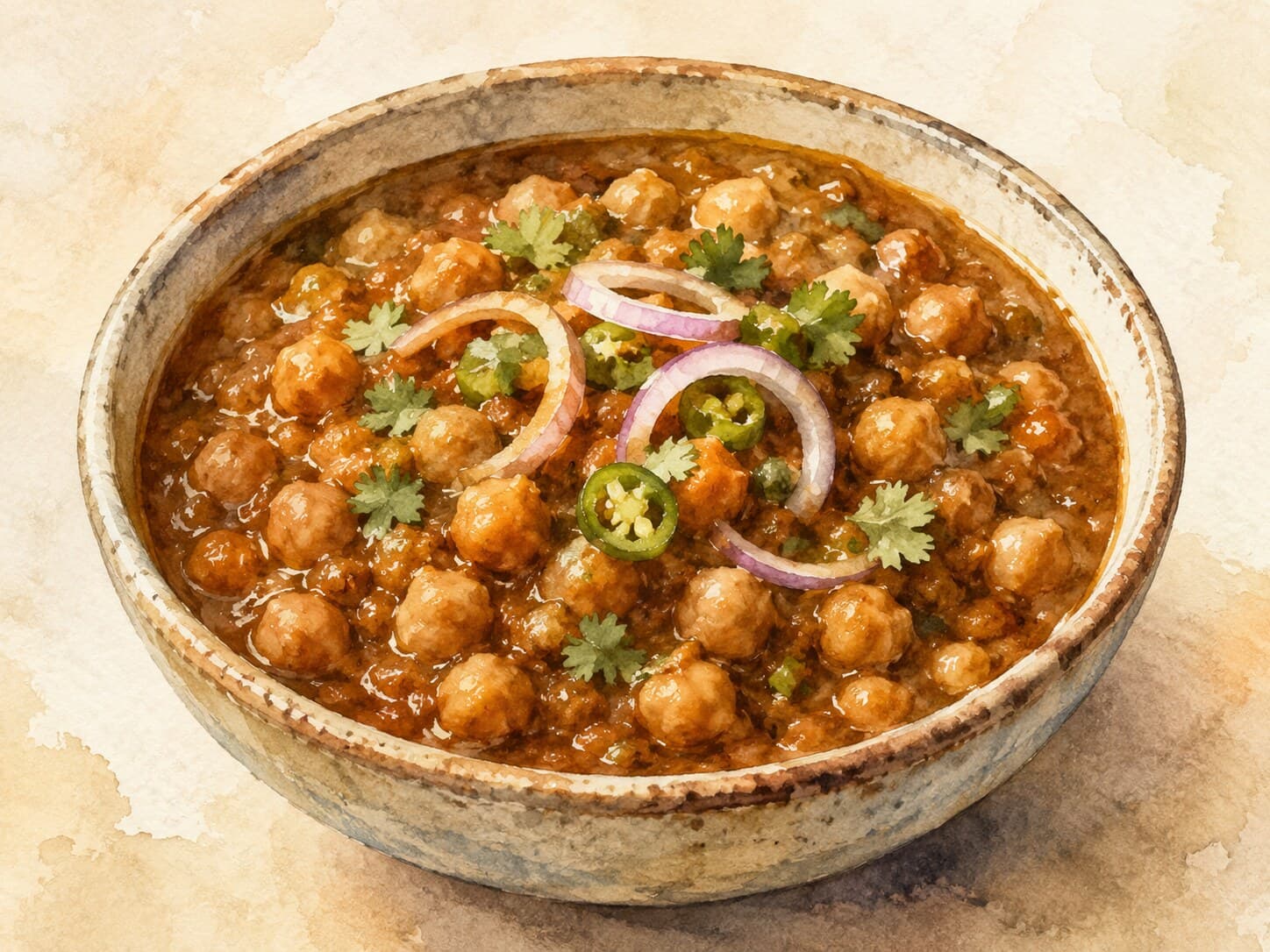
A rich and aromatic North Indian chickpea curry that achieves its deep color and flavor through a unique simmering technique.
Contents (5 sections)▾
Ingredients
- 250 g chickpeas, soaked overnight
- 2 tbsp vegetable oil
- 1 large onion, finely chopped
- 2 medium tomatoes, pureed
- 1 tbsp ginger-garlic paste
- 1 tsp cumin seeds
- 1 tsp coriander powder
- 1 tsp garam masala
- 1/2 tsp turmeric powder
- 1 tsp red chili powder
- 1 tea bag or 1 dried amla
- Salt to taste
- Fresh cilantro leaves for garnish
Steps
In a pot, heat the vegetable oil over medium heat. Add cumin seeds and let them sizzle for about 30 seconds to release their aroma.
Add the chopped onions and sauté until they turn golden brown, approximately 8-10 minutes. This caramelization adds depth to the dish.
Stir in the ginger-garlic paste and cook for another 2 minutes before adding the pureed tomatoes.
Cook the tomato mixture for about 5-7 minutes until it thickens and the oil separates, indicating the masala is ready.
Add coriander powder, turmeric powder, red chili powder, and salt. Mix well and cook for 2 more minutes.
Add the soaked chickpeas along with enough water to cover them. Toss in the tea bag (or dried amla) for color and depth.
Bring to a boil, then reduce heat to low and simmer for 15 minutes, allowing the flavors to meld. If the curry seems too thick, add water as needed.
Finally, stir in garam masala and simmer for an additional 2 minutes. Garnish with fresh cilantro before serving.
Why this works
The simmering technique used in making Chole allows the chickpeas to absorb the rich flavors of the onion-tomato masala while the addition of a tea bag or dried amla contributes a distinct color and depth of flavor. The caramelization of onions is crucial; it adds sweetness and enhances the overall complexity of the dish. If the curry seems too thick during cooking, simply add a little water to achieve the desired consistency. This ensures that the chickpeas remain tender and the masala is not overly concentrated. The balance of spices is also essential, as it builds the foundational flavor that defines this North Indian dish.
Common mistakes
Stopping the onion at pale yellow instead of deep brown. Target: Onions cooked 8–10 minutes to a true golden-brown, soft and jammy. Why it matters: The browning here is the Maillard reaction (the chemistry that turns proteins and sugars brown and savory under heat) plus caramelization of the onion's own sugars. That browned base is most of the curry's body and sweetness. Pale onions leave the gravy thin and sharp, leaning entirely on raw spice heat. What to do: Keep the heat at medium, stir often, and wait for the color to deepen and the smell to turn sweet rather than pungent. Rushing on high heat scorches the edges before the inside softens.
Adding spices to a dry, hot pan and burning them. Target: Ground spices go in once the tomato has loosened the masala (the cooked, spiced onion-tomato base), with a little fat present. Why it matters: Turmeric and chili powder scorch in seconds on bare hot metal, turning acrid and bitter — a flavor you cannot cook back out. Fat and tomato moisture buffer them and pull their color and aroma out gently. What to do: Bloom the ground spices in the oil-and-tomato base for a full two minutes over medium heat, stirring, before the chickpeas go in.
Not cooking the tomato until the oil separates. Target: Cook the tomato 5–7 minutes until you see oil beading at the edges of the masala. Why it matters: That oil separating out (called bhuna) is the visual signal that the raw water has cooked off and the spices have fused with the fat. Skip it and the curry tastes raw and watery, with the tomato's sourness sitting on top instead of melting in. What to do: Keep stirring over medium heat; when the mass tightens and a rim of oil appears, the base is ready for liquid.
Under-soaking or rushing the chickpeas. Target: Chickpeas soaked overnight, then simmered (cooked gently in liquid just below a boil) until fully tender — creamy, not chalky, at the center. Why it matters: Chickpeas that are still firm in the middle never absorb the masala and stay starchy and dense. Tenderness comes from time at a gentle simmer, not from higher heat, which only splits the skins while leaving the interior hard. What to do: Press one against the side of the pot with a spoon — it should crush with no resistance. If they are still firm at 15 minutes, add a splash of water and keep simmering until they yield.
What to look for
- The browned onion base: deep amber, glossy, and jammy — not pale or crunchy. This is your sweetness and body; the color of the finished curry is set here.
- The masala before liquid: a tight paste with a thin rim of oil beading at the edges. That oil break (bhuna) means the spices are cooked through and no longer raw.
- The chickpeas at doneness: they crush easily against the pot and have drunk in the dark gravy. Chalky centers mean more simmering time, not more spice.
- Final consistency: the gravy coats a spoon and clings to the chickpeas rather than pooling thin around them. If it is watery, simmer uncovered a few minutes; if claggy, loosen with a splash of hot water.
A note on history
Chole comes from the Punjab region of the Indian subcontinent, where chole is the Punjabi word for chickpea (and chana the broader Hindi term); both name the legume at the heart of the dish (Wikipedia, Tea for Turmeric). Its signature dark color is a deliberate technique: cooks traditionally deepen the hue with dried amla (Indian gooseberry) or a tea bag dropped into the pot, alongside a tangy, complex chole masala blend (Vegrecipesofindia, Swasthi's Recipes). It remains one of North India's most familiar chickpea preparations, famously paired with fried bread as chole bhature.
Get the essays in your inbox — free
Weekly notes on flavor, fermentation, and food history — the writing behind the Atlas of Flavor. No spam; unsubscribe anytime.