
Sisig (Filipino Sizzling Pork)
Experience the bold flavors of Filipino Sisig with this step-by-step guide to achieving perfect chew and crisp texture.
Contents (5 sections)▾
Ingredients
- 500 g pork jowl, cheek, or belly
- 1 cup water
- 2 tbsp soy sauce
- 2 tbsp vinegar
- 1 tsp black peppercorns
- 1 onion, finely chopped
- 2-3 green chilies, chopped
- 1-2 tbsp calamansi juice or lime juice
- 1 egg — for the classic raw/soft topping, an egg pasteurized in the shell to destroy Salmonella; otherwise cook it fully (see the safety note)
- salt to taste
- cooking oil for grilling
- lime wedges for serving
Steps
In a pot, combine the pork, water, soy sauce, vinegar, and black peppercorns. Bring to a boil over medium heat and simmer for 30 minutes until the pork is tender.
Remove the pork from the pot and let it cool slightly. Preheat your grill or griddle over medium-high heat.
Grill the pork for about 5-7 minutes on each side until it develops a nice char and crispy edges, enhancing the Maillard reaction for depth of flavor.
Once grilled, chop the pork finely, then mix in the chopped onion, green chilies, and calamansi juice. Adjust seasoning with salt to taste.
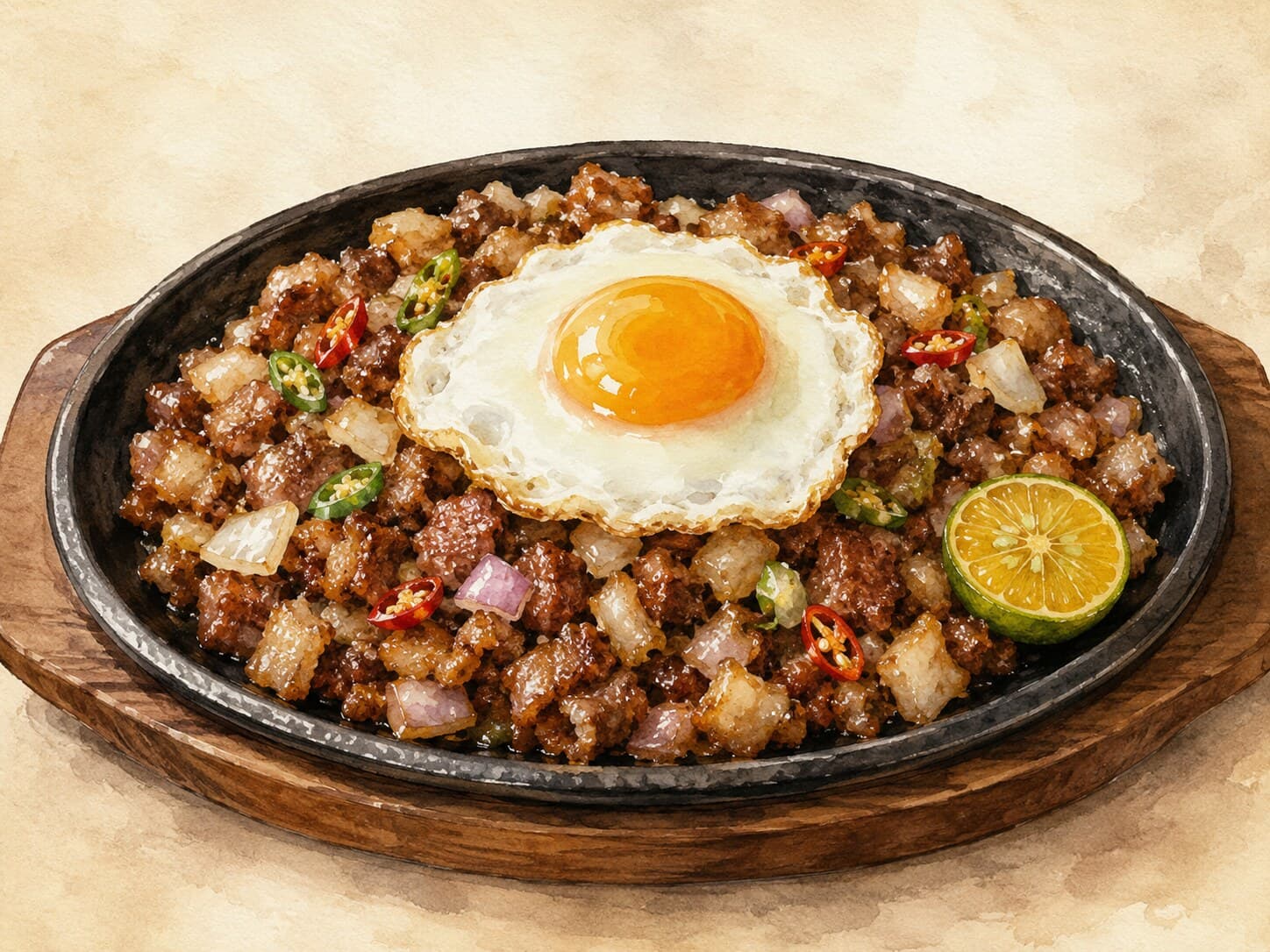
Serve the sisig hot on a sizzling plate; the plate crisps the edges further. For the classic egg on top, use an egg pasteurized in the shell if you want it runny (the plate's residual heat does not reliably cook a raw egg through), or top with a fully cooked egg. Add lime wedges on the side.
Why this works
This recipe leverages a three-stage cooking process to achieve the ideal texture for sisig. First, boiling the pork tenderizes it, allowing for easy chopping. The boiling liquid, infused with soy sauce and vinegar, also imparts flavor. Next, grilling the pork creates a crispy exterior through the Maillard reaction, enhancing the dish's overall taste and texture. Finally, chopping the pork finely promotes a layered chewiness while ensuring that each bite is packed with flavor. If the pork seems too tough after boiling, extend the simmering time by 10-15 minutes. This will ensure it becomes tender enough for chopping. The final sizzling presentation at the table adds visual appeal and allows for the edges to crisp up further, providing that satisfying contrast of textures that is quintessential to a great sisig.
Safety — the egg on top. The pork is fully cooked (boiled, then grilled), so the egg cracked over the sizzling plate is the one hazard. A hot plate's residual heat does not reliably cook a raw egg through, so it is not a safety step. For the traditional runny egg, use an egg pasteurized in the shell (treated through to the contents to control Salmonella) — ordinary freshness is not the same; otherwise top with a fully cooked egg. Pregnant people, infants and young children, older adults, and anyone immunocompromised should use a pasteurized or fully cooked egg.
Common mistakes
Cutting the boil short and ending up with rubbery chew
- Target: pork simmered 45-60 minutes until a fork slips in without resistance.
- Why it matters: the boil is where safety and tenderness are built; the grill afterwards only adds char and crisp, it does not soften tough connective tissue.
- What to do: check the pork with a fork before pulling it from the pot — chewy means more time, not more salt.
Grilling cold from the fridge and never getting a crisp edge
- Target: drained pork at room temperature, surface patted dry before it hits the grill.
- Why it matters: wet, cold pork lowers the grate temperature and steams rather than sears; the Maillard reaction (the browning chemistry between proteins and sugars that builds savoury crust and aroma) needs dry, hot contact.
- What to do: let the boiled pork rest 10 minutes on a rack, blot the surface with paper towels, then grill on a fully preheated grate.
Chopping too coarsely and losing the trademark texture
- Target: roughly 5-7 mm pieces — bigger than mince, smaller than a dice.
- Why it matters: coarse chunks behave like a cutlet, fine mince loses the chew sisig is known for; the in-between piece carries both crisp edges and tender interior.
- What to do: rock a chef's knife over the pile in one direction, then turn 90° and repeat — stop when each piece would balance on a spoon tip.
Adding the calamansi too early, then the acid cooks off
- Target: calamansi (a small, fragrant Filipino citrus — like a tart lime crossed with mandarin) or lime juice mixed in after chopping, just before the sizzling plate.
- Why it matters: acid added on hot pork at the chop stage holds its brightness; whisked in too early on the grill, the volatile aromatics drift off and the bite turns dull.
- What to do: squeeze the citrus directly over the chopped pork, toss, taste once, then load the sizzling plate.
What to look for
- the pork pile reads two-toned at a glance: deep mahogany char edges and paler tender interior
- a sample bite has crisp resistance at the edge and yields easily at the centre, not uniform throughout
- calamansi or lime cuts through the fat on the first bite — your mouth notices the acid before the salt
- the plate sizzles audibly when it arrives at the table, with the chopped pork browning further at the points of contact
A note on history
Modern sisig (a Filipino dish of finely chopped grilled pork served on a sizzling cast-iron plate) as the chopped, sizzling pork dish most cooks recognise was created in 1974 by Lucia Cunanan — "Aling Lucing" — at her restaurant in Angeles City, Pampanga. She built the dish from pig heads that were being discarded by kitchens at the nearby American Clark Air Base: ears and cheeks grilled, chopped, and seasoned with vinegar, calamansi, onion, and chillies. The word sisig itself is older, appearing in Kapampangan with roots in sisigan — "to make sour" — and earlier referred to a sour fruit salad. Cunanan's chopped-pork interpretation took her name to a national fame she still carries as the "Sisig Queen."
Get the essays in your inbox — free
Weekly notes on flavor, fermentation, and food history — the writing behind the Atlas of Flavor. No spam; unsubscribe anytime.