
Kare-Kare (Filipino Peanut Stew)
Kare-Kare is a rich Filipino peanut stew featuring succulent slow-braised oxtail and tripe, perfect for festive gatherings.
Contents (5 sections)▾
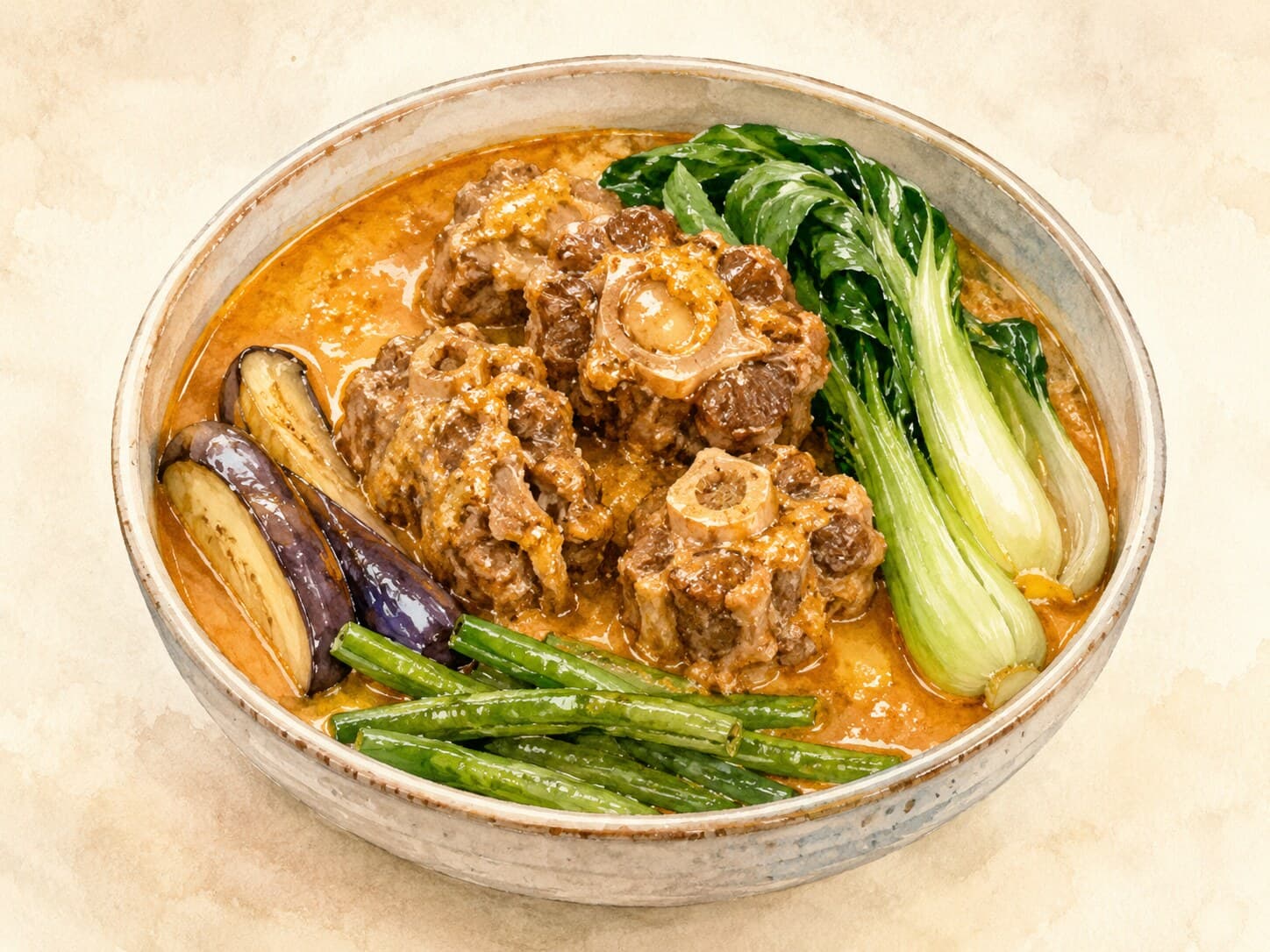
Ingredients
- 1 kg oxtail, cut into pieces
- 500 g tripe, cleaned and cut into strips
- 1 onion, quartered
- 4 cloves garlic, crushed
- 2 liters water
- 1 cup peanut butter
- 1/2 cup ground roasted peanuts
- 2 tbsp fish sauce
- 2 tbsp annatto oil
- 1 large eggplant, sliced
- 200 g long beans, cut into 2-inch pieces
- Salt and pepper to taste
- Shrimp paste (bagoong), for serving
Steps
In a large pot, combine oxtail, tripe, onion, garlic, and water. Bring to a boil over medium heat, then reduce to a simmer. Cover and braise for 2.5 to 3 hours until the meat is tender and gelatinous.
Once tender, remove the meat and strain the broth into a bowl, discarding solids. Return the broth to the pot and add peanut butter, ground peanuts, and fish sauce. Stir well and simmer for 15 minutes until thickened.
In a separate pan, heat annatto oil over medium heat. Sauté eggplant and long beans until just tender, about 5-7 minutes. Season with salt and pepper.
Return the oxtail and tripe to the peanut sauce, mixing gently to coat. Simmer for an additional 5 minutes. Adjust seasoning as needed.
Serve kare-kare hot, with shrimp paste on the side for a salty contrast.
Why this works
Slow-braising the oxtail and tripe (the stomach lining of beef, used as a chewy, gelatin-rich cut in stews) allows the collagen and fat to break down, resulting in a tender texture and rich flavor that is essential for kare-kare. The gelatinous quality of the meat enhances the mouthfeel of the peanut sauce, making it luxurious and satisfying. Thickening the braising liquid with peanut butter and ground peanuts creates a luscious sauce that clings well to the meat and vegetables. If the sauce seems too thick, simply add a bit of the reserved broth to adjust the consistency. Alternatively, if it’s too thin, let it simmer longer to reduce. This careful balance of texture and flavor is what sets kare-kare apart, and serving it with a side of shrimp paste introduces a salty counterpoint.
Common mistakes
Under-braising the oxtail.
Target: 2.5 to 3 hours at a low simmer, until a fork passes through the meat with no resistance and the tendons around the bone have turned translucent and jelly-like. The bones should release easily.
Why it matters: Oxtail is a working muscle wrapped in connective tissue (collagen — the protein that holds muscle fibres together). Below about 70 °C internal temperature for long enough, that collagen hydrolyses into gelatin (the liquid form of collagen that gives stock and stews their silky body). Pull the meat out too early and it's stringy and tough; the broth is also thin, because gelatin is what gives the sauce its clinging, glossy weight. There's no shortcut — high heat just toughens the muscle fibres before the collagen has time to convert.
What to do: Set a bare simmer (small lazy bubbles, not a rolling boil) and walk away. Skim foam in the first 30 minutes, then leave it alone. Test at 2.5 hours by sliding a fork into the thickest piece — if it resists, give it another 30 minutes.
Adding peanut butter to a boiling broth.
Target: Lower the heat to a gentle simmer before whisking in the peanut butter and ground peanuts, then stir constantly while it thickens.
Why it matters: Peanut butter is a peanut oil and peanut solid emulsion (the same kind of oil-in-water structure as mayonnaise, just held together by ground nut tissue instead of egg yolk). Dropped into rapidly boiling liquid, the oil separates and pools on the surface; the dish then tastes greasy rather than thick and nutty. A gentle simmer lets the peanut solids hydrate, the starches in the ground peanuts thicken the broth, and the fat stays integrated.
What to do: Pull the pot off the heat for a minute before stirring the peanut butter into a ladle of warm broth first (this slackens it), then return to a low simmer. Stir continuously for the first few minutes.
Over-cooking the eggplant and long beans.
Target: Cook the vegetables separately until just-tender — eggplant 4–6 minutes, long beans 3–4 minutes — then add to the sauce only at the end.
Why it matters: Long-simmered in peanut sauce, eggplant collapses into mush and long beans turn olive-grey and limp. The contrast between the silky sauce and the vegetable crunch is half the dish; lose it and what's left is a uniform brown stew.
What to do: Sauté in annatto oil (oil infused with annatto seeds — the orange-red colourant traditional to kare-kare) just to tenderise. Fold them into the finished sauce in the last 2–3 minutes, only long enough to warm through.
Skipping the bagoong.
Target: Bagoong alamang (fermented shrimp paste — pink-grey, salty, deeply funky) served on the side, never stirred into the pot. Start with about a teaspoon per portion, more to taste.
Why it matters: Kare-kare's peanut sauce is intentionally mild and slightly sweet — the dish is designed to be completed at the plate with a salty, umami-loaded counterpoint. Without the bagoong, the bowl tastes flat and one-note. Stirring it in instead overwhelms the sauce evenly and removes the diner's control over each bite.
What to do: Serve a small dish of bagoong with every serving. Each diner adds a dab to a forkful, tasting as they go.
What to look for
- Properly braised oxtail: the meat slides off the bone with the lightest fork pressure; the tendons around the bone look glassy and gelatinous. If it resists, more time.
- Peanut sauce, finished: thick enough to coat the back of a spoon and hold a trail when you draw a finger across it; no slick of orange oil pooling on top. Oil pooling means the heat was too high when the peanut butter went in.
- Vegetables just-cooked: eggplant is silky but still holds its shape; long beans are bright green and snap when bent. Olive-grey beans were cooked too long.
- At the plate: the sauce should cling to each piece of meat and vegetable; the bagoong on the side should look pink-grey and slightly oily, not dry or greyed.
A note on history
Kare-kare's exact origins are contested, with multiple plausible threads. The most cited theories trace it to Indian sepoys stationed near Manila in the 18th century who introduced curry-like nut-and-spice sauces; to the Kapampangan people of Pampanga, who claim invention and acknowledge naming it after the Tamil word kari (sauce); and to pre-colonial Malay and Indonesian trade along Southeast Asian routes, where coconut and peanut-thickened stews were already part of regional cooking. The Tagalog tradition of the Pasig River claims its own variation — kari-kari, which evolved phonetically into the current name. What is well-established is that by the 19th century the dish was a fixture of Filipino festive cooking, and that its signature use of oxtail and tripe reflects a deeply Filipino, frugal logic of cooking the whole animal into long, gelatinous comfort (Wikipedia, Tasting Table, Radar).
Get the essays in your inbox — free
Weekly notes on flavor, fermentation, and food history — the writing behind the Atlas of Flavor. No spam; unsubscribe anytime.