
Filipino Chicken Adobo
Experience the rich flavors of Filipino Chicken Adobo, a savory-sour dish that perfectly balances vinegar and soy sauce.
Contents (5 sections)▾
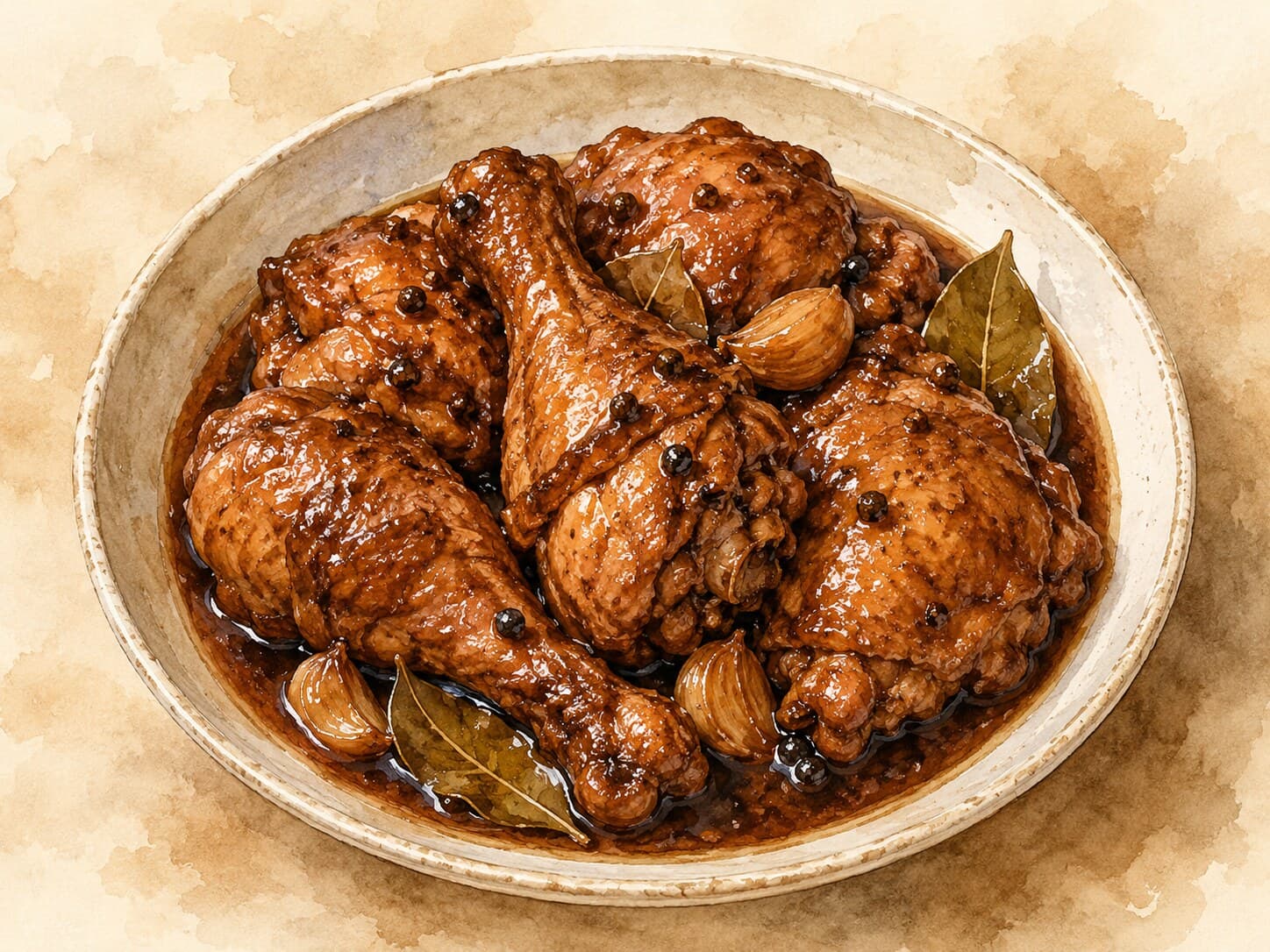
Ingredients
- 1 kg chicken thighs, bone-in and skin-on
- 120 ml soy sauce
- 120 ml white vinegar
- 6 cloves garlic, crushed
- 1 tsp whole black peppercorns
- 2 bay leaves
- 2 tbsp cooking oil
- Salt to taste
- Water as needed
Steps
Heat 2 tablespoons of cooking oil in a large pot over medium heat. Sear the chicken thighs until golden brown on all sides, about 5-7 minutes.
Add the crushed garlic, soy sauce, vinegar, black peppercorns, and bay leaves to the pot. Stir to combine and bring to a gentle simmer.
Cover the pot and let it braise for about 15 minutes, allowing the flavors to meld and the harsh raw-vinegar edge to mellow.
Uncover the pot and let the sauce reduce for another 5-10 minutes or until it thickens into a glossy glaze. If the sauce seems too thin, let it reduce further; if it becomes too thick, add a splash of water to loosen.
Taste and adjust seasoning with salt if necessary. Serve the adobo over steamed rice, garnished with additional peppercorns and bay leaves.
Why this works
The essence of Chicken Adobo lies in its balanced use of vinegar and soy sauce, which flavors the chicken and acts as a preservative. The braising technique (browning the meat, then cooking it slowly in a small amount of liquid in a covered pot) is crucial; it ensures that the chicken absorbs the savory and tangy notes while retaining moisture. Starting with a sear (cooking the surface in hot oil until it turns deep golden-brown) builds deep, roasted flavor through the Maillard reaction (the browning that happens when food gets hot and dry, building deep savory, roasted flavor), creating a rich base. Allowing the vinegar to simmer reduces its sharpness, transforming it into a mellow, savory glaze. If the sauce seems too acidic, adding a little sugar can help balance the flavors. Conversely, if it breaks or separates during cooking, gently stir in a bit of water and continue to simmer until it comes together again. This adaptability in technique is what makes adobo a staple in Filipino cuisine, showcasing how simple ingredients can create profound flavors.
Common mistakes
Stirring the vinegar while it is still raw.
Target: Add the vinegar, then let it come to a simmer and cook undisturbed for the first few minutes before stirring.
Why it matters: Stirring raw vinegar through the pot early drives off the sharp acetic vapor (the stinging vinegar fumes) unevenly and can leave a harsh, one-note sourness that never rounds out. Letting it simmer first lets the acid mellow into the savory base.
What to do: Pour in the vinegar, bring to a gentle simmer, and leave it alone for two to three minutes. Then stir and continue braising.
Reducing the sauce too far.
Target: A glossy glaze that still coats a spoon and pools slightly around the chicken — not a dry pan.
Why it matters: Soy and vinegar both concentrate as the liquid evaporates. Take the reduction (the process of simmering a sauce down so water boils off and the flavor concentrates) too far and the glaze turns sharply salty and acidic, and the surface can scorch into bitterness.
What to do: Reduce over medium, not high, and stop while the sauce still flows. If it has gone too tight or too salty, loosen with a splash of water and pull it off the heat.
Skipping the sear.
Target: Golden-brown color on all sides of the thighs before the braising liquid goes in.
Why it matters: The sear builds the Maillard-browned base that gives adobo its depth; chicken simmered straight in soy and vinegar tastes flat and pale by comparison.
What to do: Get the oil properly hot, lay the thighs skin-side down, and leave them until they release cleanly and have color before turning.
Under-braising the chicken.
Target: Bone-in thighs that are fully tender and pull easily from the bone.
Why it matters: Thighs are forgiving, but cut the simmer short and the connective tissue (the tough bands inside meat that only soften with long, slow cooking) stays tight and chewy. A glaze that has reduced before the meat is tender means the heat was too high.
What to do: Keep the braise at a gentle simmer, covered, and check tenderness with a fork before uncovering to reduce. Add a little water if the liquid drops before the chicken is done.
What to look for
- Vinegar after a few minutes' simmer: the sharp, nose-stinging raw smell softens into a rounder, savory-sour aroma.
- The braise: a steady, gentle simmer with small bubbles — not a hard, splattering boil.
- The chicken: the meat pulls back from the bone ends and a fork slides in with no resistance.
- The finished sauce: dark, glossy, and just thick enough to cling to the chicken and leave a coating on the back of a spoon.
A note on history
The word adobo is Spanish — from adobar, "to marinate" or "to season" — but the dish is older than that name. Spanish colonizers, encountering an indigenous Filipino method of cooking and preserving meat in vinegar and salt, recorded it under their own familiar word; the friar Pedro de San Buenaventura noted the term in the early 1600s. The vinegar-and-salt technique itself predates contact and arose as a practical way to keep meat in a hot, humid climate, which is why acid sits at the heart of the dish.
Get the essays in your inbox — free
Weekly notes on flavor, fermentation, and food history — the writing behind the Atlas of Flavor. No spam; unsubscribe anytime.