
Sinigang (Filipino Sour Soup)
Experience the comforting sourness of Sinigang, a traditional Filipino soup that highlights the balance of flavors in a clear broth.
Contents (5 sections)▾
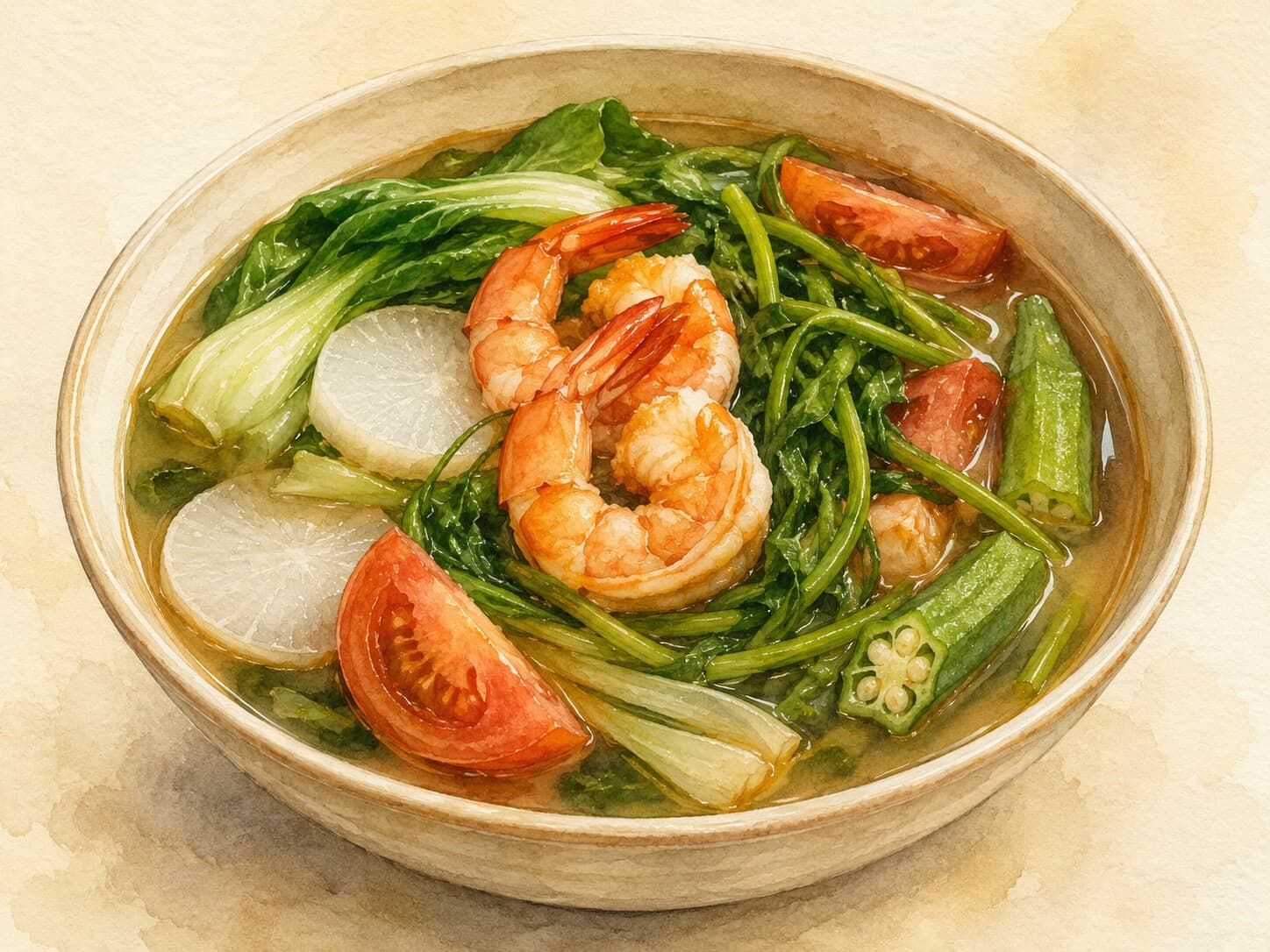
Ingredients
- 500 g pork belly, cut into cubes
- 1 liter water
- 100 g tamarind paste (or 200 g fresh tamarind pods)
- 2 medium radishes, sliced
- 100 g long green beans, trimmed
- 100 g water spinach (kangkong), chopped
- 1 medium onion, quartered
- 2 medium tomatoes, quartered
- 2 tbsp fish sauce
- Salt to taste
- Pepper to taste
Steps
In a large pot, combine the pork belly, water, onion, and tomatoes. Bring to a boil over medium heat for 10 minutes to develop the broth.
Lower the heat and simmer for 25 minutes, skimming off any foam that rises to the surface for a clearer broth.
Add the tamarind paste, stirring until fully dissolved. If using fresh tamarind, boil it with the broth for 10 minutes before straining.
Season with fish sauce, salt, and pepper to taste. Adjust sourness as needed.
Add the radishes and cook for 5 minutes, followed by the long beans for another 3 minutes.
Finally, add the water spinach and cook for 2 minutes before removing from heat.
Why this works
Sinigang's essence lies in the balance of its clear broth and the sharpness of its souring agent, typically tamarind. Building a clear broth from pork or shrimp forms the foundation of flavor, while the tamarind introduces the necessary acidity that defines this soup. The key to preserving the vegetables' texture is to add them in stages based on their cooking times. For instance, radishes require a longer cooking time than delicate water spinach. If your broth appears cloudy, ensure to skim off froth while simmering, as it helps achieve that pristine clarity. If the soup seems too sour, you can counterbalance this by adding a bit of sugar or additional water to mellow the flavors. This technique enhances the dish and teaches the importance of layering flavors and timing in achieving a harmonious final product.
Common mistakes
Pulling the pork from the pot before it is fork-tender
- Target: pork belly simmered until a fork slips in and out without resistance — roughly 40-50 minutes of gentle cooking before the souring step.
- Why it matters: sinigang's clear broth gives nowhere to hide a tough piece of pork. Underdone belly stays chewy and the broth tastes thin from a short cook.
- What to do: simmer the pork well before the tamarind goes in; the pot should look quiet and the meat should yield easily by the time you taste for sourness.
Not skimming the scum, then chasing clarity later
- Target: clear, almost translucent broth — skim every minute or two during the first ten minutes of boil.
- Why it matters: the grey foam is coagulated protein; left in the pot, it clouds the broth and dulls the sour-savoury contrast that defines sinigang.
- What to do: keep a small bowl and a slotted spoon at the stove. Lift the scum as it forms, before it sinks back into the soup.
Dumping every vegetable in at once and ending up with mush
- Target: radish 5 minutes, long beans 3 minutes, water spinach 1-2 minutes — added in that order.
- Why it matters: the vegetables cook at very different rates. Together they either undercook the radish or melt the kangkong.
- What to do: stage them by hardness — radish first, then beans, then leafy greens at the end so they go limp but stay bright.
Adding the tamarind too early, then losing the bright fresh sourness
- Target: souring agent (tamarind — a tangy tropical pod pulp used to give sinigang its signature sour note) dissolved in late, after the broth has built its savoury base.
- Why it matters: boiled long, tamarind acid mellows and turns flat. Late acid keeps the sharpness lively and lets you taste and adjust to your liking.
- What to do: taste before the leafy greens go in; add tamarind paste a spoonful at a time, dissolving each before checking again.
What to look for
- the broth reads clear amber-brown — you can see the slice of radish at the bottom of the bowl through it
- pork belly cubes hold their shape but a spoon presses through them easily
- the radish slice is translucent at the edge, still firm in the middle
- kangkong stems lean tender but the leaves still hold a vivid green and have not collapsed into the broth
A note on history
Sinigang (a Filipino sour broth-soup of meat or seafood and vegetables) predates the Spanish arrival in the Philippines; food historians treat it less as a fixed recipe and more as a culinary principle — protein and vegetables cooked in a sharply sour broth. The islands have always had local souring agents: tamarind, unripe mango, calamansi, guava, kamias. In the tropical climate before refrigeration, that acid carried both flavour and a measure of preservation. Tamarind eventually became the dominant souring agent that most home cooks recognise today, but the older tradition of cooking with whatever sour fruit is in season still runs through regional versions across the country.
Get the essays in your inbox — free
Weekly notes on flavor, fermentation, and food history — the writing behind the Atlas of Flavor. No spam; unsubscribe anytime.