
Sauerbraten (German Sour Pot Roast)
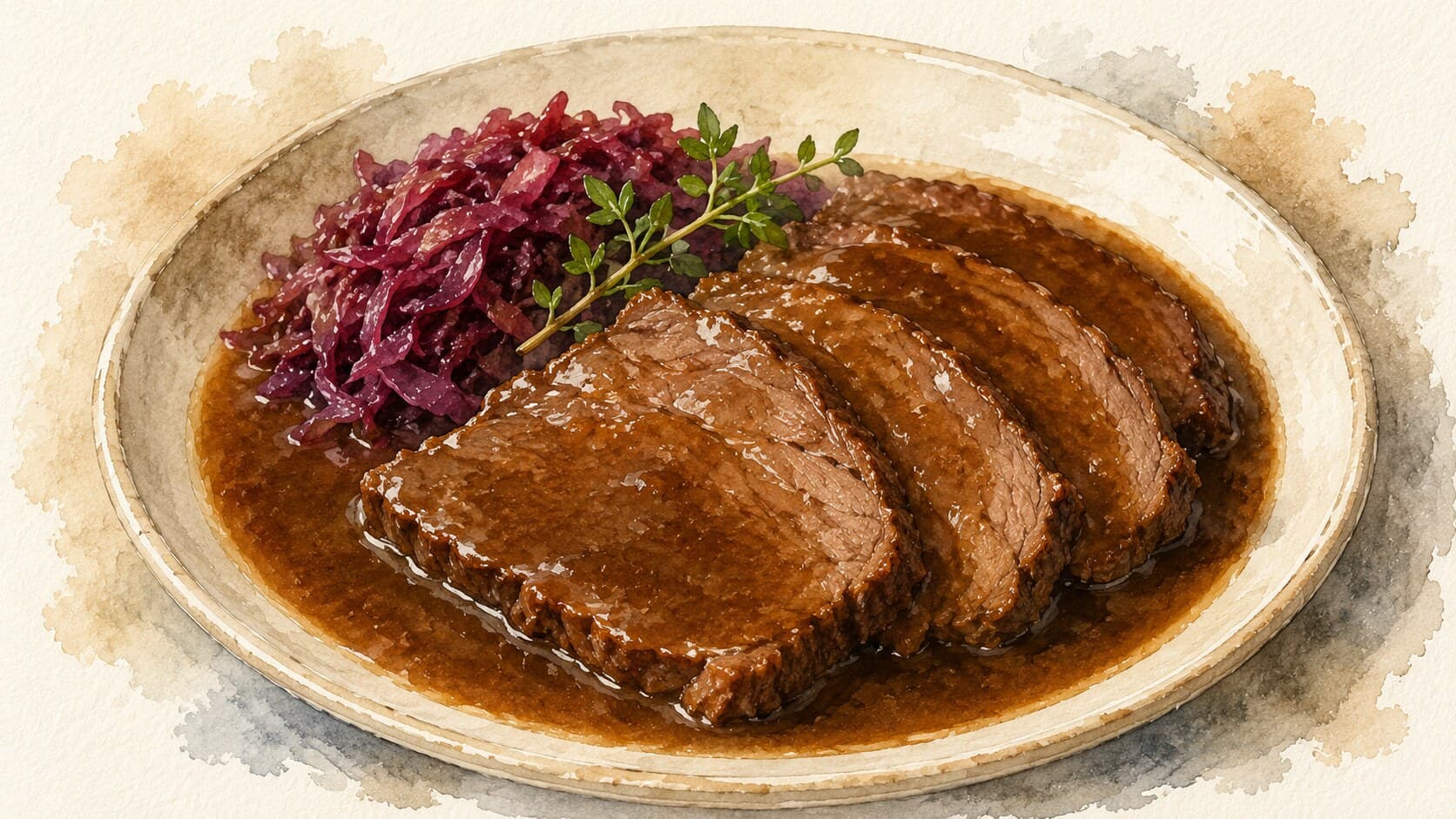
Sauerbraten, a quintessential German pot roast, requires days of marination for a rich, tangy flavor that transforms into a delightful gravy.
Contents (5 sections)▾
Ingredients
- 1.5 kg beef rump
- 500 ml red wine
- 250 ml red wine vinegar
- 2 medium onions, sliced
- 2 cloves garlic, crushed
- 2 bay leaves
- 5 whole cloves
- 1 tsp black peppercorns
- 1 tsp mustard seeds
- 1 tbsp sugar
- Salt to taste
- 2 tbsp vegetable oil
- 500 ml beef broth
- 2 tbsp cornstarch (optional for thickening)
Steps
In a large bowl, combine red wine, red wine vinegar, sliced onions, garlic, bay leaves, cloves, peppercorns, mustard seeds, sugar, and salt to create a marinade. Add the beef and ensure it is fully submerged. Cover and refrigerate for 5 to 7 days, turning the beef daily.
After marination, remove the beef and pat it dry. Reserve the marinade. Heat vegetable oil in a large Dutch oven over medium-high heat. Sear the beef on all sides until browned, about 10 minutes total.
Pour the reserved marinade and beef broth into the pot. Bring to a simmer, then cover and reduce the heat to low. Braise for about 3 hours, or until the beef is fork-tender.
Remove the beef from the pot and let it rest. Strain the cooking liquid, discarding solids. Return the liquid to the pot and simmer until reduced. If desired, mix cornstarch with a bit of cold water and stir into the sauce to thicken.
Slice the beef and serve with the thickened gravy.
Why this works
Sauerbraten's distinctive flavor comes from the extended marination in a spiced wine-vinegar brine. This process breaks down the tough fibers in the beef, making it tender while infusing it with tangy and aromatic notes. The acidity from the vinegar tenderizes and contributes to the dish’s signature sweet-sour taste. It's essential to keep the beef submerged in the marinade to evenly distribute flavors. If the marinade seems too acidic after several days, balancing it with a bit of sugar can mitigate the sharpness. Additionally, if the beef isn't as tender as desired after braising, slicing it thinly and simmering it longer in the gravy can help achieve the tender texture typical of Sauerbraten.
Common mistakes
Pulling the roast before it's fork-tender
- Target: beef that yields with no resistance when a fork is twisted into the center, with the fibers separating cleanly.
- Why it matters: the marinade flavors the surface and softens the outermost layer, but the deep connective tissue still has to break down in the braise — under-cooked, the meat slices into chewy, dry boards.
- What to do: braise covered at a bare simmer for at least 3 hours, then check by twisting a fork into the thickest part; if there's resistance, give it another 30 minutes and check again — never rush the finish.
Skimpy or uneven marinade contact
- Target: the roast fully submerged in the marinade, turned every day for 5-7 days in the refrigerator.
- Why it matters: any part of the surface that sits above the liquid does not pick up the acid and aromatics, so the cooked roast will taste sharp on one side and mild on the other.
- What to do: use a vessel just big enough to hold the meat snugly, weight it down with a small plate if needed, and rotate every day so each face spends time at the bottom.
Boiling the braise instead of simmering
- Target: a slow, lazy bubble breaking the surface every few seconds — not a rolling boil.
- Why it matters: hard boiling toughens the muscle fibers and squeezes water out faster than the collagen (the tough connective tissue in meat that slowly melts into gelatin during a long braise) can dissolve, leaving the meat stringy.
- What to do: bring everything up gently and then drop the heat as low as it will go with the lid on, or move the pot to a 150°C / 300°F oven and let it work without supervision.
Acidic, harsh sauce at the finish
- Target: a sauce where sweet and sour sit in balance, with spice and aromatics audible underneath.
- Why it matters: the strained marinade is concentrated and very acidic; without correction it overwhelms the meat instead of glazing it.
- What to do: reduce the strained liquid until it coats a spoon, then taste and round it out with sugar (or, in the Rhineland style, with a few raisins and a piece of lebkuchen) and a small spoon of butter until the edge softens.
What to look for
- Deep mahogany color on the seared exterior of the roast before it goes into the braise.
- Liquid that barely trembles at the surface during cooking — small bubbles, never a hard boil.
- A fork that twists cleanly into the center of the roast at the end, with the fibers fanning apart.
- A glossy, slightly thick gravy that ribbons off the spoon, the color of dark caramel.
A note on history
Sauerbraten — literally "sour roast" — is a German pot roast (a tough cut of beef braised low and slow in a covered pot until fork-tender) built on the old practice of preserving and tenderizing tough cuts of meat in vinegar or sour wine. Several regional traditions exist: the Rhineland version is especially known for a sweet finish from raisins and lebkuchen (a Nuremberg gingerbread), while Franconian and other northern versions lean drier and more savory. The dish is widely considered a German national classic and has long traveled with German immigrant communities abroad.
Get the essays in your inbox — free
Weekly notes on flavor, fermentation, and food history — the writing behind the Atlas of Flavor. No spam; unsubscribe anytime.