
German Potato Salad
A tangy and savory German Potato Salad featuring vinegar dressing and crispy bacon.
Contents (5 sections)▾
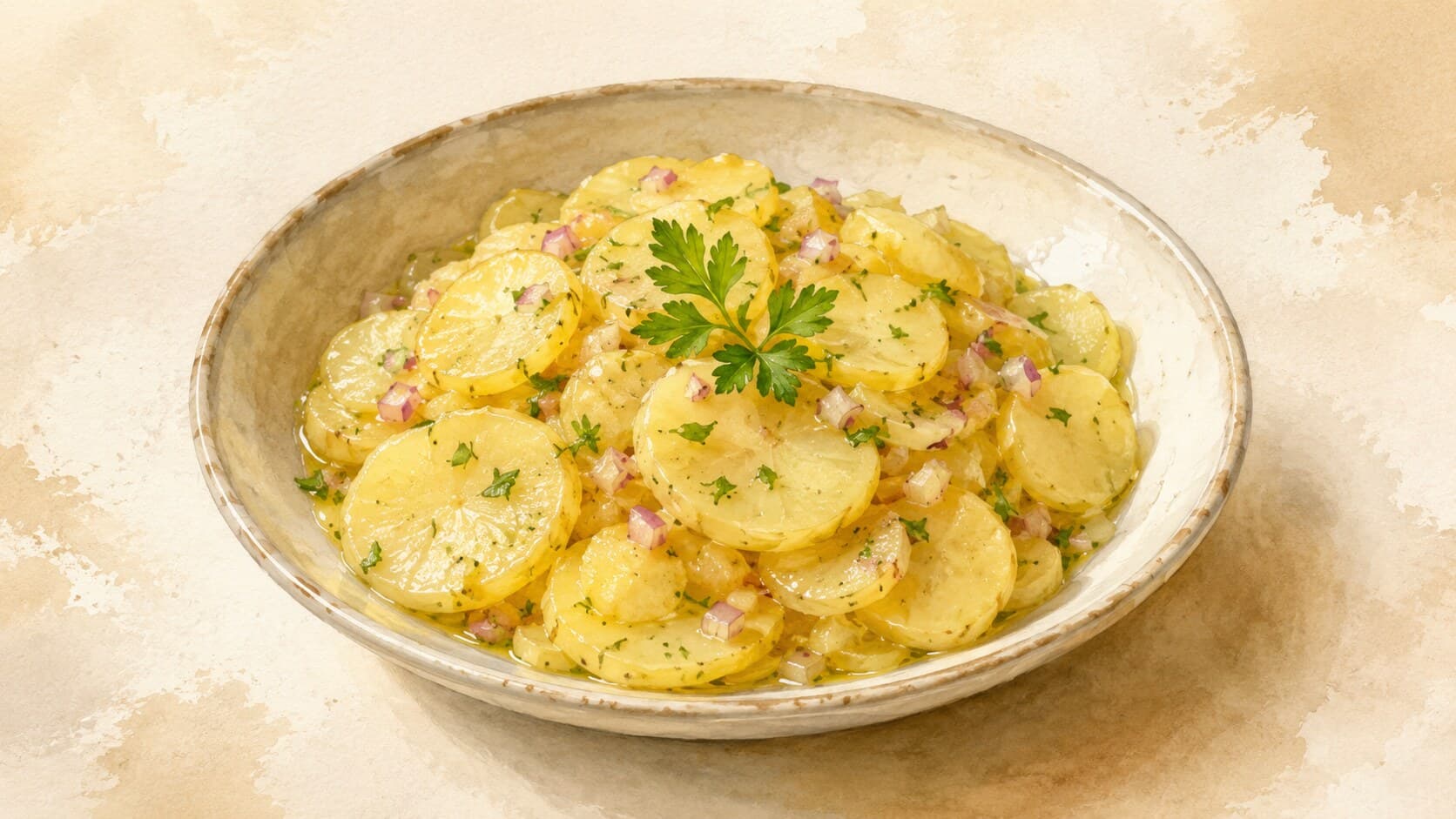
Ingredients
- 1 kg waxy potatoes
- 200 ml apple cider vinegar
- 100 ml vegetable broth
- 150 g bacon, diced
- 1 medium red onion, finely chopped
- 1 tsp mustard
- 1 tsp sugar
- Salt to taste
- Pepper to taste
- Fresh parsley, chopped for garnish
Steps
Start by boiling the waxy potatoes in salted water for about 15 minutes or until just tender. This helps to maintain their shape.
While the potatoes are boiling, heat a skillet over medium heat and cook the diced bacon until crispy, about 5-7 minutes.
Remove the bacon and set aside, leaving the rendered fat in the skillet. Add the chopped red onion to the skillet and sauté until softened, about 3 minutes.
Once the potatoes are done, drain and let them cool slightly before slicing them into thick rounds. This helps to preserve their texture.
In the skillet with the onions, add the apple cider vinegar, vegetable broth, mustard, sugar, salt, and pepper, stirring to combine. Bring to a simmer for about 2 minutes.
Add the sliced potatoes to the skillet and gently toss to coat them in the dressing, allowing them to absorb the flavors for about 5 minutes on low heat.
Finally, sprinkle the crispy bacon and chopped parsley over the top before serving warm.
Why this works
German Potato Salad is distinct from its mayonnaise-based counterparts as it relies on a tangy vinegar dressing that complements the potatoes without overpowering them. The use of waxy potatoes is crucial; they hold their shape better than starchy varieties, preventing a mushy texture. Cooking the potatoes just until tender is important, as overcooking can lead to a disintegration of the salad. The bacon adds a savory crunch that enhances the dish's appeal. If the dressing seems too acidic, balance it with a pinch of sugar or more broth. This salad is best served warm, as the heat helps the potatoes absorb the dressing more effectively, creating a harmonious blend of flavors. Remember, when tossing the potatoes, do so gently to maintain their integrity and avoid breaking them apart. Enjoying this salad fresh ensures you experience the full flavor of each ingredient together, making it a perfect side dish for any hearty meal.
Common mistakes
Choosing the wrong potato variety.
Target: Waxy potatoes — Yukon Gold, fingerling, red-skinned, Charlotte, or German Sieglinde. Not russets, not Maris Piper, not other floury bakers.
Why it matters: Starchy varieties have a high amylose content (the starch fraction that gelatinizes and softens dramatically with heat). Toss them in warm vinegar and they collapse into mash. Waxy potatoes are higher in amylopectin and pectin, so they hold their slices when warm and absorb the dressing without breaking.
What to do: When in doubt, choose potatoes whose skin feels firm and thin and whose flesh looks yellow rather than chalky white. If a bag says "good for boiling" or "salad potato," that is your target.
Boiling the potatoes whole, in unsalted water, then slicing them cold.
Target: Boil whole in well-salted water until a knife slides in with mild resistance, slice while still warm enough to absorb the dressing.
Why it matters: Cold sliced potatoes have already set their starch — the vinegar dressing slides off the surface instead of soaking in. A warm potato slice acts almost like a sponge: the surface starch is still soft and the cell walls still slightly open, so the broth-and-vinegar emulsion penetrates rather than sitting on top.
What to do: Salt your boiling water as you would for pasta. Pull the potatoes when just tender — overcooking erases the shape you carefully chose a waxy potato for. Let them cool only enough to handle, then slice and dress immediately.
Under-cooking the bacon (food-safety failure).
Target: Bacon rendered (cooked slowly so its fat melts out clear) until evenly browned and crisp, with no soft pink or translucent fat remaining.
Why it matters: Pork bacon must reach an internal temperature high enough to be safe; soft, pale bacon may still carry the kind of pathogens that pork cooking is designed to address, and it also fails culinarily — limp bacon adds no textural contrast and the fat tastes greasy rather than savory. The crisp, rendered fat is also what carries the dressing's flavor.
What to do: Cook the diced bacon over medium heat (not high) so the fat renders gradually. Stir often. Look for an even mahogany color across the dice and audibly crisp pieces — not just browned edges. Reserve the rendered fat in the skillet; it is the dressing's backbone.
Adding all the vinegar cold, after the dressing is off the heat.
Target: Simmer vinegar, broth, mustard, sugar, salt, and pepper together for about two minutes before adding the potatoes.
Why it matters: A brief simmer mellows the harsh top notes of vinegar (volatile acetic acid evaporates), dissolves the sugar fully, and emulsifies the mustard with the bacon fat into a glossy, lightly thickened dressing. Cold raw vinegar tastes sharp and one-dimensional; simmered, it becomes round and savory.
What to do: Combine the liquids in the warm skillet with the onions, bring to a gentle simmer, taste, and only then add the potatoes. Adjust salt and sugar against the simmered dressing, not the raw one.
What to look for
- The potato when you slice it: firm enough to hold the knife shape, with a faint glossy yield, not crumbling. This tells you the starch has set but not over-cooked.
- The bacon in the skillet: deep mahogany dice with audibly crisp edges and clear, golden rendered fat. Limp pink pieces or smoking fat both mean re-do.
- The dressing before the potatoes go in: glossy, lightly thickened, slightly cloudy from the mustard, smelling sweet-sharp rather than harsh. This is the moment to taste and balance.
- The finished salad after resting five minutes: warm potatoes evenly coated, almost no free liquid in the bowl, parsley still bright green. If a puddle of dressing has separated out, the potatoes were too cold to absorb it.
A note on history
What English-speakers call "German potato salad" is really a family of regional dishes that took shape after the potato became a staple in southern Germany during the 18th century (Food From Germany, FIVEheartHOME — Swabian Kartoffelsalat). The warm vinegar-and-broth style is most strongly associated with Swabia (Schwäbischer Kartoffelsalat) and Bavaria, where it is traditionally built from sliced waxy potatoes, hot beef or vegetable broth, mustard, onion, and vinegar; mayonnaise-based versions belong mainly to northern Germany (The Daring Gourmet). The bacon-and-vinegar version popularised abroad — and the one this recipe follows — sits closer to the Bavarian end of that spectrum.
Get the essays in your inbox — free
Weekly notes on flavor, fermentation, and food history — the writing behind the Atlas of Flavor. No spam; unsubscribe anytime.