
Sambar (South Indian Lentil Stew)
Sambar is a flavorful South Indian lentil stew enriched with vegetables and a fragrant tempering of spices.
Contents (5 sections)▾
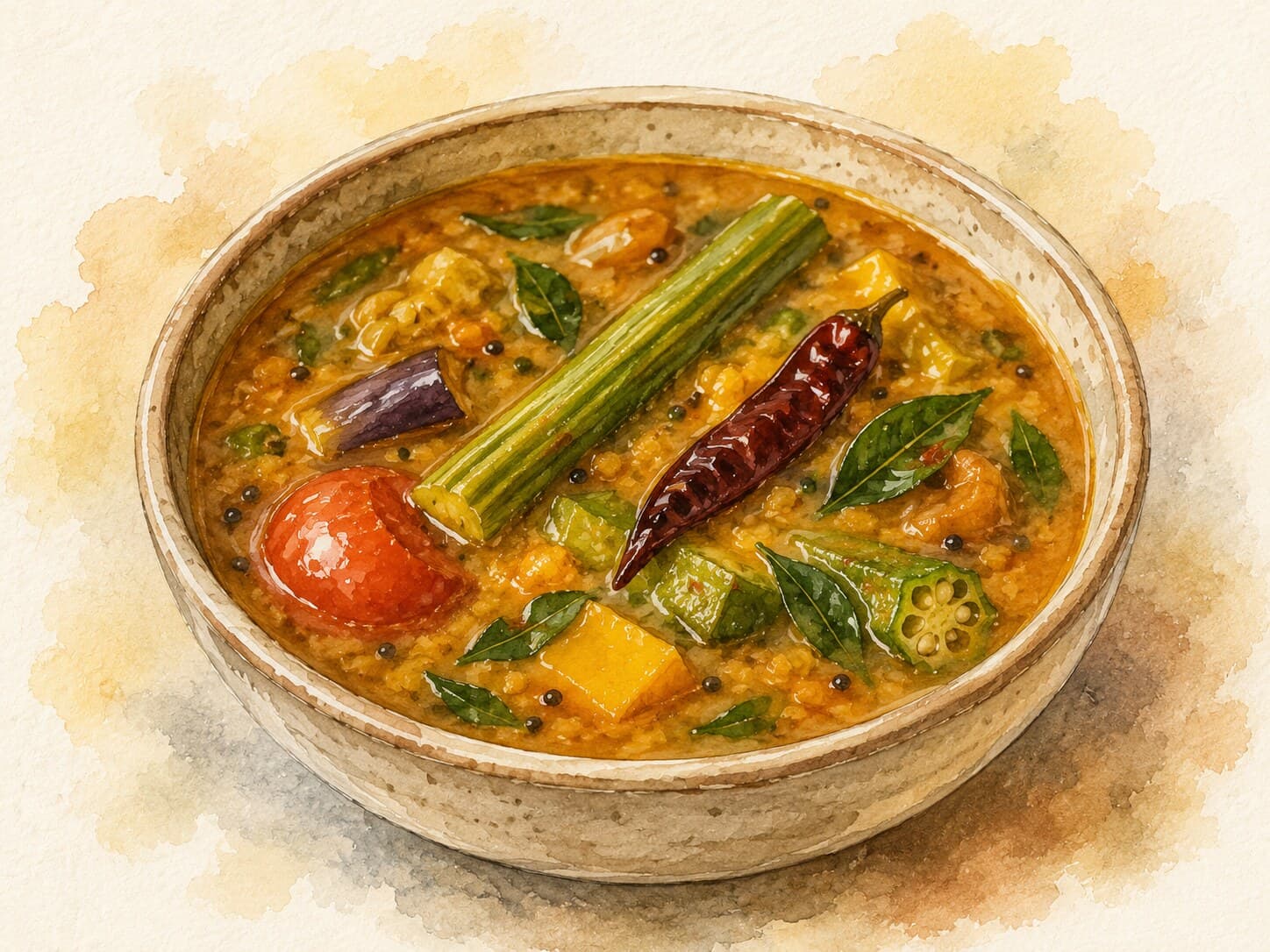
Ingredients
- 200 g toor dal (split pigeon peas)
- 1 medium onion, chopped
- 1 medium tomato, chopped
- 1 carrot, diced
- 1 potato, diced
- 1 green chili, slit
- 1 sprig curry leaves
- 1 tbsp tamarind paste
- 1 tsp turmeric powder
- 1 tsp mustard seeds
- 1 tsp cumin seeds
- 2 tbsp ghee
- Salt to taste
- Water as needed
Steps
Rinse the toor dal thoroughly under cold water, then soak it for 15 minutes.
In a pot, combine the soaked dal with 4 cups of water, turmeric powder, and salt. Bring to a boil over medium heat, then reduce to a simmer for 10-15 minutes until the dal is soft.
Add the chopped onion, tomato, carrot, potato, green chili, and curry leaves to the pot. Simmer for an additional 10 minutes until the vegetables are tender.
In a separate small pan, heat ghee over medium-high heat. Add mustard seeds and cumin seeds, allowing them to splutter and bloom their flavors. This process enhances the aroma and taste of the spices.
Once the spices are fragrant, remove the pan from heat and stir in the tamarind paste. Quickly pour this tempering over the simmering stew.
Mix well and adjust salt to taste. Let the sambar sit for 5 minutes before serving to allow flavors to meld.
Why this works
Sambar is a quintessential South Indian dish, and its success lies in the perfect balance of flavors and textures. The toor dal provides a creamy base that becomes even richer when simmered with vegetables. The inclusion of tamarind offers a tangy contrast that brightens the stew. The final touch, known as tadka or tempering, involves heating ghee and blooming spices like mustard and cumin. This step is crucial because it releases the essential oils and flavors locked within the spices. If the spices seem too strong, add a bit more water to the sambar to mellow them out. Additionally, ensuring the lentils are cooked to a soft consistency is key; if they seem too firm, continue simmering them in water until they soften to your liking, enhancing the overall texture of the stew.
Common mistakes
Undercooked dal
- Target: toor dal (yellow split pigeon peas, the lentil that gives sambar its body) that breaks down into a creamy, soft purée when pressed between fingers, not whole beads that still resist.
- Why it matters: firm dal leaves a chalky mouthfeel and never thickens the broth, so the sambar tastes like a thin spiced soup with beans bobbing in it.
- What to do: simmer the dal until it's truly soft — typically 25-40 minutes in a covered pot, or longer if your dal is old; mash a spoonful against the side of the pot to confirm it crushes easily.
Burnt mustard or cumin in the tadka
- Target: spices that crackle and turn a shade darker, releasing aroma in 15-30 seconds — not blackened.
- Why it matters: scorched mustard turns bitter and brown cumin turns acrid; both flavors then dominate every spoonful of the sambar.
- What to do: have everything pre-measured next to the pan, heat the ghee until shimmering then add mustard seeds first, wait for them to pop, then add cumin and pull off the heat the moment the aroma rises.
Adding tamarind too early
- Target: tamarind (a sour-sweet pulp from a tropical pod, sold as paste or concentrate, that gives sambar its signature tang) stirred in toward the end, after the dal and vegetables are tender.
- Why it matters: acidic tamarind firms up unripe vegetables and slows the dal from breaking down, leaving the stew gritty and the lentils underdone.
- What to do: cook the dal and vegetables in plain seasoned water first; once everything is soft, add the tamarind paste and let it simmer just long enough to integrate, then finish with the tadka.
Under-salted, flat finish
- Target: salt level high enough that you can taste the tamarind tang clearly against the dal sweetness.
- Why it matters: lentil stews soak up salt as they sit; what tastes balanced at the stove can taste muted on the plate.
- What to do: salt the dal as it simmers, then taste once more after the tamarind and tadka are in — adjust with small pinches until the sour, savory, and aromatic notes all sit forward.
What to look for
- A creamy, slightly thickened broth that coats the back of a spoon — not a thin watery soup.
- A sharp crackle and a wave of toasted-spice aroma the second the tadka (the final flourish of spices bloomed in hot ghee and poured over the stew) hits the surface of the stew.
- Vegetables yielding to a spoon edge but still holding their shape, with no chalky raw centers.
- A finishing aroma where curry leaves and cumin sit on top of a faintly sour tamarind base.
A note on history
Sambar is now a defining dish of South Indian cuisine, but a widely recounted origin story places its invention in the 17th-century Maratha court at Thanjavur (Tamil Nadu). According to that account, when the regional kokum used in a Maharashtrian amti dal ran short, cooks substituted tamarind, producing the lentil-and-tamarind stew that came to be named after a visiting royal guest. The story is popularly recounted rather than firmly documented, and many regional variations — Tamil, Karnataka, Kerala — have evolved their own spice blends and vegetable choices.
Get the essays in your inbox — free
Weekly notes on flavor, fermentation, and food history — the writing behind the Atlas of Flavor. No spam; unsubscribe anytime.