
Rasam (South Indian Pepper Soup)
A comforting South Indian pepper soup made with a fragrant tamarind-tomato broth.
Contents (5 sections)▾
Ingredients
- 2 tbsp tamarind paste
- 2 medium tomatoes, chopped
- 4 cups water
- 1 tsp black pepper, crushed
- 1 tsp cumin seeds
- 4 cloves garlic, minced
- 2 tbsp oil
- 1/2 tsp mustard seeds
- 1 sprig curry leaves
- Salt to taste
- Fresh coriander leaves for garnish
Steps
In a pot, combine tamarind paste, chopped tomatoes, and water. Bring to a gentle simmer over medium heat.
Add crushed black pepper, cumin seeds, minced garlic, and salt to the pot. Simmer for 10-12 minutes, allowing the flavors to meld without boiling.
In a small pan, heat oil over medium heat. Add mustard seeds and wait until they splutter.
Once the seeds splutter, add curry leaves and sauté for 30 seconds. Pour this tadka over the simmering broth.
Stir gently and remove from heat. Serve hot, garnished with fresh coriander leaves.
Why this works
The technique of simmering is crucial for rasam, as it allows the flavors of tamarind (the sticky-sour pulp of a tropical pod, used here as the broth's acid), tomato, and spices to develop without reaching a rolling boil, which can diminish their potency. The crushed black pepper and cumin seeds release their essential oils during simmering, creating a fragrant and complex broth. This method ensures that the soup remains thin and refreshing, akin to a warm hug on a cold day. If the broth appears too thick, simply add more water to achieve the desired consistency without compromising flavor. Additionally, the tadka (tempering — briefly blooming whole spices in hot fat, then pouring the whole thing over the dish) at the end enhances the aromatic profile, bringing a nutty depth to the dish that complements the tangy base. The careful balance of spices and the non-boiling technique make rasam a staple in South Indian cuisine, celebrated for its comforting qualities. Curry leaves (small fragrant leaves from the curry tree, used like a south-Indian bay leaf) are the other signature note in the finishing tadka.
Common mistakes
Boiling the broth hard and driving off the aromatics. Target: the surface holds at a soft tremble — small individual bubbles slowly breaking, not a vigorous churn. Hold around 90–95°C / 195–205°F, not a full roll. Why it matters: rasam's character lives in the volatile aromatic compounds of crushed black pepper, cumin, garlic and curry leaf — molecules that evaporate at and above boiling. A hard boil scorches the tamarind acid and drives off the lifting fragrance in minutes. Even if the rasam is otherwise correctly seasoned, it tastes flat and tinned after a vigorous boil. What to do: bring the pot to the very edge of a boil, then immediately reduce. If you see white foam churning, take the pot off the burner for 30 seconds.
Adding too much tamarind, or adding it raw without dissolving. Target: tamarind extracted as a smooth, lump-free liquid (about 1 cup of warm water per 1 tablespoon of paste, stirred and strained through a sieve). Salt and tomato balance the sourness. Why it matters: tamarind is intensely sour (its acid is mostly tartaric and citric — the same acids in grapes and lemons). Lumps of undissolved paste create pockets of harsh sourness, and over-dosed tamarind shouts over the spice tadka. Rasam should taste lifted, not puckering. What to do: dissolve tamarind in warm water first. Strain. Taste the liquid: it should be pleasantly sour, like a strong lemonade. Add gradually rather than dumping in at once.
Tempering the spices in cool ghee, or burning the curry leaves. Target: ghee or oil in a separate small pan reaches the point where mustard seeds pop within seconds; curry leaves turn glossy and crisp within 10 seconds, but do not blacken. Why it matters: tadka (tempering — a quick hot-fat spice bloom poured in at the end) is rasam's signature finishing flourish. Cool ghee draws out spice essence too slowly and tastes oily; too-hot ghee blackens curry leaves and turns the whole pot bitter. The ideal sits in a narrow window around 175–185°C / 345–365°F. What to do: heat the ghee until a single mustard seed dropped in pops within 2–3 seconds. Add the rest, wait for the popping, then add curry leaves and immediately pour over the rasam. The pour itself releases a wave of fragrance.
Serving lukewarm or under-cooked. Target: rasam served piping hot, with the broth and any added ingredients (lentils, vegetables) fully cooked through. Why it matters: rasam is traditionally drunk hot as a cold-weather and unwell-body comfort. Lukewarm rasam loses the aromatic lift entirely — the volatiles only release in hot steam. And any toor dal or vegetables added must be cooked thoroughly for food safety. What to do: taste-check temperature before serving. Reheat gently if it has cooled, but don't boil again. If serving with rice, ladle the hot rasam over the rice at the table.
What to look for
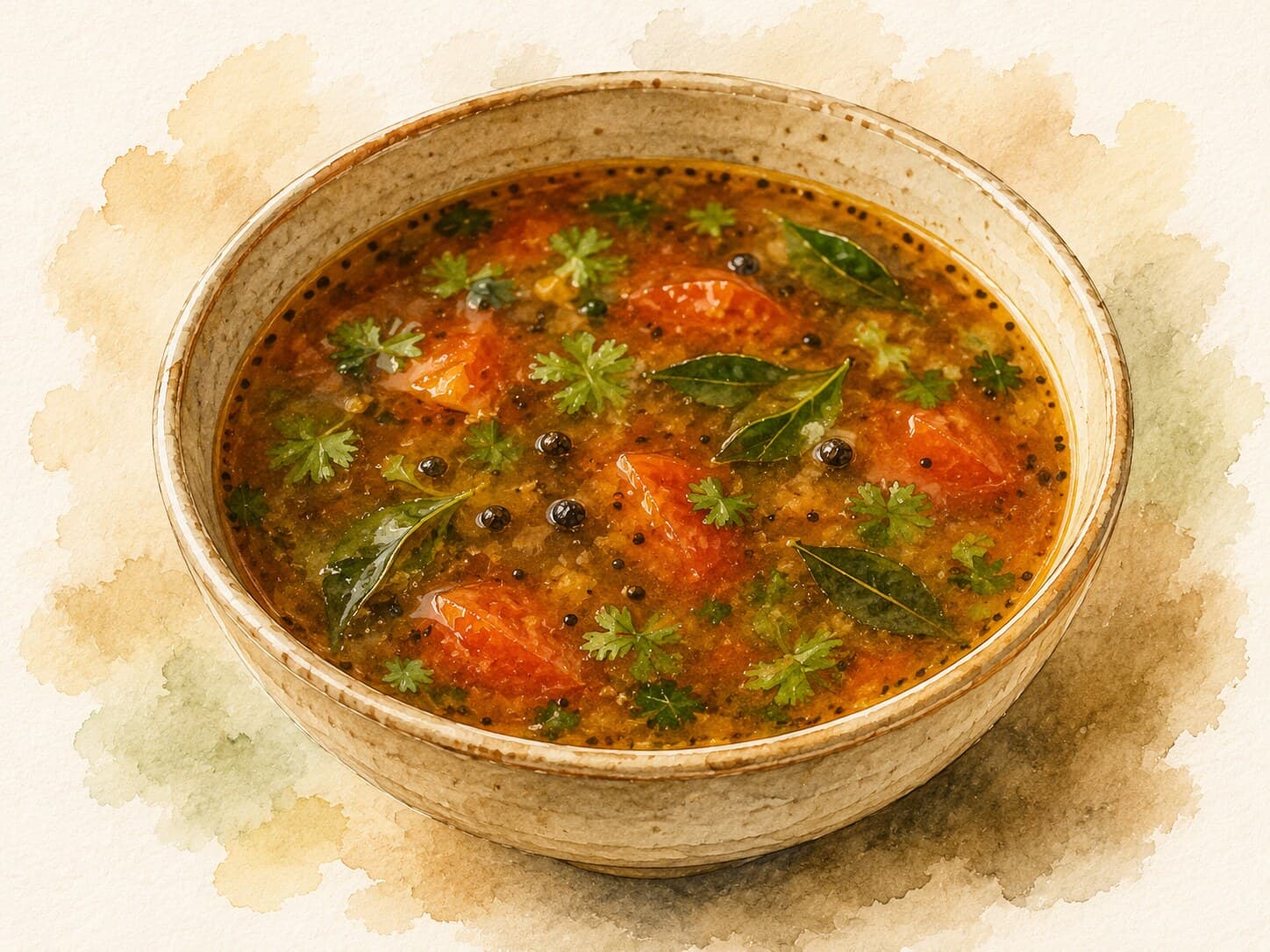
- A clear, ruby-colored broth with a thin film of orange-tinted ghee on top — that gloss is the tadka emulsifying just at the surface. A dull cloudy broth means it was boiled too hard.
- A two-stage smell when you bring the bowl close — first the warm pepper-cumin spice from the tadka, then a deeper tamarind-tomato sourness underneath. If you smell only one or the other, the balance has tilted.
- Black mustard seeds and curry leaves still floating bright on the surface — they should look freshly fried, not soggy or blackened. Cook tadka separately and pour in last.
- A peppery warmth that sits at the back of the throat after the second sip — that delayed heat is crushed black pepper releasing its piperine (its sharp pungent compound). If you taste only sour, the pepper was under-toasted; if you taste only burn, it was over-dosed.
A note on history
Rasam's origins are traced to 16th-century Madurai in Tamil Nadu, where an immigrant Saurashtra community built a thin healing broth around the locally abundant tamarind and black pepper (Wikipedia: Rasam). The Tamil word rasam and the related Sanskrit rasa both mean "extract" or "juice" — the broth was conceived as a distilled essence of pepper and sour fruit, made to settle digestion and bring warmth to a weak body (Hive: The Origins of Rasam). Tomatoes, a later New World introduction to South Indian kitchens, were folded in over the centuries, and the dish spread from Tamil Nadu across Karnataka, Andhra Pradesh and Kerala into countless regional variations (Taste: South India's Peppery Comfort).
Get the essays in your inbox — free
Weekly notes on flavor, fermentation, and food history — the writing behind the Atlas of Flavor. No spam; unsubscribe anytime.