
Rice and Peas
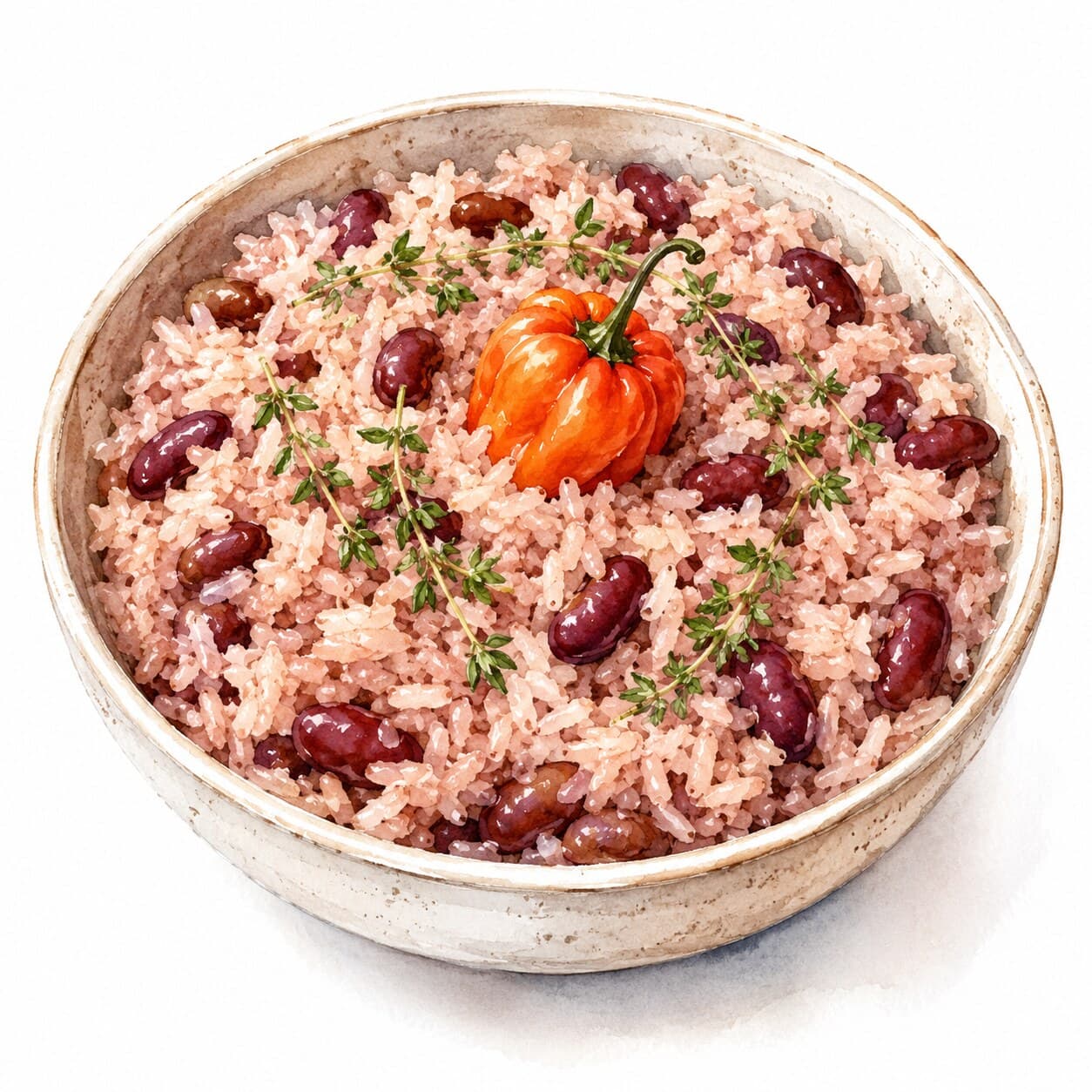
A traditional Jamaican dish of rice and kidney beans simmered in coconut milk with a whole scotch bonnet for rich flavor.
Contents (5 sections)▾
Ingredients
- 1 cup long-grain rice
- 1 cup kidney beans (or gungo peas), soaked overnight
- 1 can (400ml) coconut milk
- 1 sprig fresh thyme
- 1 whole scotch bonnet
- 2 cups water
- 1 tsp salt
Steps
Rinse the soaked kidney beans under cold water, then combine them in a pot with 2 cups of water and the salt. Bring to a boil over medium-high heat, then reduce to a simmer for 15 minutes.
Add the rinsed rice, coconut milk, thyme, and the whole scotch bonnet to the pot with the beans. Stir gently to combine.
Cover the pot, reduce the heat to low, and let it simmer for about 15 minutes, or until the rice is tender and has absorbed the liquid.
Remove the pot from heat and let it sit, covered, for an additional 10 minutes to allow the flavors to meld before serving.
Why this works
This recipe showcases a classic Jamaican technique where rice and beans are cooked together in coconut milk, creating a rich and creamy dish. The whole scotch bonnet is key; it infuses flavor without overwhelming heat, unlike if it were cut or broken. Cooking the beans first ensures they are tender, allowing them to harmonize with the rice. The combination of coconut milk and thyme adds depth and a comforting aroma, making it a perfect side or main dish for Sunday dinners in Jamaica.
Safety — kidney beans: Raw red kidney beans contain phytohaemagglutinin, a toxin that causes gastrointestinal distress if beans are undercooked. After overnight soaking, drain the soaking water and bring the beans to a hard rolling boil for at least 10 minutes before reducing to a simmer. Do not use a slow cooker for the bean phase — the temperature does not reach the threshold to destroy the toxin. Canned kidney beans are already processed and safe to use as a shortcut.
Safety — scotch bonnet: The pepper goes in WHOLE and stays whole. Removing it intact before serving is the technique. Never break it accidentally with a spoon — that releases full heat into the pot. Warn anyone serving themselves.
Common mistakes
Treating the soak-and-boil step for raw kidney beans as optional, or trusting a slow cooker to handle it.
Target: After soaking, drain the soaking water, then bring the beans to a full rolling boil for at least 10 minutes before dropping to a simmer — never start raw, soaked kidney beans directly in a slow cooker.
Why it matters: As noted above, raw red kidney beans carry a natural toxin that a slow cooker's low, gentle heat does not get hot enough to destroy; only a real, sustained boil neutralizes it. Skipping straight to a gentle simmer, or relying on a slow cooker for this stage, leaves the toxin intact.
What to do: Follow the boil-then-simmer order every time you use dried, soaked beans, or use canned kidney beans (already cooked and safe) if you'd rather skip this stage entirely.
Stirring vigorously enough to break the whole scotch bonnet open.
Target: Stir gently once the pepper is in the pot, keeping it whole and intact from the moment it goes in until it's lifted back out.
Why it matters: The whole point of adding the pepper whole is to let just a little of its heat and fruity aroma perfume the rice without turning the dish fiery; a vigorous stir or a poke with a spoon can split the skin and release far more heat than intended into every bite.
What to do: Stir gently and only as needed, and check before serving that the pepper is still in one piece; if it split, warn people that this batch will be spicier than usual.
Stirring the rice frequently once it's in the pot.
Target: Stir the rice in gently just once to combine, then leave it alone under the lid for the full simmering time.
Why it matters: Rice grains release starch as they cook; frequent stirring knocks more of that starch loose into the liquid, which can turn the dish gluey and clumped instead of tender grains that stay separate.
What to do: Combine everything with one gentle stir, then put the lid on and resist checking or stirring again until the timer is up.
Lifting the lid to check on the rice partway through cooking.
Target: Keep the pot covered for the entire simmering and resting time, including the 10-minute rest off the heat at the end.
Why it matters: Rice cooks partly by trapped steam as much as by the liquid it's simmering in; every time the lid comes off, that steam escapes and the pot loses heat, which can leave the rice undercooked or unevenly cooked by the time you serve it.
What to do: Trust the timing in the recipe and keep the lid on throughout — resist the urge to peek — and give it the full resting time at the end before you uncover it.
What to look for
- Rice grains that are tender and separate, not clumped into a sticky mass. Distinct, fluffy grains with a slight bite mean the starch stayed mostly in the rice rather than turning the pot gluey.
- Kidney beans that yield easily to gentle pressure, with no firm or chalky center. Fully tender beans — not just softened on the outside — are both the texture and (when the boil time above has been followed) the safety target for kidney beans.
- A pale golden tint and coconut aroma running through the rice, with the scotch bonnet still whole and visible. That color and smell mean the coconut milk cooked into the grains rather than separating out; the intact pepper confirms it delivered gentle background heat instead of a sudden burn.
A note on history
Rice and peas has deep roots in West Africa: enslaved Akan people from present-day Ghana and Ivory Coast, where rice-and-bean dishes such as waakye are still eaten today, carried the technique of cooking rice and legumes together to Jamaica during the era of Caribbean slavery. Coconut milk, thyme, and the whole scotch bonnet are the distinctly Caribbean additions layered on top of that West African foundation, giving the dish its regional identity.
Rice and peas is remembered as a Sunday and special-occasion dish in particular — enslaved people were traditionally given Sundays off, and this was the meal cooked for that one day of rest — which is part of why it remains closely associated with Sunday dinners and celebrations in Jamaica today, distinct from the more everyday "peas and rice" found on other Caribbean islands (Wikipedia).
Get the essays in your inbox — free
Weekly notes on flavor, fermentation, and food history — the writing behind the Atlas of Flavor. No spam; unsubscribe anytime.