
Jamaican Jerk Chicken
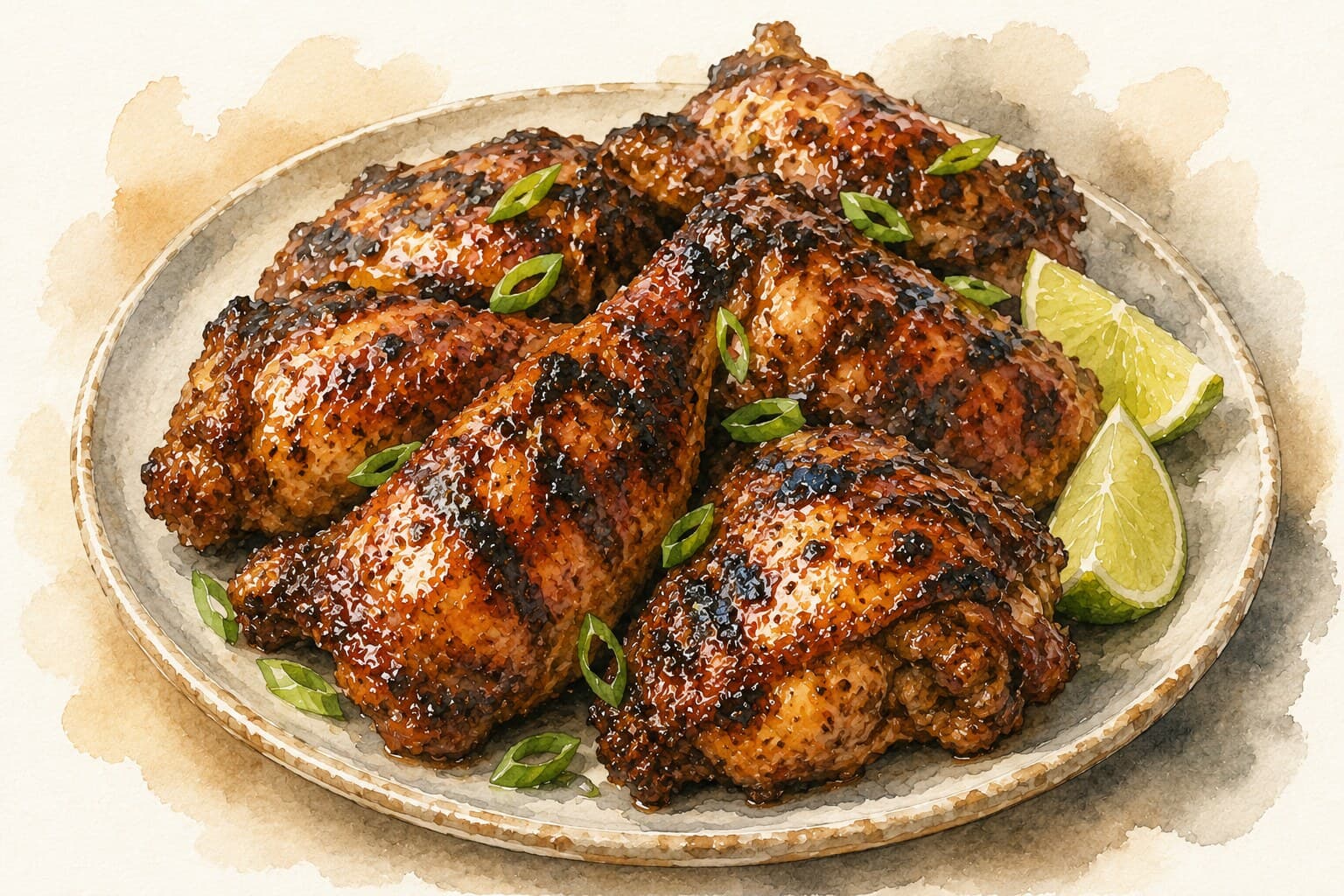
Experience the vibrant flavors of Jamaican Jerk Chicken, marinated in a spicy allspice-and-scotch-bonnet blend and grilled to perfection.
Contents (5 sections)▾
Ingredients
- 1 kg chicken (legs or thighs)
- 4 tbsp allspice (ground)
- 2-3 scotch bonnet peppers (to taste)
- 4 cloves garlic (minced)
- 1 onion (chopped)
- 2 tbsp brown sugar
- 2 tbsp soy sauce
- 2 tbsp vegetable oil
- 1 tbsp thyme (dried or fresh)
- 1 tsp salt
- 1 tsp black pepper
- 1/2 cup lime juice
- 1 cup pimento wood chips (soaked in water for 30 minutes)
Steps
In a blender, combine allspice, scotch bonnet peppers, garlic, onion, brown sugar, soy sauce, vegetable oil, thyme, salt, black pepper, and lime juice. Blend until smooth to create the marinade.
Place the chicken in a large bowl or zip-top bag and pour the marinade over it. Ensure the chicken is well-coated. Marinate in the refrigerator for at least 2 hours, preferably overnight, to allow the flavors to penetrate.
Prepare your grill for indirect heat, maintaining a temperature of about 150-180°C (300-350°F). Add soaked pimento wood chips to create smoke.
Remove the chicken from the marinade, allowing excess marinade to drip off. Place the chicken skin-side up on the grill grates away from direct heat.
Grill the chicken for about 30 minutes, turning occasionally, until the internal temperature reaches 75°C (165°F) and the skin is charred and crispy. Adjust cooking time as necessary for larger pieces.
Why this works
The technique of marinating chicken in a spicy allspice-and-scotch-bonnet blend infuses the meat with robust flavors and helps to tenderize it. The key to achieving the signature jerk flavor lies in the balance of heat from the scotch bonnet peppers (a small, fiery Caribbean chili — handle with care) and the warm, aromatic notes of allspice. Smoking the chicken over pimento wood enhances the flavor further, imparting a unique aroma that is characteristic of traditional jerk cooking. If the chicken seems too charred, lower the grill temperature slightly and move the chicken to a cooler part of the grill to avoid burning. This will allow the meat to cook through without losing that essential smoky flavor.
Common mistakes
Confusing char on the outside for "done" on the inside.
Target: Char is cosmetic; doneness is internal. Cooked-through means juices run clear at the joint, no pink at the bone, and an instant-read thermometer at the thickest part of a thigh or leg reads 74°C (165°F). On larger bone-in pieces, always do a pierce test in the thickest part — appearance alone is not safe.
Why it matters: Jerk (a Jamaican dry-rub-and-grill technique using allspice and Scotch bonnet chiles) develops a dark crust quickly because of sugar in the marinade and the spice rub. That crust can look fully done while the centre is still raw or under-cooked — especially near the bone, which conducts heat more slowly than meat. Chicken cooked below 74°C carries a real Salmonella and Campylobacter risk. The rule is non-negotiable: char on the outside is not the same as done in the middle.
What to do: Use indirect heat at 150-180°C and give large pieces time — 35-45 minutes is normal for bone-in thighs/legs. Probe the thickest part, not the edge. If the thermometer reads under 74°C, move the piece back to the cool side of the grill and keep going. When in doubt, cut into the thickest piece at the bone to confirm no pink — better to break the presentation than serve under-cooked poultry.
Marinating too little.
Target: 8 hours minimum, preferably overnight. The recipe's 2-hour floor is the absolute minimum and produces a noticeably thinner flavor.
Why it matters: The flavor compounds in allspice (thymol, eugenol — aromatic oils that drive the characteristic warm spice profile), thyme, and Scotch bonnet need time to migrate into the meat and react with the surface proteins. Two hours penetrates only a few millimeters; overnight reaches deeper, and the salt also begins to alter the protein structure for better juiciness.
What to do: Plan a day ahead. Marinate in the fridge, in a sealed bag with the air pressed out — closer contact means deeper penetration.
Direct high heat from start to finish.
Target: Set up two zones: indirect (cool side) for the bulk of the cook; direct (hot side) only for the final 3-5 minutes of crust development.
Why it matters: All-direct heat burns the sugary marinade and the spice crust before the interior is safely cooked through (74°C). The bone-in pieces called for in jerk chicken need slow, indirect heat to bring the centre up safely; the direct heat is a finishing move, not the cooking method.
What to do: Build the fire to one side of the grill. Place the chicken on the cool side, skin-up, lid down. Move it to direct heat only at the end, watching closely so the crust deepens without burning. Probe before moving to direct heat to confirm you're already close to 74°C.
Skipping the rest.
Target: Rest the cooked chicken loosely tented with foil for 5-10 minutes before serving.
Why it matters: Hot off the grill, the meat is at its peak temperature and pours juice at the first cut. A short rest lets it cool off that peak, so less spills when you cut, and it gives carry-over cooking 1-2°C — useful if you took the piece off at 74°C dead-on; not a substitute for cooking it through.
What to do: Pull the chicken onto a clean board, tent loosely with foil, set a timer. Do not skip this step to "serve it hot" — resting hardly cools the chicken, and the difference in texture is large.
What to look for
- Marinade before applying: thick, blender-paste consistency, deep red-brown, intensely fragrant — eye-watering when you lift the lid. Thin marinade won't cling to the skin or build crust.
- Chicken halfway through the cook (indirect side): skin tightening, surface drying out, color shifting from raw-pink to brown, no flare-ups under the grates. If flames are licking the skin, move further from the heat — sugar in the marinade burns easily.
- At the doneness check: juices run clear (not pink) when pierced at the joint; instant-read thermometer at the thickest part of the thigh reads 74°C (165°F); no pink along the bone. All three signs together — not just one.
- After resting: the crust is deep mahogany, almost black in patches, and the cut reveals fully opaque white-to-tan meat with clear juice pooling on the board. Pink near the bone after resting means it was undercooked — return to indirect heat for another 5-10 minutes before serving.
A note on history
Jerk cooking traces back to the indigenous Taíno people of Jamaica, who used pimento (allspice) wood and berries to smoke and preserve meat — the Taíno word charqui (dried, smoked meat) is the linguistic ancestor of "jerk." The technique was carried forward by Jamaican Maroons, communities formed by Africans who escaped enslavement and lived in the island's mountainous interior. They combined Taíno smoking methods with African spice traditions, cooking seasoned meat in covered earth pits over pimento embers — a method that doubled as concealment from British colonial patrols. Modern jerk chicken sits directly in this lineage. (Smithsonian, Fodor's)
Get the essays in your inbox — free
Weekly notes on flavor, fermentation, and food history — the writing behind the Atlas of Flavor. No spam; unsubscribe anytime.