
Ackee and Saltfish
A classic Jamaican dish featuring tender ackee fruit and flaked salt cod, creating a harmonious blend of flavors.
Contents (5 sections)▾
Ingredients
- 200 g salt cod, soaked overnight
- 200 g ackee fruit, canned or fresh, cooked
- 1 medium onion, chopped
- 1 bell pepper, chopped
- 2 cloves garlic, minced
- 1/2 tsp black pepper
- 1/2 tsp thyme, dried
- 2 tbsp vegetable oil
- 1 Scotch bonnet pepper, whole (optional)
- to taste: salt
Steps
Soak the salt cod in cold water for at least 12 hours, changing the water halfway through to reduce the saltiness.
Once soaked, drain and rinse the salt cod. Place it in a pot, cover with fresh water, and simmer for about 15 minutes until tender.
Remove the salt cod from the pot, allow it to cool slightly, then flake it into pieces, ensuring any skin or bones are removed.
In a large skillet, heat the vegetable oil over medium heat. Add the chopped onion, bell pepper, and minced garlic, sautéing until soft, about 5 minutes.
Gently fold the flaked salt cod and cooked ackee into the skillet with the sautéed vegetables. Add black pepper, thyme, and the whole Scotch bonnet pepper for flavor, cooking for another 5 minutes.
Be careful not to stir too vigorously to keep the ackee intact; it should resemble scrambled eggs in appearance. Season with salt if needed.
Why this works
The technique of soaking and flaking the salt cod is critical for achieving the desired flavor without overwhelming saltiness. By soaking, you allow the fish to hydrate and become tender, making it easier to flake. This step is essential because if the salt cod is not soaked long enough, it can be excessively salty, overpowering the dish's delicate balance. If your ackee breaks apart while folding (gently turning it over with a spoon instead of stirring hard, so the soft pieces stay whole), don’t worry; this can happen if you mix too roughly. Just adjust the cooking time to ensure the ackee is heated through without further breaking it down. The combination of sautéed vegetables (cooked gently in a little oil over medium heat until soft) adds depth and complements the soft texture of the ackee, resulting in a dish that is both visually appealing and flavorful. It's important to use fresh or properly prepared ackee because unripe ackee is toxic. Thus, respecting the ingredient's preparation is vital for safety and authenticity in this Jamaican classic.
Common mistakes
Under-soaking the salt cod.
Target: At least 12 hours in cold water, with the water changed partway through, so the fish is pleasantly seasoned rather than aggressively salty.
Why it matters: Salt cod is cured hard. If it has not soaked and simmered long enough, the finished dish is overwhelmingly salty and the delicate ackee can't balance it — and there is no real way to pull salt back out at the end.
What to do: Soak overnight, change the water, then simmer until tender and taste a flake before flaking the rest. If it is still too salty, give it a second simmer in fresh water.
Leaving skin or bones in the flaked fish.
Target: Clean flakes of cod with skin and any pin bones removed.
Why it matters: Salt cod carries skin and fine bones that are unpleasant in a soft, folded dish like this. Flaking carelessly leaves them scattered through every forkful.
What to do: Let the simmered cod cool enough to handle, then flake by hand so you can feel and discard skin and bones as you go.
Breaking the ackee by over-stirring.
Target: Soft ackee that holds its shape, with the finished dish resembling scrambled eggs — distinct pieces, not a paste.
Why it matters: Cooked ackee is extremely fragile. Vigorous stirring or adding it too early collapses it into mush and loses the texture that defines the dish.
What to do: Add the ackee toward the end and fold gently, lifting from underneath rather than stirring. Keep the heat moderate and stop as soon as it is warmed through.
Using ackee that isn't ripe and properly prepared.
Target: Canned ackee, or fresh ackee that has been harvested ripe (opened naturally on the tree) and cooked according to traditional preparation.
Why it matters: Unripe ackee contains a natural toxin and is genuinely unsafe — this is not a texture issue but a safety one. Canned ackee has already been prepared to be safe, which is why it is the reliable choice outside Jamaica.
What to do: Use canned ackee, or fresh ackee only from a trusted source that has been ripened and prepared correctly. When in doubt, use canned.
What to look for
- Soaked, simmered cod: the flesh flakes apart easily with a fork and a tasted flake is savory but no longer harshly salty.
- The sautéed base: onion and bell pepper turned soft and translucent, smelling sweet and fragrant — not browned or scorched.
- Folding in the ackee: the pieces stay intact and glossy, holding their shape as you lift rather than smearing.
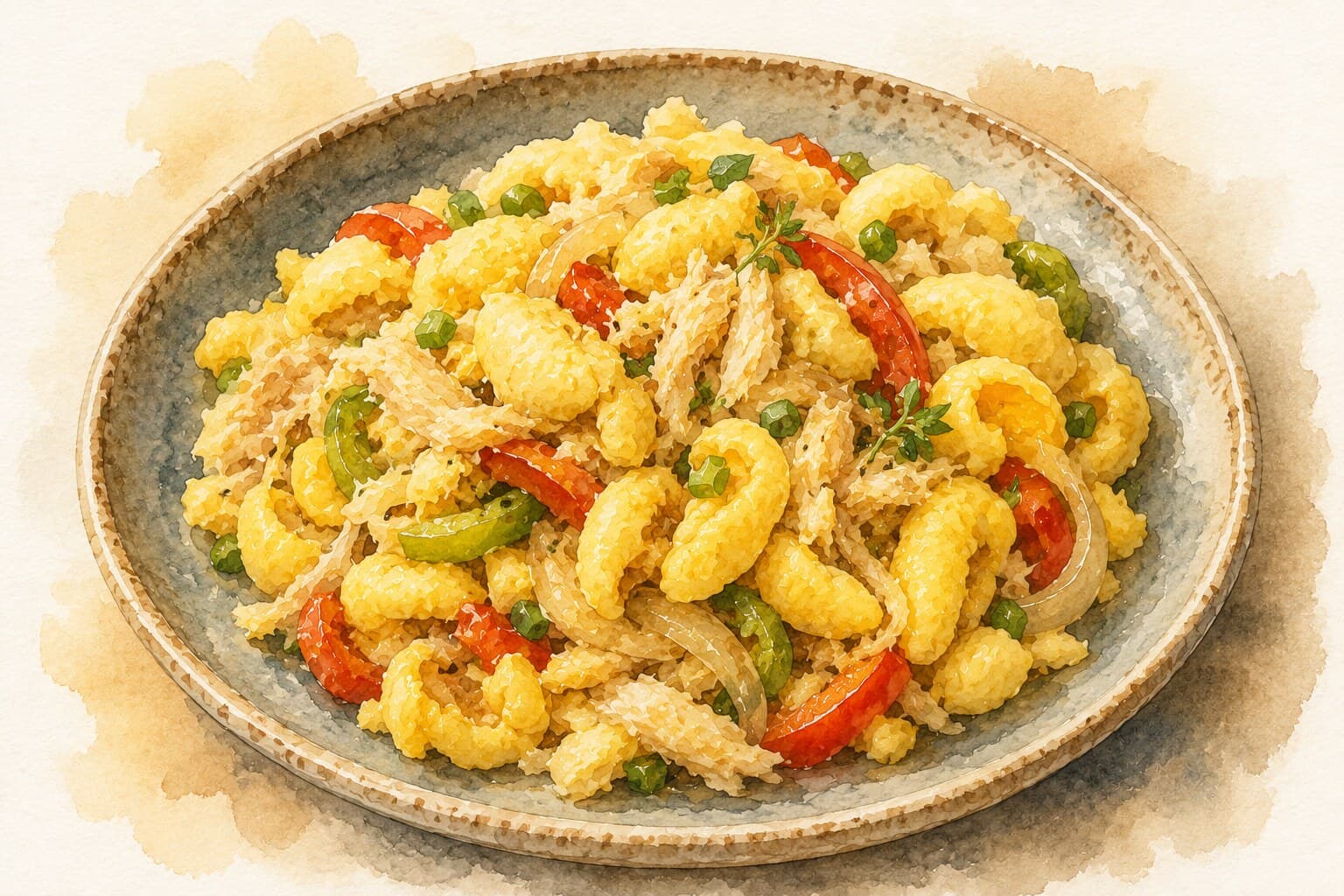
- The finished dish: soft, scrambled-egg-like in appearance, with golden ackee and flecks of pepper and thyme distributed throughout.
A note on history
Ackee and saltfish is the national dish of Jamaica, and both of its core ingredients arrived from elsewhere. The ackee fruit is native to West Africa — its name derives from ankye in the Twi language of Ghana — and is widely held to have been carried to Jamaica during the transatlantic slave trade in the eighteenth century. Salted cod, meanwhile, was imported by European colonizers as a cheap, durable protein; over time the two were combined into the dish recognized today.
Get the essays in your inbox — free
Weekly notes on flavor, fermentation, and food history — the writing behind the Atlas of Flavor. No spam; unsubscribe anytime.