
Jamaican Curry Goat
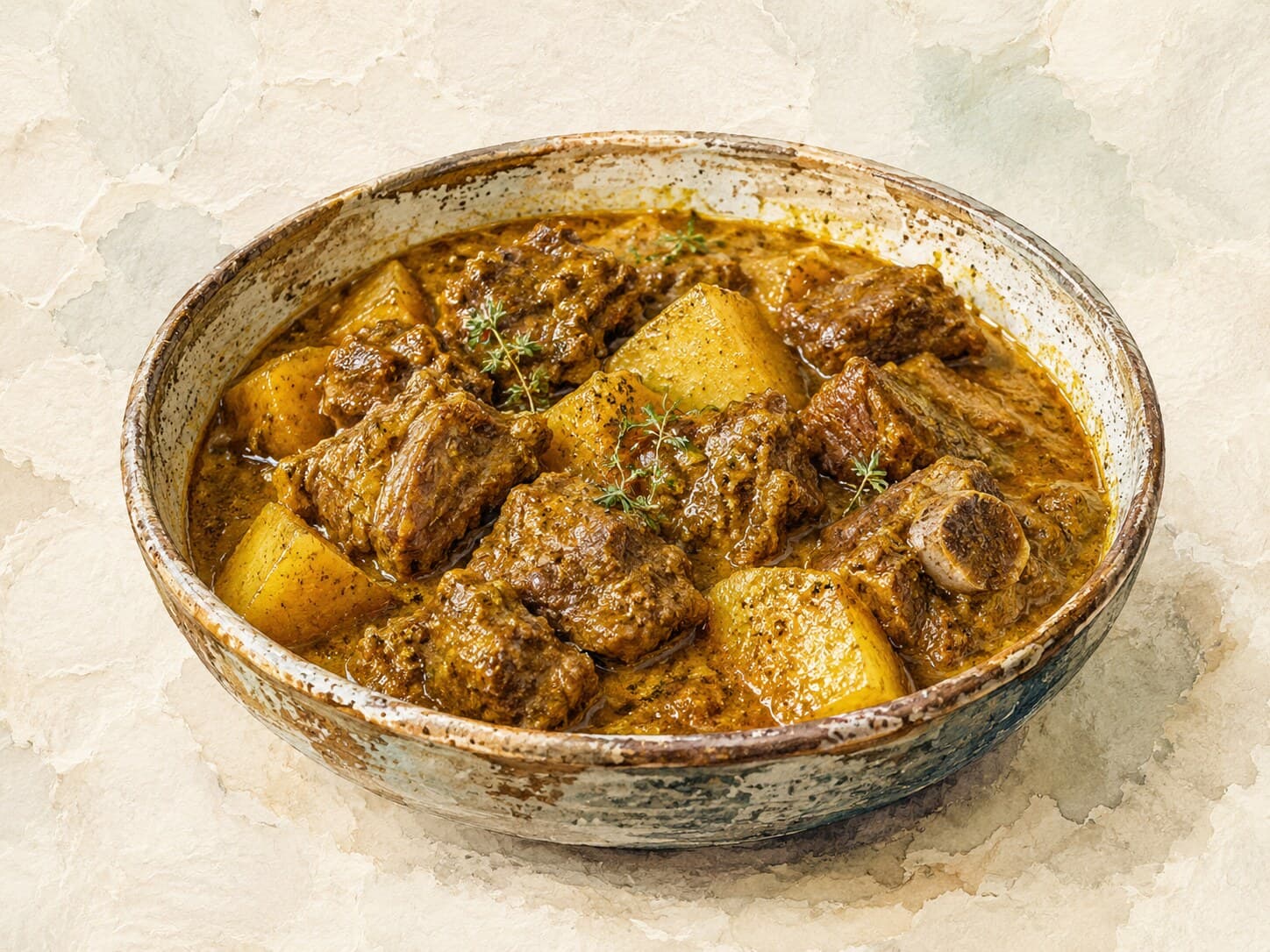
Experience the rich flavors of Jamaica with this tender Jamaican Curry Goat, featuring burnt curry and spicy scotch bonnet.
Contents (5 sections)▾
Ingredients
- 1 kg goat meat, cut into chunks
- 2 tbsp burnt curry powder
- 1 scotch bonnet pepper, whole
- 2 tbsp vegetable oil
- 1 onion, chopped
- 4 cloves garlic, minced
- 1 tsp fresh thyme, chopped
- 1 tsp allspice
- 1 cup water or goat broth
- Salt to taste
Steps
In a large pot, heat the vegetable oil over medium heat. Add the burnt curry powder and scotch bonnet pepper. Cook for about 2 minutes until fragrant; this step enhances the spices' flavor.
Add the chopped onion and minced garlic, cooking until the onion turns translucent, about 5 minutes.
Add the goat meat to the pot, stirring to coat with the curry mixture. Brown the meat for about 10 minutes, ensuring it develops a rich color.
Sprinkle in the thyme and allspice, then add water or goat broth, bringing the mixture to a simmer.
Cover and reduce the heat to low. Braise the goat for 2 hours, or until the meat is fork-tender, stirring occasionally.
Season with salt to taste before serving. Enjoy the dish hot with rice or flatbreads.
Why this works
The technique of browning the goat meat in 'burnt' curry powder is key to developing deep, rich flavors. The high heat activates the spices, releasing their essential oils and creating a fragrant base for the dish. The scotch bonnet adds a unique heat that complements the curry. As the goat braises (slow-cooks gently in liquid), the combination of allspice and thyme infuses the meat with aromatic qualities, breaking down the tough fibers and resulting in a tender texture. If the meat seems too tough after braising, simply extend the cooking time by an additional 30 minutes, checking periodically until it reaches the desired tenderness. Properly balancing the simmering process ensures that the meat absorbs all the flavors without drying out.
Common mistakes
Confusing "burning" the curry with scorching it.
Target: The curry powder toasted in hot oil until deeply fragrant and a shade darker — about 1–2 minutes — but never black or acrid.
Why it matters: "Burnt curry" is Jamaican shorthand for blooming the spices (frying ground spices in fat so their aromatic oils dissolve out and intensify). Heat drives the volatile compounds out of the powder and into the oil, which then carries that flavor through the whole pot. Push it too far, though, and the spices genuinely burn — bitter, harsh, unrecoverable. The line between "woken up" and "ruined" is a matter of seconds.
What to do: Use medium heat, stir constantly, and trust your nose: the moment the kitchen fills with curry aroma and the powder darkens slightly, move on to the aromatics. If you see smoke or smell bitterness, start over.
Not browning the goat before it braises.
Target: A real seared crust on the meat — brown, not gray — before the liquid goes in.
Why it matters: Browning is the Maillard reaction (the heat-driven chemistry between protein and sugars that builds deep, roasted flavor). Goat is lean and mild; without that crust the braise tastes thin. Searing also coats each chunk in the bloomed-spice oil, layering flavor onto the surface before the long simmer.
What to do: After the spices and aromatics, add the goat and let it sit against the hot pot to color before stirring. Don't crowd — work in batches if needed so the meat sears instead of steaming.
Pulling the goat off the heat too soon.
Target: Braised low and slow until fork-tender and fully cooked through — typically 2 hours or more, never served pink or chewy.
Why it matters: Goat is rich in collagen, the tough connective tissue that only melts into silky gelatin with long, gentle, moist heat. Rush it and the meat stays springy and tight; the collagen hasn't had time to break down. This is also the doneness point — goat should always be cooked through, and fork-tenderness is both the texture goal and the sign it is safely done.
What to do: Keep the braise at a bare simmer, covered, and give it the full time. Test with a fork: the meat should yield with almost no resistance. If it's still tough, it simply needs longer — add 30 minutes and check again.
Boiling hard instead of simmering — and letting it cook dry.
Target: A lazy, barely-bubbling simmer, with enough liquid to keep the meat partly submerged throughout.
Why it matters: A hard boil agitates and squeezes the muscle fibers, drying them out even as the collagen melts — you get meat that is both tough and stringy. And because the braise runs for hours, the liquid can reduce too far and scorch the spices on the pot bottom.
What to do: Once it reaches a simmer, drop the heat to low and cover. Check occasionally; if the level falls too far, top up with a splash of water or broth.
What to look for
- Spices properly bloomed: the oil turns glossy and the whole kitchen smells of warm curry — darkened, not blackened. Bitterness or smoke means it's gone too far; start again.
- A good sear on the goat: brown, caramelized surfaces and no gray steam-cooked patches. This is the flavor base the long braise builds on.
- Fork-tender meat: a fork slides in and the chunk pulls apart with almost no resistance. This is both the texture you want and the signal it's fully, safely cooked.
- The right sauce body: a glossy, lightly thickened gravy that clings to the meat, not a thin watery broth. If it's thin, simmer uncovered a few minutes to concentrate.
A note on history
Jamaican curry goat traces to the Indian indentured labourers who arrived after the British Empire abolished slavery in 1833; between 1834 and 1917 roughly 36,000 Indians migrated to Jamaica, bringing curry techniques that fused with local ingredients (The Juggernaut; CNN Travel). The distinctly Jamaican stamp is in the method and the aromatics — spices "burned" in hot oil at the start, and local thyme, scallion, and the fiery scotch bonnet (The Juggernaut). Though people of Indian descent are now a small share of the population, curry goat is today claimed as thoroughly Jamaican (The Juggernaut).
Get the essays in your inbox — free
Weekly notes on flavor, fermentation, and food history — the writing behind the Atlas of Flavor. No spam; unsubscribe anytime.