
Rawon (Indonesian Black Beef Soup)
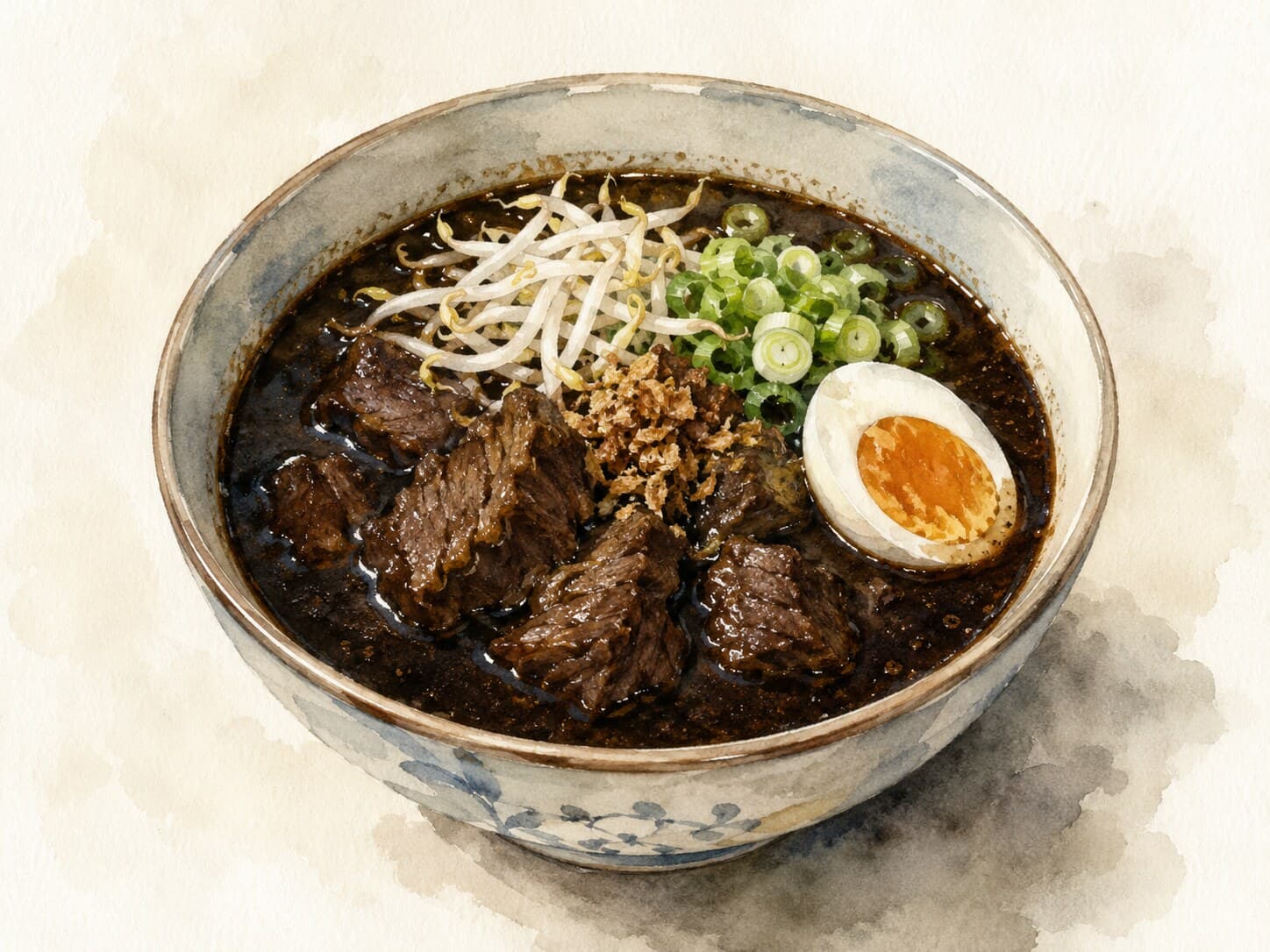
Rawon is a rich, inky black beef soup from East Java, enriched with unique keluak nuts and aromatic spices.
Contents (5 sections)▾
Ingredients
- 1 kg beef short ribs
- 100 g keluak nuts (processed)
- 2 tbsp vegetable oil
- 1 large onion, chopped
- 4 cloves garlic, minced
- 1 thumb-sized piece of ginger, minced
- 2 stalks lemongrass, bruised
- 3-4 kaffir lime leaves
- 2-3 green chilies, sliced
- 1 tsp turmeric powder
- 1 tsp coriander powder
- 1 tsp cumin powder
- 1 liter beef stock
- Salt to taste
- 200 g bean sprouts, for garnish
- Sambal, for serving
Steps
Prepare the keluak nuts by soaking them in water for at least 12 hours to detoxify them, then remove the flesh and set aside.
In a large pot, heat the vegetable oil over medium heat. Add the chopped onion, garlic, and ginger, sautéing until fragrant and softened, about 5-7 minutes.
Add the processed keluak flesh, turmeric, coriander, cumin, and green chilies to the pot. Stir well to combine and cook for another 5 minutes, allowing the spices to bloom.
Increase the heat to medium-high and add the beef short ribs, browning them on all sides for about 10 minutes. This step develops depth of flavor.
Pour in the beef stock, then add the bruised lemongrass and kaffir lime leaves. Bring the mixture to a boil, then reduce the heat to low and cover the pot.
Simmer for 1.5 to 2 hours, or until the beef is tender. Skim off any foam or fat that rises to the surface during cooking.
Once the beef is tender, season the soup with salt to taste and serve hot, garnished with fresh bean sprouts and sambal on the side.
Why this works
Rawon achieves its signature inky black color and earthy flavor from the unique keluak nuts (the buried-and-fermented black inner kernel of the pangium edule fruit — only the fully fermented black form sold as a cooking ingredient is safe; never use raw or fresh nuts), which require careful detoxification to remove their natural toxins. This process enhances their nutty taste, contributing to the broth's complexity. Browning the beef short ribs before braising (cooking gently and slowly in a covered pot with a small amount of liquid) is crucial, as it develops a rich depth of flavor through the Maillard reaction (the browning chemistry that creates roasted, savory aromas). While simmering, the spices meld together, creating a harmonious profile. If the broth seems too thick, adding a bit more beef stock or water can help achieve your desired consistency. Conversely, if it appears too thin, allow it to simmer uncovered for a bit longer to concentrate the flavors. This balance of technique and ingredient quality is what makes Rawon a familiar dish in Indonesian cuisine.
Common mistakes
Using raw, unprocessed kluwek (keluak) nuts. Target: only properly fermented and processed kluwek — sold dry, with deep black flesh inside, never the raw white flesh. The black color and the dry, slightly waxy texture are the safety signals. Why it matters: raw kluwek (the fruit of the kepayang tree, Pangium edule) contains cyanogenic glycosides — natural compounds that release hydrogen cyanide when broken down. This is a real toxin, not a minor concern. The traditional weeks-long burying-and-fermenting process neutralizes the cyanide. Properly processed kluwek sold for cooking has already been through this, but the raw fresh nut from the tree is dangerous and must never be used. This is a BLOCK-level safety guard. What to do: buy whole black kluwek from a trusted Indonesian or Southeast Asian source, sold specifically as a cooking ingredient. Crack one open: the flesh should be uniformly deep black-brown and slightly oily-fragrant, never pale or white. If in doubt, discard. When you cannot source verified kluwek, simply omit it — the soup loses its signature blackness but is safe and still delicious as a beef-and-aromatics soup.
Skimping on the spice paste (bumbu) build. Target: the bumbu (a ground paste of shallot, garlic, candlenut, ginger, turmeric, coriander, kluwek) cooked in oil over medium heat for 6–10 minutes until the paste darkens and the raw shallot smell turns sweet and roasted. Why it matters: this is the foundational layer of rawon. Skipping it or under-cooking it leaves the soup tasting raw and harsh, no matter how long the beef simmers. The bumbu's complexity comes from sautéing — the same Maillard-and-caramelization browning that develops curry pastes everywhere. What to do: keep stirring as you cook the bumbu; it will splatter as the water evaporates. You're done when the oil pools at the edges, the paste smells nutty rather than sharp, and it has darkened by two shades.
Adding beef to under-seasoned cold broth and ending up with bland, fibrous meat. Target: beef (short rib, shank or chuck) browned in batches first, then simmered very gently — bubbles only just breaking — for 2 to 3 hours, until you can pull strands apart with no resistance. Final internal temperature comfortably above 70°C / 160°F sustained through the long simmer. Why it matters: rawon traditionally uses tough collagen-rich cuts. Collagen (the connective tissue protein) needs hours of gentle wet heat between 80 and 95°C to convert into gelatin, which is what gives the broth its silky body. A rolling boil at this stage shrinks muscle fibers and squeezes out moisture, leaving the beef stringy. Properly slow-simmered beef is also fully safe; insufficient cooking is a real meat safety concern. What to do: brown the beef first in the bumbu pot, then add stock or water to cover. Hold a bare simmer for at least 2 hours, skimming the surface. The meat is done when a chopstick goes through the largest piece without resistance.
Drowning the broth with sambal at the table before tasting. Target: taste the broth first, add sambal only to balance, and keep it on the side rather than stirred through. Why it matters: properly made rawon has a complex bitter-earthy-savory profile that fresh sambal will overwhelm if dumped in early. The traditional service places sambal, bean sprouts, salted egg and lime on the side specifically so each diner tunes their bowl. What to do: serve sambal in a small dish next to the bowl. Take one full spoonful of plain broth first, then add half a teaspoon of sambal and a squeeze of lime, taste again, adjust.
What to look for
- A jet-black broth with a thin amber sheen of oil at the surface — the depth of color tells you the kluwek was both well-processed and well-cooked. A grayish soup means the kluwek wasn't toasted enough into the bumbu; an iridescent broth means proper fat suspension.
- Beef strands that pull apart cleanly along the grain with chopstick pressure — that yield is rendered collagen. Resistant chunks need another 30 minutes.
- A two-stage aroma when you bring the bowl close — first the earthy-smoky kluwek, then the warm aromatic note of lemongrass and lime leaf. Both should be present; if one dominates, the balance has tilted.
- Crisp, raw bean sprouts that stay bright white even after sitting on the hot soup — they should crunch in the spoon, not wilt. If they collapse, they were added too early or the bowl is too hot for too long.
A note on history
The earliest known reference to rawon appears in the Taji inscription from Ponorogo, East Java, dated 901 CE, where it is recorded as rarawwan — placing the dish in continuous Javanese cooking memory for over a thousand years (Journal of Ethnic Foods (Springer Nature)). It was a royal delicacy of the Surakarta court before becoming an iconic everyday dish of East Java in the 19th century, when the province's abundant cattle supply made beef-based soups practical for ordinary kitchens. The defining ingredient, kluwek (kepayang nut), is native to Indonesia, Malaysia and the Philippines, and the fermentation technique that renders it safe is itself an ancient piece of Southeast Asian food knowledge — a reminder that traditional processing methods solve real chemistry problems.
Get the essays in your inbox — free
Weekly notes on flavor, fermentation, and food history — the writing behind the Atlas of Flavor. No spam; unsubscribe anytime.