
Soto Ayam
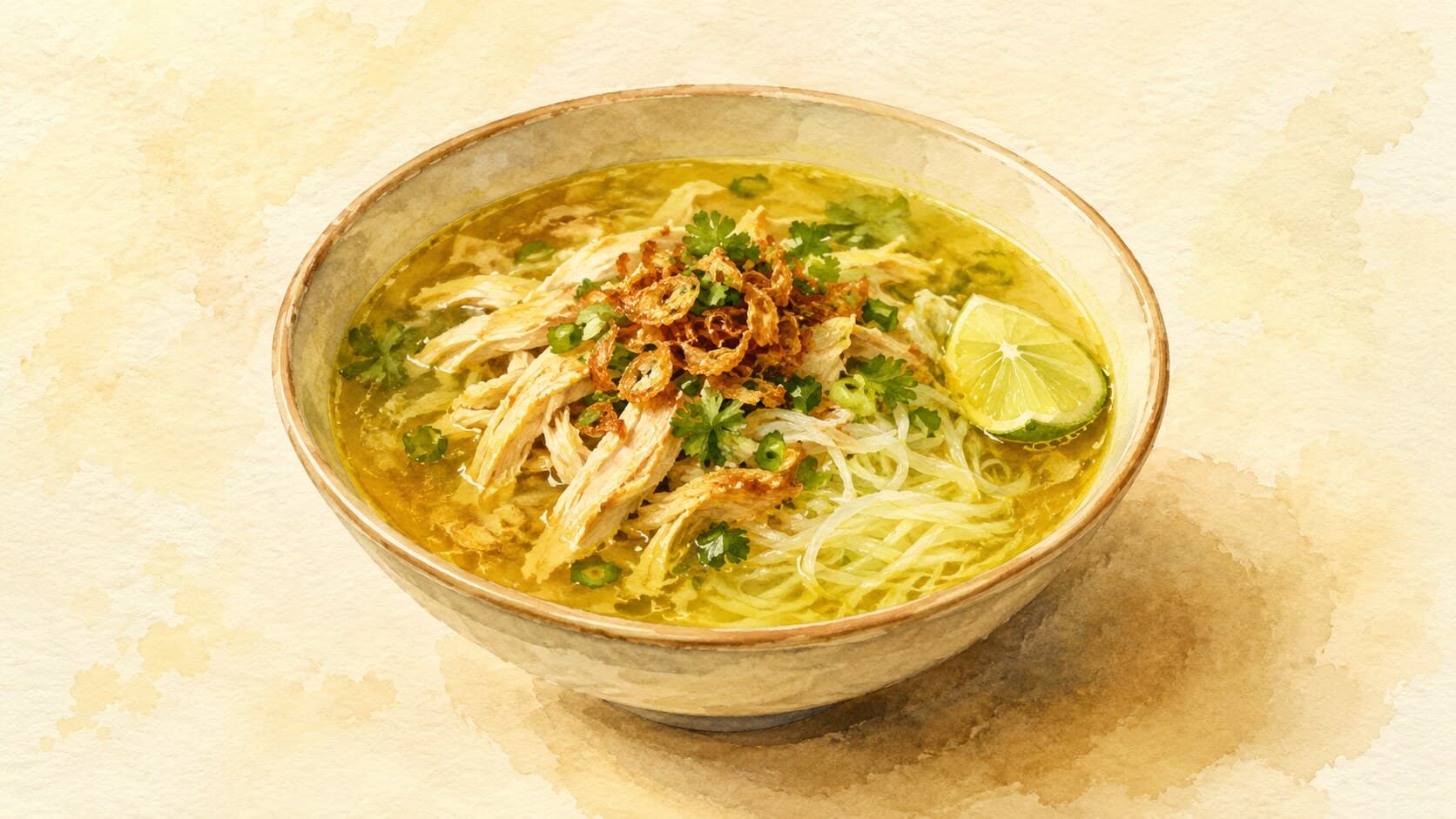
Soto Ayam is a traditional Indonesian dish consisting of turmeric chicken broth served over rice and noodles, garnished with shredded chicken and crispy toppings.
Contents (5 sections)▾
Ingredients
- 1 kg chicken, cut into pieces
- 2 liters water
- 3 stalks lemongrass, bruised
- 6 kaffir lime leaves
- 5 cm ginger, sliced
- 5 cm turmeric root, sliced (or 1 tbsp turmeric powder)
- 3 cloves garlic, minced
- 2 shallots, sliced
- 1 tsp salt
- 200 g glass noodles, soaked in hot water
- 200 g cooked jasmine rice
- 2 hard-boiled eggs, halved
- 2 tbsp fried shallots
- 2 tbsp scallions, chopped
- Lime wedges, to serve
- Chili paste, to taste
Steps
In a large pot, add chicken pieces and 2 liters of water. Bring to a boil over medium heat, skimming any foam that rises for about 5 minutes. This ensures a clear broth.
Once boiling, add lemongrass, kaffir lime leaves, ginger, turmeric, garlic, shallots, and 1 tablespoon of salt. Reduce heat to low and simmer for 30 minutes to allow the flavors to meld.
After the simmer (about 30 minutes as a guide), confirm the thickest chicken piece has reached 74 °C / 165 °F on an instant-read thermometer before removing it — time is a guide, not the safety test. Let the pieces cool slightly for about 5 minutes, and shred the meat. Strain the broth through a fine mesh sieve to remove solids for clarity and return the liquid to the pot.
Prepare serving bowls with 1 cup of cooked rice and soaked glass noodles. Pour the hot broth (around 90°C) over the top and add shredded chicken, halved hard-boiled eggs, fried shallots, and scallions.
Serve with lime wedges and chili paste on the side for an added zest.
Why this works
The clarity of the broth in Soto Ayam is achieved by skimming the foam that forms during boiling, preventing cloudiness. The combination of turmeric, lemongrass, and kaffir lime leaves creates an aromatic profile. Simmering at low heat allows flavors to develop without losing broth clarity. If the broth is too cloudy after straining, let it sit undisturbed for a few minutes to allow sediments to settle. This results in a clear turmeric broth that contrasts with the rice and noodles. A simmering time of 30 minutes ensures that flavors are fully extracted without overcooking the chicken, which can lead to a dry texture. Maintaining a consistent temperature throughout the cooking process results in a well-balanced dish that reflects traditional Soto Ayam.
Common mistakes
-
Boiling hard instead of simmering, so the broth turns murky.
- Target: the surface should barely tremble — gentle simmer, never a rolling boil.
- Why it matters: a hard boil emulsifies fat and protein scum back into the broth and you can never strain it clear again. The colour goes from bright turmeric-gold to a beige cloud.
- What to do: bring to a boil only once at the start so you can see the scum, skim it off, then drop the heat and hold a low simmer for the full extraction time.
-
Not skimming aggressively in the first 10 minutes.
- Target: skim every minute or two while grey foam keeps rising — usually for the first 8-10 minutes.
- Why it matters: most of the impurities (denatured blood proteins) come out at the very start. If you let them collapse back into the broth, no amount of straining at the end will fix it.
- What to do: keep a small bowl of water nearby and lift the foam off with a shallow spoon; rinse the spoon between passes.
-
Adding turmeric (a yellow root spice, raw and chalky-tasting until cooked) to a cold pot at the end.
- Target: bloom the turmeric (and other aromatics) in the bumbu paste (the Indonesian aromatic spice paste, blended and fried at the start of cooking), or add it during simmering — not as a sprinkle at the finish.
- Why it matters: turmeric tastes raw and chalky when it isn't cooked. The colour also stays muddy instead of golden.
- What to do: sweat the spice paste in oil first, or add ground turmeric in the second step with the lemongrass and lime leaves and let it simmer 30 minutes.
-
Overcooking the chicken so it shreds dry.
- Target: poach until the internal temperature reaches 74°C / 165°F — about 25-30 minutes for bone-in pieces — then pull immediately.
- Why it matters: chicken held at a hard boil for an hour turns chalky and fibrous, and shredding makes that texture worse, not better.
- What to do: pull the pieces when they're just done, cool slightly, then shred. Return the bones to the pot if you want a deeper second simmer for the broth.
What to look for
- the broth's surface flat and almost still, with a single small bubble lifting now and then — that's the simmer that keeps clarity.
- the scum coming off in beige islands, not stringy white shreds — well-formed foam means you skimmed early enough.
- a clear, deep golden colour through which you can almost see the bottom of the pot — turmeric properly cooked, fat well separated.
- chicken that pulls into clean shreds along the grain with a quiet snap, still glossy with juice — cooked through, not over.
A note on history
Soto (the umbrella name for Indonesia's traditional aromatic soup category) is a family of Indonesian soups with roughly 75 documented regional variations — the regional names tell you the lineage as much as the ingredients do. Soto ayam (chicken soto) is among the most widespread, with well-known versions from Lamongan and Madura in East Java, each with its own broth body, aromatic profile, and accompaniments. Many historians trace the dish's origins to acculturation between Chinese immigrant cooking and Javanese culinary tradition, with the bright turmeric-yellow broth and bumbu paste reflecting the Indonesian side of that exchange.
Get the essays in your inbox — free
Weekly notes on flavor, fermentation, and food history — the writing behind the Atlas of Flavor. No spam; unsubscribe anytime.