
Bakso
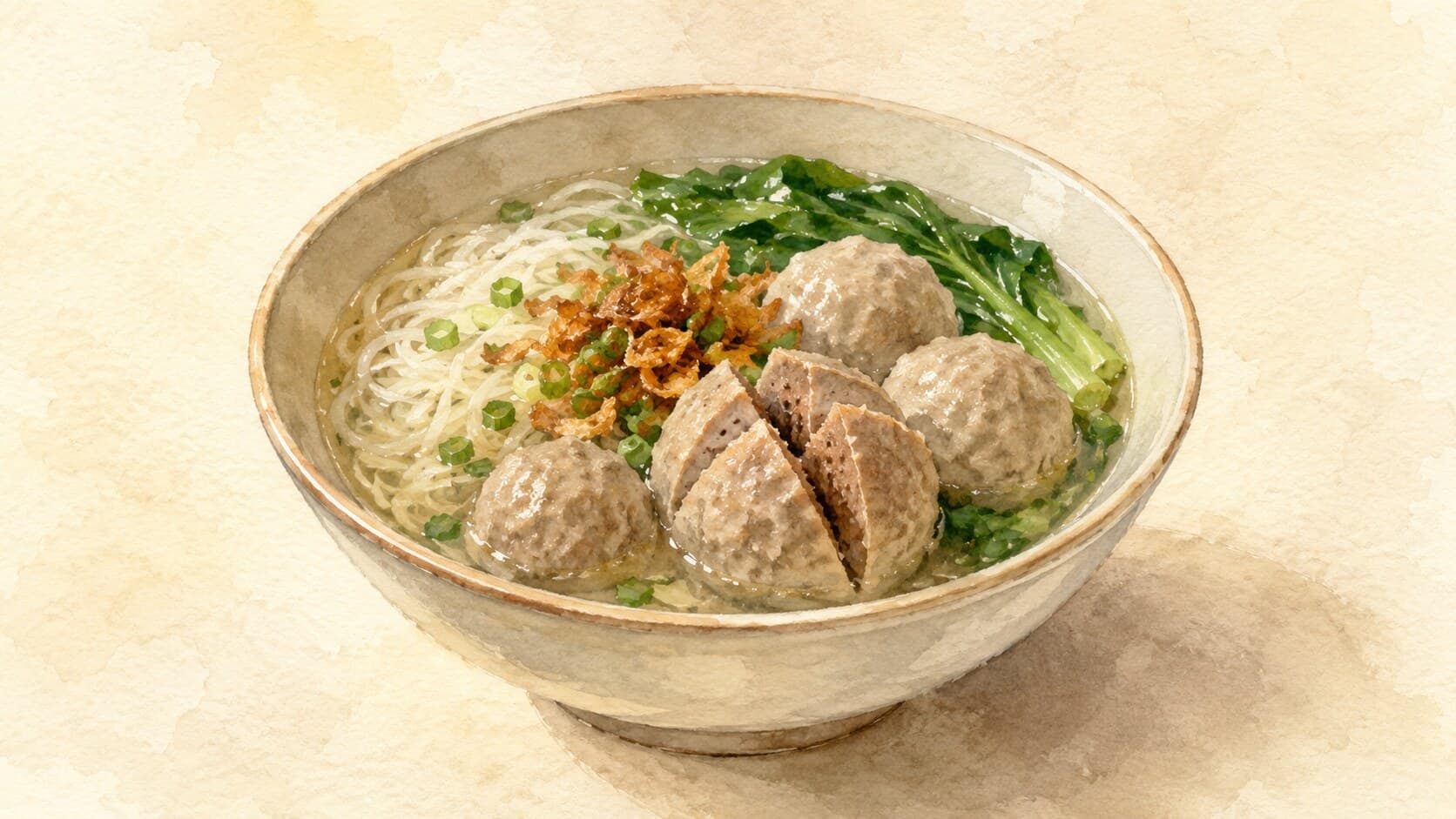
Bakso are beef meatballs, often served in a clear broth flavored with garlic and pepper, common in Indonesian cuisine.
Contents (5 sections)▾
Ingredients
- 500 g beef, finely minced
- 100 g ice water
- 50 g tapioca starch
- 1 clove garlic, minced
- 1 tsp black pepper, ground
- 1 tsp salt
- 1 liter beef bone broth
- 2 cloves garlic, sliced
- 1 tsp black peppercorns
- 200 g glass noodles
- 2 spring onions, chopped
- red chili sauce, to taste
Steps
In a bowl, combine the minced beef, ice water, tapioca starch, minced garlic, black pepper, and salt. Use your hands to knead the mixture until it becomes a smooth paste, which helps in achieving the bouncy texture.
Form the mixture into small meatballs, approximately 3 cm in diameter. Make sure they are uniformly shaped to ensure even cooking.
Bring a pot of water to a gentle simmer (around 80°C). Carefully drop the meatballs into the simmering water and poach for about 10 minutes until fully cooked. This gentle cooking method prevents the meatballs from breaking apart.
While the meatballs are cooking, prepare the bone broth. In a separate pot, heat the beef bone broth, sliced garlic, and black peppercorns until it reaches a gentle simmer.
Once the meatballs are cooked, remove them from the water with a slotted spoon and transfer them into the hot broth. Allow them to infuse in the broth for about 5 minutes before serving.
In the meantime, prepare the glass noodles following the package instructions. Drain and divide them into serving bowls.
Serve the meatballs in the broth over the glass noodles, garnished with chopped spring onions and a side of red chili sauce for added heat.
Why this works
Cold-emulsifying the beef with ice water and tapioca starch enhances the texture, resulting in bouncy meatballs. The cold water maintains fat, creating a smooth emulsion (fat and water held together in one stable, even mixture) that holds during poaching (cooking gently in water kept just below a boil). If the mixture is too loose, add more tapioca starch for binding. Poaching in simmering water rather than boiling ensures even cooking without toughness. The clear broth, flavored with garlic and pepper, complements the meatballs without overpowering them.
Common mistakes
Letting the meat mixture warm up.
Target: Beef, ice water, and starch kept cold throughout mixing.
Why it matters: The bounce comes from a cold emulsion — the proteins hold the fat and water in suspension only while everything stays cold. If the mixture warms, the fat smears and the emulsion breaks, giving dense, grey, crumbly meatballs instead of springy ones.
What to do: Use genuinely iced water, work quickly, and chill the bowl or the mixture in the fridge if it starts to feel warm or greasy under your hands.
Under-kneading the paste.
Target: A smooth, tacky, sticky paste that holds together in one mass.
Why it matters: Kneading is what develops the protein network that traps water and gives bakso its signature bouncy snap. An under-worked mixture stays loose and grainy, and the meatballs fall apart in the broth.
What to do: Knead until the paste turns smooth and sticky and clings to itself. If it still feels loose, the recipe's note applies — a little more tapioca starch helps it bind.
Boiling the meatballs hard.
Target: A gentle simmer around 80°C, never a rolling boil.
Why it matters: A violent boil tears the still-soft meatballs apart before they set and clouds the cooking liquid. The gentle poach lets them firm up intact while staying tender.
What to do: Hold the water at a bare simmer with only small bubbles. Lower the meatballs in gently and let them poach until fully cooked and floating.
Cooking in cloudy water and muddying the clear broth.
Target: A clean, clear serving broth.
Why it matters: Bakso is prized for its clear, light broth. Poaching the meatballs releases scum and starch, so cooking them directly in the serving broth turns it murky.
What to do: Poach the meatballs in a separate pot of water as written, then transfer them into the clear broth to finish — keeping the broth bright.
What to look for
- The paste before shaping: smooth, pale, sticky, and cohesive, clinging to itself and to the spoon rather than crumbling.
- Meatballs as they cook: they rise and float to the surface once set and cooked through — the cue that they are done.
- A finished meatball: firm with a springy bounce, smooth and pale on the surface, holding its round shape without cracks.
- The broth: clear and clean, pale gold, with a clean garlic-and-pepper aroma and no cloudiness.
A note on history
Bakso takes its name from Hokkien Chinese (bak meaning meat), reflecting its roots among Chinese immigrants to the Indonesian archipelago. The noodle soup that frames it traces to Chinese cooking, while culinary historians note the dish was shaped further during the colonial era in the Dutch East Indies. Over time it was thoroughly localized — especially within Javanese cooking, where the bulk of bakso vendors are based — into the street-food icon it is today.
Get the essays in your inbox — free
Weekly notes on flavor, fermentation, and food history — the writing behind the Atlas of Flavor. No spam; unsubscribe anytime.