
Ayam Penyet
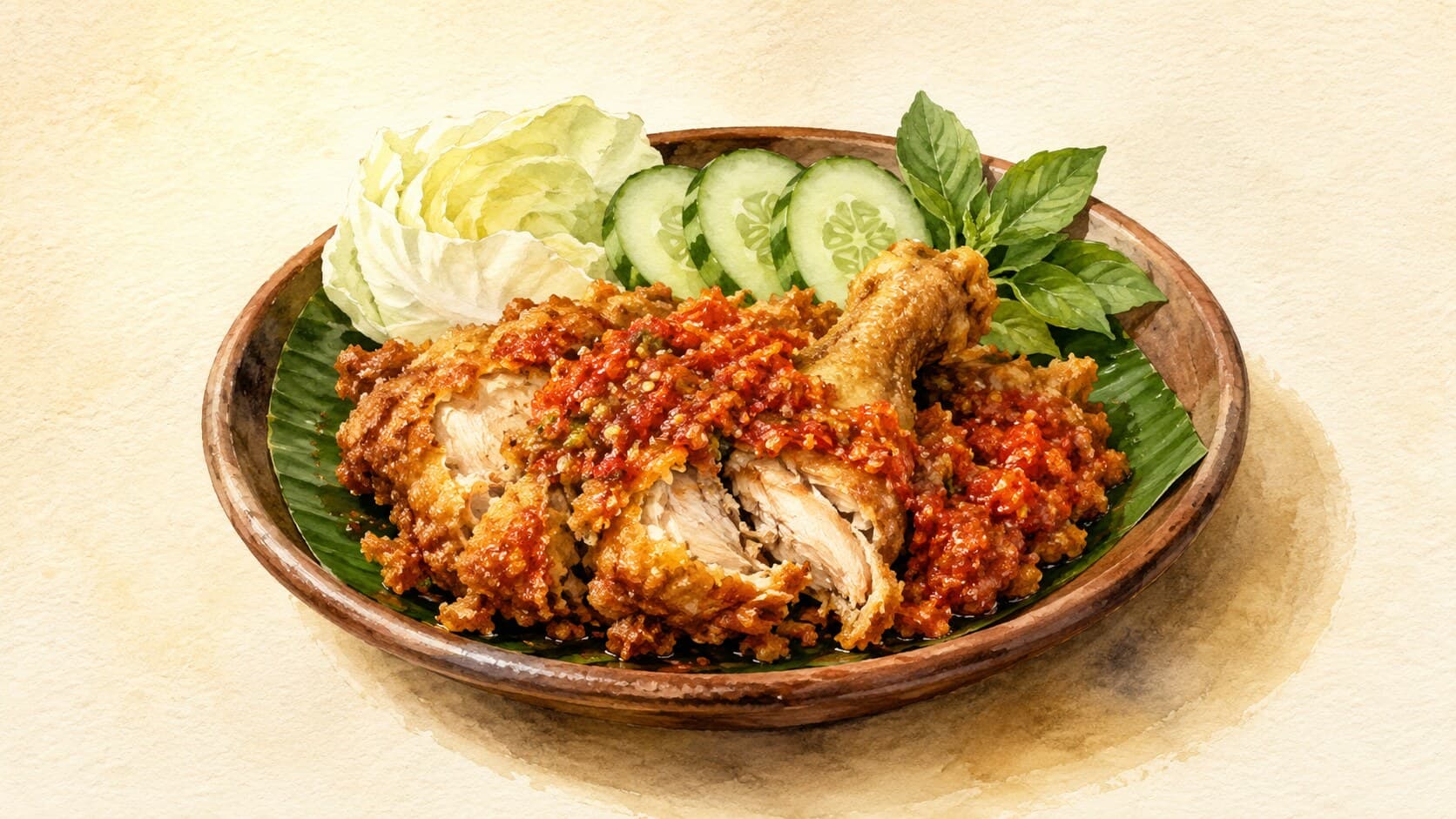
Ayam Penyet is a dish of braised and deep-fried chicken, served smashed with sambal terasi, common in Indonesian cuisine.
Contents (5 sections)▾
Ingredients
- 500 g chicken thighs, boneless
- 2 cloves garlic, minced
- 1 shallot, minced
- 1 tsp turmeric powder
- 1 tsp salt
- 1 tsp black pepper
- 200 ml water
- Oil for deep frying
- Sambal terasi, to taste
- Cucumber slices, for serving
- Tomato wedges, for serving
Steps
In a pot, combine chicken thighs, minced garlic, minced shallot, turmeric powder, salt, black pepper, and water. Bring to a simmer over medium heat for 20 minutes to infuse the flavors and tenderize the chicken.
Remove the chicken from the pot and let it cool slightly. Heat oil in a deep fryer or large pot to 180°C (350°F).
Once the oil is hot, gently add the chicken thighs and fry for about 5-7 minutes until golden brown and crispy. Ensure they are cooked through.
After frying, remove the chicken and place it on a cutting board. Use a flat surface to smash each piece gently to flatten.
Serve the smashed chicken with sambal terasi, cucumber slices, and tomato wedges on the side.
Tools you'll want
Why this works
This recipe uses a two-step cooking process: braising (gently simmering in a small amount of seasoned liquid) followed by deep-frying. The braising infuses moisture and flavor into the chicken, while frying creates a crispy exterior. This method ensures the chicken remains tender inside with a crunchy outside. If the chicken seems dry after frying, braising for a few more minutes or adding broth before frying can help. The sambal terasi (a spicy Indonesian chili paste made with fermented shrimp paste) adds a spicy, umami (savory, mouth-filling depth of taste) contrast that enhances the chicken's flavor. Smashed chicken increases surface area for crispy edges.
Common mistakes
Frying the chicken while it is still wet from the braise.
Target: Surface patted thoroughly dry before it meets the oil.
Why it matters: The chicken comes out of the braising liquid soaked. Water hitting 180°C oil flashes to steam, drops the oil temperature, and makes the surface spit and steam instead of crisping — you get pale, greasy skin rather than the crackly exterior penyet is built on.
What to do: Lift the chicken out, let it cool and drain, then pat every surface dry with paper towels before it goes into the oil.
Crowding the pot and dropping the oil temperature.
Target: A few pieces at a time, oil held near 180°C (350°F).
Why it matters: Cold-braised chicken added all at once pulls the oil temperature down fast, and below frying temperature the chicken absorbs oil instead of crisping. The braise already cooked it through, so the fry is only there to build color and crunch — it can't do that in lukewarm oil.
What to do: Fry in batches, let the oil recover between additions, and keep an eye on a steady, lively (not violent) bubble around each piece.
Smashing the chicken too hard.
Target: One firm press that flattens and cracks the piece open, not a pulverizing pound.
Why it matters: "Penyet" means smashed, and the point is to open the meat up so it grabs the sambal and stays tender — go too far and you shred it into dry fragments that fall apart on the plate.
What to do: Press once with the flat of a heavy pestle, the base of a mortar, or the side of a sturdy bowl, just until it flattens and splits.
Over-braising into dry, stringy meat.
Target: Thighs simmered just until cooked through and tender.
Why it matters: Chicken thigh stays forgiving for a while, but a long hard simmer eventually squeezes the moisture out, and then the fry can only dry it further. Penyet should be juicy under a crisp surface.
What to do: Keep the braise at a gentle simmer and pull the chicken as soon as it is cooked through; if it does come out dry, spoon a little of the warm braising liquid back over the smashed meat before serving.
What to look for
- The chicken before frying: matte and dry to the touch, no glistening film of braising liquid left on the surface.
- The oil as the chicken goes in: an immediate, steady curtain of fine bubbles around each piece — a sluggish reaction means the oil is too cool.
- The fried chicken: deep golden brown with a firm, crisp surface, not pale or oil-darkened in patches.
- After smashing: flattened and cracked open with the fibers visible, still holding together as one piece rather than scattering.
A note on history
Ayam penyet grew out of sambal tempe penyet, a Surabaya dish of fried tempeh (a firm cake of fermented soybeans) smashed into spicy sambal. The smashed-chicken version is widely credited to Pak Wardoyo, who created it in Medan in 1992 after applying that same smashing technique to fried chicken; he later opened a chain, Ayam Penyet Surabaya, dedicated to the dish. It spread quickly as cheap, filling student food and is now a staple of East Javanese–style cooking across Indonesia and beyond.
Get the essays in your inbox — free
Weekly notes on flavor, fermentation, and food history — the writing behind the Atlas of Flavor. No spam; unsubscribe anytime.