
Papa a la Huancaina (Peruvian Potatoes in Cheese Sauce)
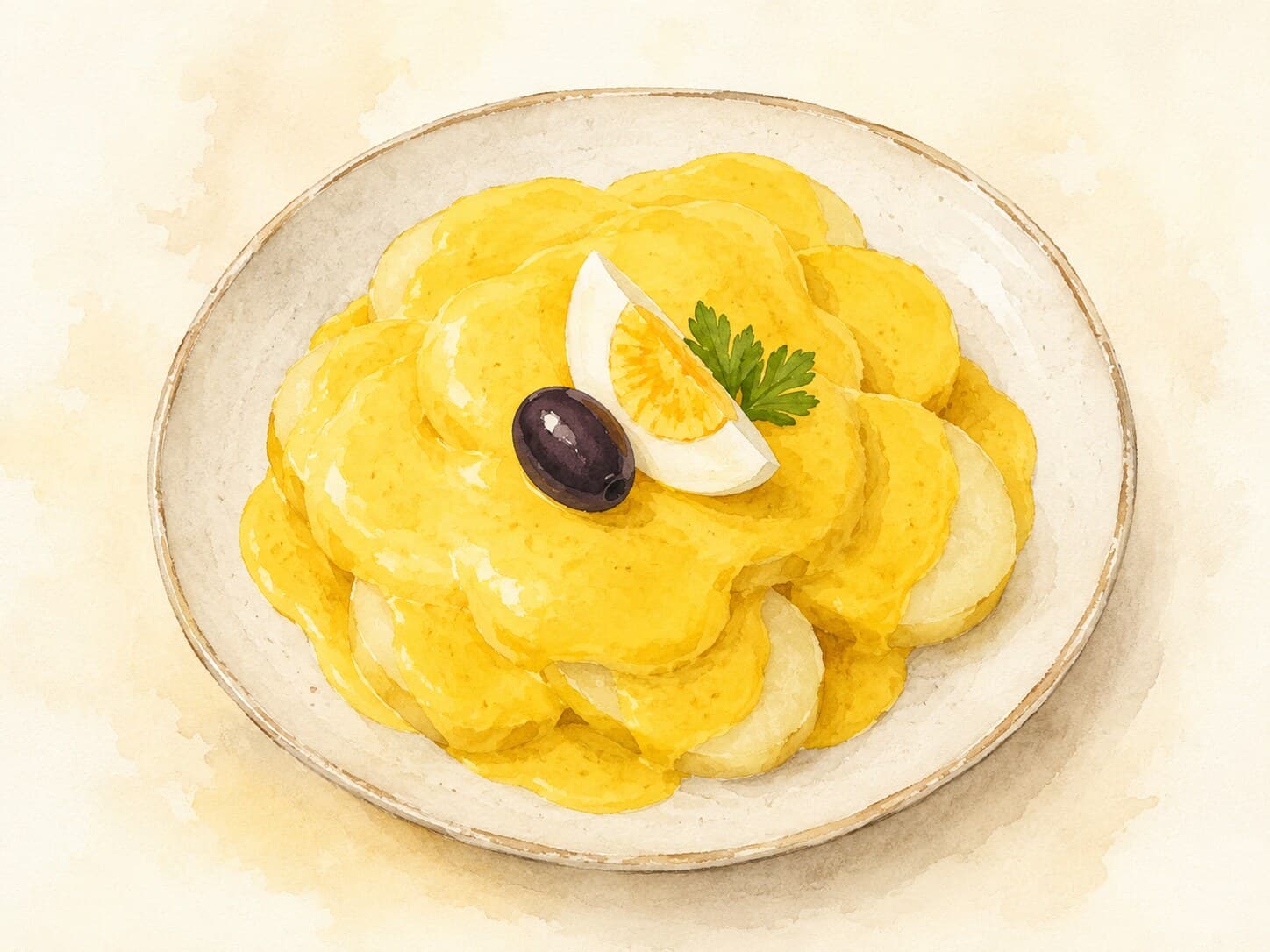
Papa a la Huancaina features tender boiled potatoes smothered in a creamy, vibrant aji amarillo cheese sauce.
Contents (5 sections)▾
Ingredients
- 800 g potatoes
- 200 g fresh cheese (like queso fresco)
- 100 g aji amarillo paste
- 250 ml evaporated milk
- 100 g saltine crackers
- salt to taste
- black olives for garnish
- hard-boiled eggs for garnish
- parsley for garnish
Steps
Boil the potatoes in salted water for about 15 minutes or until tender. This ensures they are soft and suitable for absorbing the sauce.
While the potatoes are boiling, in a blender, combine the fresh cheese, aji amarillo paste, evaporated milk, and saltine crackers. Blend until smooth and creamy.
If the sauce is too thick, add more evaporated milk a little at a time until the desired consistency is reached. Aim for a pourable texture.
Once the potatoes are cooked, drain them and allow them to cool slightly before serving them on a platter.
Pour the prepared aji amarillo cheese sauce generously over the potatoes and garnish with black olives, sliced hard-boiled eggs, and parsley.
Why this works
The technique of blending fresh cheese with aji amarillo, alongside crackers, creates a rich, silky sauce that clings beautifully to the potatoes. The aji amarillo provides a vibrant color and infuses the dish with a unique, smoky heat that complements the creamy texture of the sauce. Using crackers in the mixture helps to thicken the sauce while adding a touch of flavor. If the sauce seems too thick after blending, simply adjust by adding more evaporated milk until the desired pourable consistency is achieved. Aim for a balance where the sauce is thick enough to coat the potatoes but not so thick that it becomes gloopy. This dish is all about contrast; the softness of the potatoes paired with the bright, zesty sauce creates an unforgettable appetizer experience.
Common mistakes
Boiling the potatoes until they break apart in the water. Target: Potatoes are done when a paring knife slides in with no resistance but the skin still holds — usually 15–20 minutes for medium yellow potatoes; lift them out the moment they hit that point. Why it matters: Overboiled potatoes shed starch into the water and arrive on the plate as wet, structurally weak rounds that cannot support the sauce. The sauce is heavy; the potato has to act like a quiet platform. They must, of course, be cooked all the way through — chalky, undercooked potato is also not the goal. What to do: Start in cold salted water (not boiling), bring up gradually, and pull at the first clean knife test. Drain well and let them air-dry for a minute before slicing.
Using a raw egg yolk to "smooth" the sauce. Target: Build creaminess with queso fresco (a fresh, mild, slightly salty white cheese common across Latin America, often made from cow's milk), evaporated milk, and the starch from saltine crackers — not raw yolk. If a traditional recipe calls for yolk for binding, use a pasteurised egg yolk or replace it with a cooked binder, especially for vulnerable diners (pregnant, very young, elderly, immunocompromised). Why it matters: Raw shell egg can carry Salmonella; the sauce is served cold and sits on the table for the length of the appetizer course, which is the worst possible scenario for a raw-egg vehicle. Queso fresco and evaporated milk already give you the richness people associate with a yolk. What to do: Use pasteurised egg products if you want the yolk note, or leave it out entirely. Refrigerate the finished sauce until just before serving.
Treating cheese and aji amarillo carelessly with the food-safety basics. Target: Queso fresco from refrigeration within date, and ají amarillo paste from a sealed jar; assemble the sauce just before serving and refrigerate any leftovers within two hours. Why it matters: Queso fresco is a fresh dairy cheese — it sits in the warm zone fast on a buffet. The sauce becomes a temperature-abuse risk if left out long. Ají amarillo paste is acidic and shelf-stable in jar, but once opened it should be refrigerated. What to do: Build the sauce, taste, refrigerate; pour over potatoes at the moment of service; clear leftovers off the table.
Blending the sauce thin instead of just-pourable. Target: The sauce should ribbon off a spoon and coat the potato in an opaque, glossy layer; not so thick it sits in a clump, not so thin it runs into a puddle. Why it matters: This dish is built on a sauce-to-potato contrast — too thin and the potato sees only a yellow wash, too thick and the sauce reads as cheese paste. Crackers act as both thickener and savoury seasoning (starch granules absorbing liquid and swelling). What to do: Start with the listed evaporated milk and blend in extra a tablespoon at a time. Stop blending the moment the texture is right; over-blending heats the sauce and breaks the dairy emulsion.
What to look for
- A potato that holds its slice when cut with a knife, still whole on the plate. Crumbling rounds mean overboil; a clean-cut slice is the visual baseline.
- Sauce the colour of buttercream squash — a glowing, even yellow. Pale streaks mean the ají amarillo was not fully blended; brown flecks mean queso fresco was past its bloom.
- A ribbon that coats the back of a spoon and slowly drips, not pours. That is the visual cue for ideal sauce body.
- A clean dairy aroma with a low, fruity chilli warmth — never harsh or vinegary. Sharpness usually means too much raw garlic or an ají paste that has aged out; back off both.
A note on history
The dish is named for Huancayo, the Andean city in Peru's Junín region, although food historians often place its origin further west, in Lima or along the Lima–Huancayo rail corridor, in the late 19th century. The story most often repeated is of cooks (often women of railway workers) building a hearty dish around boiled potatoes, queso fresco and a local chilli for crews along the line. The chilli at the heart of the sauce — ají amarillo (a bright-orange Peruvian chilli with a fruity, moderate heat and a thick, fleshy wall) — is itself ancient: it appears on Andean pottery dating back roughly 5,000 years, and earlier highland versions of the dish reportedly used the hotter rocoto pepper before ají amarillo took over (Wikipedia: Papa a la huancaína, Eat Peru).
Get the essays in your inbox — free
Weekly notes on flavor, fermentation, and food history — the writing behind the Atlas of Flavor. No spam; unsubscribe anytime.