
Ají de Gallina
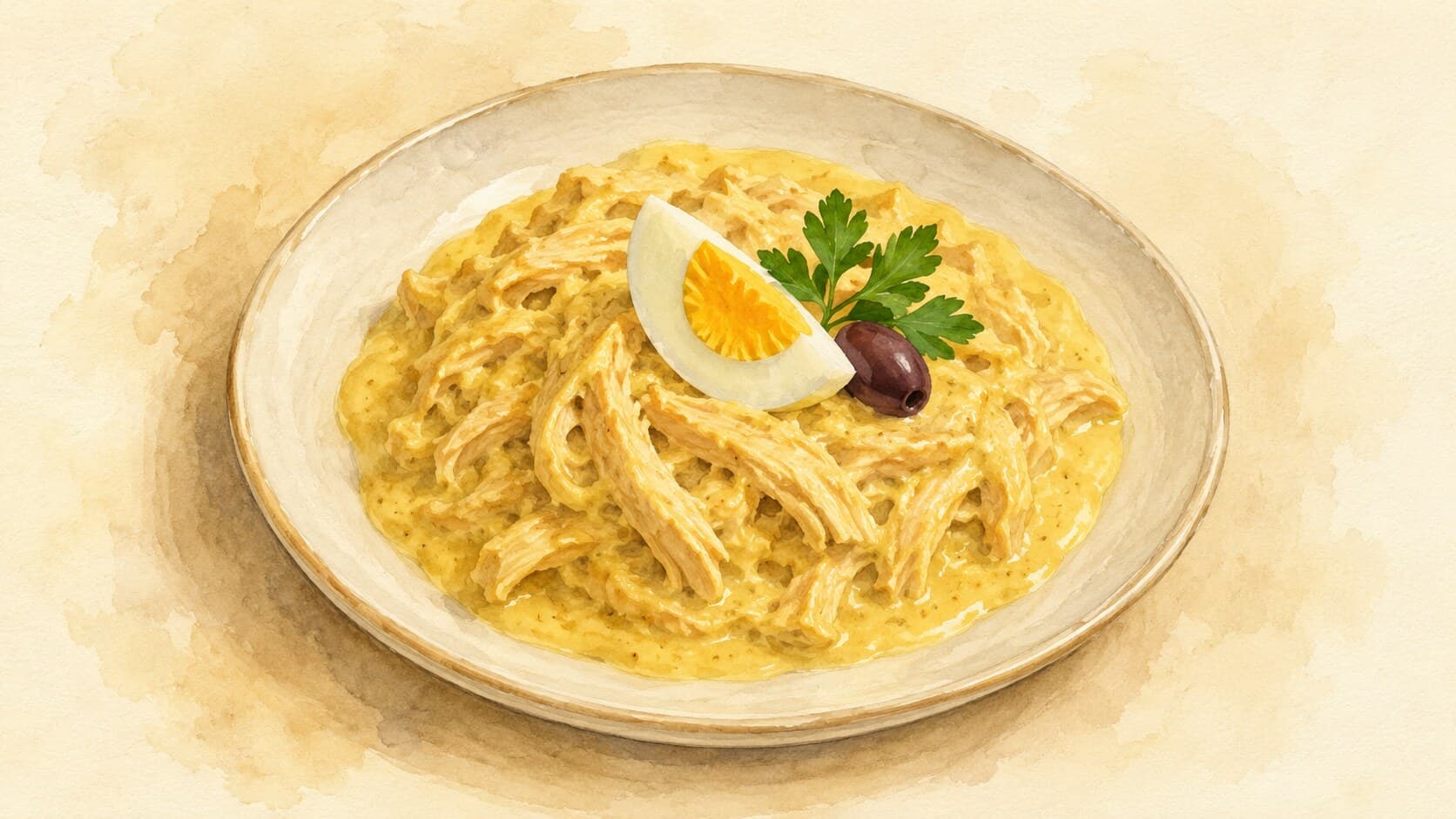
Ají de Gallina is a velvety Peruvian chicken stew made with shredded chicken, aji amarillo, and a rich bread-thickened sauce.
Contents (5 sections)▾
Ingredients
- 500 g shredded cooked chicken
- 200 g aji amarillo paste
- 250 ml chicken broth
- 100 g bread (preferably white, crusts removed)
- 1 medium onion, finely chopped
- 2 cloves garlic, minced
- 50 g walnuts, chopped
- 60 ml milk
- 1 tsp cumin
- 1 tsp salt
- 2 tbsp olive oil
- 4 hard-boiled eggs, halved
- black olives, for garnish
- cooked rice, for serving
Steps
In a skillet over medium heat, warm the olive oil and sauté the chopped onion until translucent, about 5 minutes. This develops the base flavor.
Add the minced garlic and cook for another minute until fragrant, ensuring it doesn’t burn for a smooth taste.
Stir in the aji amarillo paste and cumin, and cook for 2-3 minutes to release the flavors.
Blend the bread with the chicken broth and milk until smooth, then add to the skillet. Cook for 5 minutes or until thickened, stirring continuously.
Fold in the shredded chicken and walnuts. Cook for another 5 minutes until heated through. If the sauce is too thick, add a little more broth to reach the desired consistency.
Serve the ají de gallina over rice, garnished with hard-boiled egg halves and black olives.
Why this works
The technique of using bread as a thickener in the sauce is integral to achieving the desired creamy texture of ají de gallina. Bread absorbs moisture and adds body, creating a rich and velvety mouthfeel. The aji amarillo paste (a bright-yellow Peruvian chili pepper, more fruity and warm than fiery) brings a unique flavor, with its vibrant yellow hue and mild spiciness, which is essential to the dish. To prevent the sauce from becoming too thick, adjust with more broth if necessary; if it breaks (separates), a quick whisk can bring it back together. The walnuts add richness and a slight crunch, balancing the creaminess of the sauce. The combination of shredded chicken and this flavorful sauce makes for a comforting and satisfying meal, perfect for weeknight dinners.
Common mistakes
Pasty, gluey sauce from too much bread.
Target: A smooth, velvety sauce that coats the back of a spoon and pours slowly — not a stiff paste.
Why it matters: Bread is the thickener here, and it keeps swelling as it sits. Add too much, or let it sit too long, and the sauce turns dense and gummy instead of creamy.
What to do: Blend the bread with the broth and milk until smooth before adding it, and bring the sauce together gradually. If it tightens to a paste, loosen it with a little more warm broth or milk and stir until it flows again.
Not cooking the ají amarillo paste.
Target: The paste fried in the oil with the onion until it darkens slightly and smells deeply fragrant, about 2–3 minutes.
Why it matters: Raw chili paste tastes sharp and one-dimensional. A short fry in fat rounds it out, deepens the color, and lets its fruity character come forward.
What to do: Stir the paste and cumin into the softened onion and let it cook before any liquid goes in. It should smell toasty and look glossy, not raw and flat.
Boiling the sauce hard after the chicken goes in.
Target: A gentle simmer, just long enough to heat the chicken through (about 5 minutes).
Why it matters: The chicken is already cooked; hard boiling only dries out the shreds and can make a milk-based sauce break or look curdled.
What to do: Fold the chicken in over low-to-medium heat and warm it through gently. If the sauce ever looks like it's separating, pull it off the heat and whisk in a splash of broth or milk to bring it back.
Sauce too thick by serving time.
Target: Pourable and creamy when it reaches the plate, loose enough to nap the rice.
Why it matters: A bread-thickened sauce sets up further as it cools, so a sauce that looks right in the pan can be stiff by the time it's served.
What to do: Finish it slightly looser than you think you need, and keep a little warm broth on hand to thin it just before plating.
What to look for
- The ají amarillo base: deepened to a richer gold, glossy, smelling fruity and toasty. This is the moment the raw edge has cooked off and the liquid can go in.
- The sauce as it thickens: smooth and velvety, coating the spoon, no lumps of bread. It should fall from the spoon in a slow ribbon, not sit in a stiff mound.
- After folding in the chicken: the shreds glossed and just heated through, the sauce still creamy — not boiled dry or separated. Steam, not a hard bubble.
- On the plate: a pourable mustard-gold sauce that naps the rice and holds a gentle pool, not a paste. It should look creamy and loose alongside the egg and olives.
A note on history
Ají de gallina descends from manjar blanco (the medieval European blancmange), a dish of shredded poultry in a creamy, almond-thickened white sauce that reached Lima with the Spanish in the colonial era. Peruvian cooks reworked it with local ingredients — most importantly ají amarillo, the fruity yellow chili that gives the dish its color and warmth — while bread came to replace the almonds as the thickener. It is now considered a classic of comida criolla, Peru's Creole cooking that blends Indigenous, Spanish, African, and other influences. (Wikipedia, PromPerú / peru.info)
Get the essays in your inbox — free
Weekly notes on flavor, fermentation, and food history — the writing behind the Atlas of Flavor. No spam; unsubscribe anytime.