
Mentaiko Pasta
This creamy Mentaiko Pasta features a luscious emulsion of mentaiko and butter, perfectly coating al dente spaghetti.
Contents (5 sections)▾
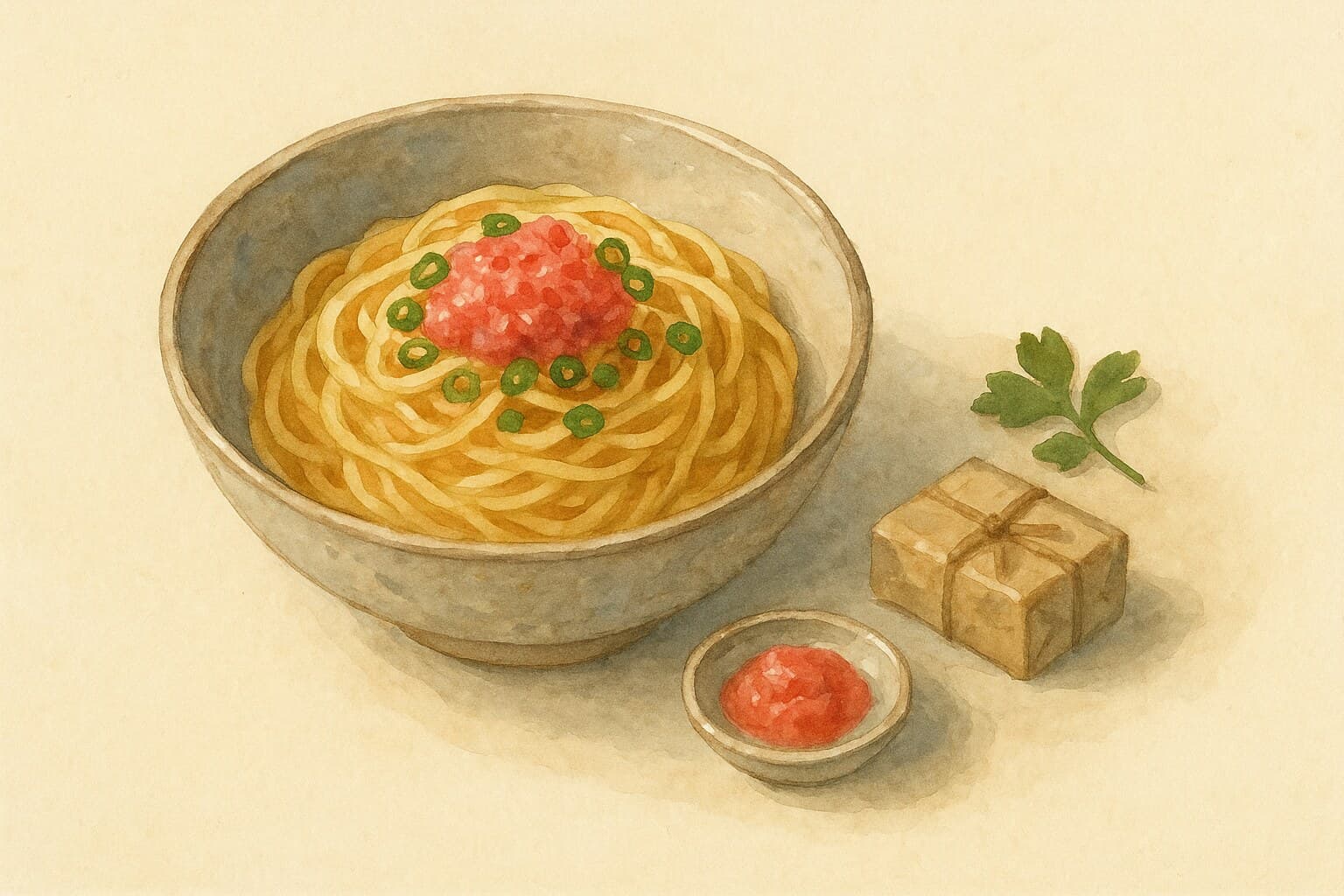
Ingredients
- 200 g spaghetti
- 60 g mentaiko (salted pollock roe)
- 30 g unsalted butter
- 2 tbsp pasta water
- 1 sheet nori, cut into strips
- 1-2 shiso leaves, for garnish (optional)
Steps
1. Bring a large pot of salted water to a boil (about 100°C). Add the spaghetti and cook according to package instructions (about 9 minutes) until al dente.
2. While the pasta is cooking, gently mash the mentaiko in a bowl and mix in 30 grams of butter until smooth.
3. Once the spaghetti is cooked, reserve 2 tablespoons (about 30 ml) of the pasta water, then drain the pasta.
4. In a large mixing bowl, combine the hot spaghetti with the mentaiko mixture and the reserved pasta water. Toss vigorously OFF the heat for about 1-2 minutes until a glossy emulsion forms.
5. If the mixture seems too thick, add a little more pasta water (1 tablespoon at a time) to achieve the desired creaminess.
6. Serve immediately, garnished with nori strips and shiso leaves if desired.
Why this works
Mentaiko pasta achieves its creamy texture through the technique of tossing hot spaghetti with mashed mentaiko (salted pollock roe) and butter off the heat, creating a silky emulsion (fat and liquid blended into one smooth, creamy sauce). The residual heat from the spaghetti gently warms the mentaiko without cooking it, preventing it from turning grainy. The butter adds richness, while the starchy pasta water helps bind the ingredients into a cohesive sauce. If the emulsion breaks or seems too thick, simply add a splash more of the reserved pasta water (approximately 15 ml) and toss again off the heat to restore that creamy consistency. Ensuring the mentaiko is properly chilled before use helps maintain its integrity during cooking, allowing you to enjoy the distinct flavor of the roe without compromising texture. The precision of time and temperature in this dish is crucial, as it ensures that each component melds perfectly, resulting in a harmonious balance of flavors and textures. This method highlights the beauty of simplicity in Japanese cuisine, where quality ingredients shine through with minimal intervention.
Common mistakes
Tossing the pasta and mentaiko in a pan still sitting on the burner.
Target: A mixing bowl, off the heat entirely, using only the heat stored in the hot spaghetti.
Why it matters: Roe is mostly protein. Above roughly 60–65°C those proteins set, exactly the way egg white turns from clear liquid to firm white — the sauce loses its silky coating and breaks into tiny hard beads. The residual warmth of drained spaghetti is enough to melt the butter and take the raw edge off the roe without crossing that line.
What to do: Drain the pasta, tip it straight into the bowl with the mentaiko-butter paste, and toss. If your kitchen is cold, warm the bowl with hot tap water first and dry it — that keeps the sauce fluid without adding real heat.
Salting the pasta water as heavily as usual.
Target: About half the salt you would use for a tomato or oil-based sauce.
Why it matters: Mentaiko is salted pollock roe — the salt is its preservative and a large part of its flavor. 60 g of it seasons the whole dish on its own, so normally-salted water pushes the finished plate past pleasant into harsh.
What to do: Salt the water lightly, taste one strand of pasta before draining, and remember that the reserved pasta water you add later is salty too.
Using butter straight from the refrigerator.
Target: Butter soft enough to dent easily with a finger before you mash it into the roe.
Why it matters: Cold butter is a solid block; the roe cannot fold into it, so you end up with lumps of butter and separate patches of roe, and neither coats the pasta evenly. Soft butter blends into a smooth paste that spreads over every strand the moment the hot pasta lands.
What to do: Cut the 30 g into small pieces and leave it out while the water comes to a boil — that is usually long enough.
Draining the pasta bone-dry and forgetting the cooking water.
Target: 2 tablespoons of cooking water set aside before draining, added a tablespoon at a time.
Why it matters: That cloudy water carries starch released by the pasta, and starch is what lets fat and moisture hold together as one creamy sauce instead of separating into greasy and watery layers. Once the water is down the sink, you cannot get it back.
What to do: Dip a mug into the pot before you drain. Add one spoonful, toss, judge, and only then add more.
Leaving the mentaiko in its thin membrane.
Target: The roe scraped free of the sac that holds it.
Why it matters: Each lobe is wrapped in a thin skin that stays rubbery no matter what you do. Mashed in whole, it shows up as chewy threads in an otherwise silky sauce.
What to do: Slit the sac lengthwise with a knife tip and scrape the roe out with the back of the blade or a spoon. Keep it refrigerated until the moment you use it, and serve the finished pasta straight away.
What to look for
- The mentaiko-butter paste: pale coral pink, smooth and loose like soft frosting, with no separate yellow lumps of butter and no visible pieces of membrane.
- Pasta water: cloudy and faintly milky, not clear. That cloudiness is the starch you need for the sauce.
- Pasta doneness: bite a strand — it should give with slight resistance and show only a faint paler line at the very center, never a chalky white core. Drain the moment you get there; it keeps softening in the bowl.
- Tossing: the sauce turns from patchy blobs to an even glossy coating that clings all the way along each strand, and the bowl feels like it is getting slightly thicker as you go — usually 1–2 minutes.
- Consistency is right when: a thin creamy film coats the bottom of the bowl — not a watery puddle (needs more tossing) and not a shiny oily slick (the butter has separated; a splash more pasta water and more tossing will bring it back).
- The warning sign of overheating: the coral color fades toward dull beige and small firm specks appear. That is the roe setting. Stop, get it off any heat, and loosen with pasta water.
- At the table: the nori should still be crisp and rustle when cut — scatter it on at the last second, since it softens within a minute on hot pasta.
A note on history
Mentaiko descends from Korean salted, chili-seasoned pollock roe, which was familiar in the port city of Hakata through the Korean peninsula. Toshio Kawahara, founder of the Fukuoka shop Fukuya, reworked it for Japanese tastes and sold the first Japanese karashi mentaiko in Hakata in 1949; he never patented the method and shared it freely, which is why Fukuoka now has hundreds of mentaiko makers rather than one. (Sources: Karashi Mentaiko — Food in Japan, Visit Fukuoka: mentaiko)
Get the essays in your inbox — free
Weekly notes on flavor, fermentation, and food history — the writing behind the Atlas of Flavor. No spam; unsubscribe anytime.