
Buri Daikon
Buri Daikon is a Japanese dish made by simmering yellowtail and daikon in a dashi-soy broth, focusing on flavor integration and broth clarity.
Contents (5 sections)▾
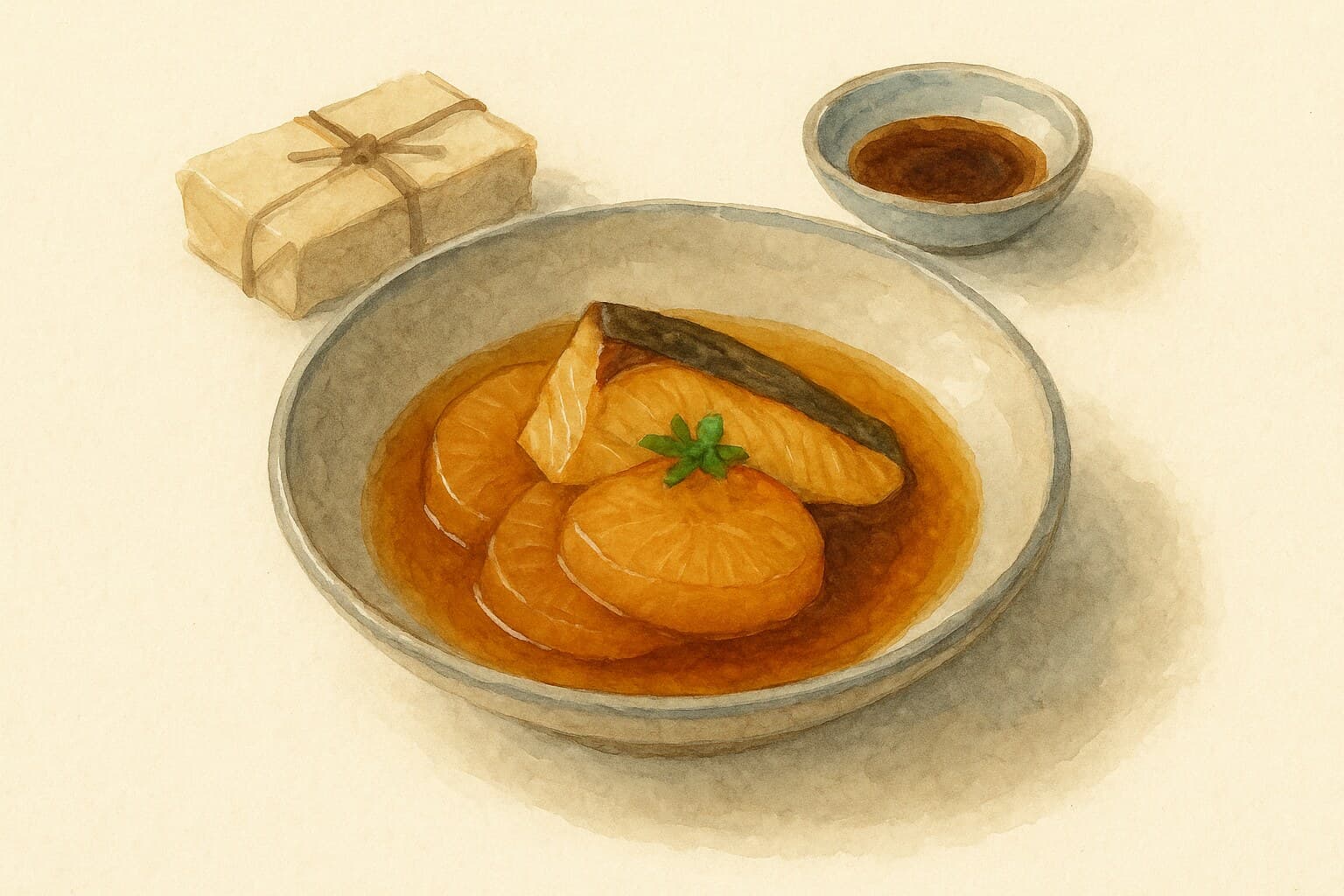
Ingredients
- 400 g yellowtail fillet, cut into collar pieces
- 300 g daikon, sliced into 1 cm disks
- 600 ml dashi broth
- 4 tbsp soy sauce
- 2 tbsp mirin
- 1 tbsp sake
- 1 cm ginger, julienned
- to taste, green onions, chopped
Steps
In a pot, combine dashi, soy sauce, mirin, and sake. Bring to a simmer over medium heat.
Add the sliced daikon to the pot and simmer for 10 minutes until slightly tender.
Gently place the yellowtail collar pieces into the pot, ensuring they are submerged, and simmer for an additional 5 minutes.
Add the ginger and simmer for another minute to infuse the flavors.
Serve the dish hot, garnished with chopped green onions on top.
Why this works
The technique of simmering yellowtail and daikon in a dashi-soy broth employs the umami-rich dashi to enhance the flavors of both the fish and vegetable. The dashi provides a complex base, while the soy sauce adds depth and a touch of sweetness. Simmering the daikon first allows it to absorb the flavors while softening. If the daikon becomes too soft, it may lose its appealing texture; to remedy this, reduce the simmering time. Additionally, the yellowtail, being a fatty fish, benefits from the gentle cooking method, preventing it from becoming dry. The result is a harmonious blend of flavors that embodies comfort during the cold winter months, making it a family dish in Japan. This preparation also allows for flexibility; if you prefer more sauce, simply add more dashi and soy sauce, adjusting to taste. The key is to balance the dashi and soy to suit your preference while ensuring each ingredient is cooked to perfection.
Common mistakes
Skipping the quick blanch of the yellowtail (shimofuri).
Target: Pour boiling water over the fish pieces (or dip them briefly), then rinse off any clouded blood and residue before they go in the broth — shimofuri (a quick scald that sets the surface and rinses away off-odors).
Why it matters: Yellowtail is a rich, fatty fish, and the blood and surface slime carry the muddy "fishy" smell. A brief scald firms the outside and lets you wash that away, so the finished broth tastes clean and savory rather than of strong fish. Skip it and the whole pot can take on a heavy, off note.
What to do: Salt the pieces, give them a short scald in just-boiled water until the surface turns white, then rinse gently under cold water before simmering.
Rushing the daikon so it stays firm and bland.
Target: Daikon simmered until it turns translucent and amber, tender enough for a skewer to slide through with no resistance.
Why it matters: Raw daikon is dense and watery; it only drinks up the dashi-soy broth once long, gentle heat softens its cell walls and the seasoning can move in (a slow exchange of water and flavor in and out of the slices). Pull it early and you get pale, crunchy daikon that tastes of nothing while the broth around it is fully seasoned.
What to do: Give the daikon a real head start — a long, quiet simmer on its own before the fish — and don't judge by color alone; test with a skewer.
Boiling hard once the fish is in.
Target: A gentle simmer with just a few bubbles breaking the surface — never a rolling boil.
Why it matters: Yellowtail's fat and delicate protein are easily overdone. A violent boil seizes the protein and squeezes moisture out, leaving the fish dry and stringy, and it can knock the pieces apart. Low, steady heat keeps the flesh moist and intact while it takes on the broth.
What to do: Once the fish goes in, drop the heat so the surface barely trembles, and spoon broth over the pieces instead of stirring them around.
Serving the fish before it's cooked through.
Target: Yellowtail simmered until opaque and just firm all the way through — flaking cleanly, no translucent raw centre.
Why it matters: This is a cooked dish, not sashimi; the gentle simmer is there precisely so the fish cooks through without drying. Underdone collar pieces near the bone can stay raw at the center even when the outside looks done.
What to do: Give the fish its full few minutes in the simmer, and check the thickest piece flakes apart cleanly before serving.
What to look for
- The daikon before the fish goes in: translucent and amber to the center, a skewer sliding through with no resistance. White and crunchy at the core means it needs more time.
- The broth as it reduces: glossy and faintly thickened, deep tea-brown, coating the back of a spoon. Thin and pale means it hasn't concentrated enough to season the daikon.
- The yellowtail when it's done: opaque and just firm, flaking cleanly into moist pieces. A translucent or mushy center means it needs another minute; a dry, stringy texture means the heat was too high.
- The surface of the pot: a gentle, lazy simmer — a few bubbles, never a hard boil. A rolling boil is your cue to turn the heat down before the fish toughens.
A note on history
Buri daikon pairs two ingredients that are both at their winter best — fatty buri (yellowtail) and sweet, dense daikon — simmered together until each takes on the other's flavor. It's strongly associated with the Hokuriku region, especially Toyama and Ishikawa, where cold-season yellowtail (kanburi, 寒鰤) is prized; from there it has become a winter home-cooking staple across Japan (Food in Japan; MAFF, Our Regional Cuisines). The dish reflects the Japanese habit of building a meal around what is in season, when both fish and root are cheap, abundant, and at their richest.
Get the essays in your inbox — free
Weekly notes on flavor, fermentation, and food history — the writing behind the Atlas of Flavor. No spam; unsubscribe anytime.