
Aji Fry (Japanese Fried Horse Mackerel)
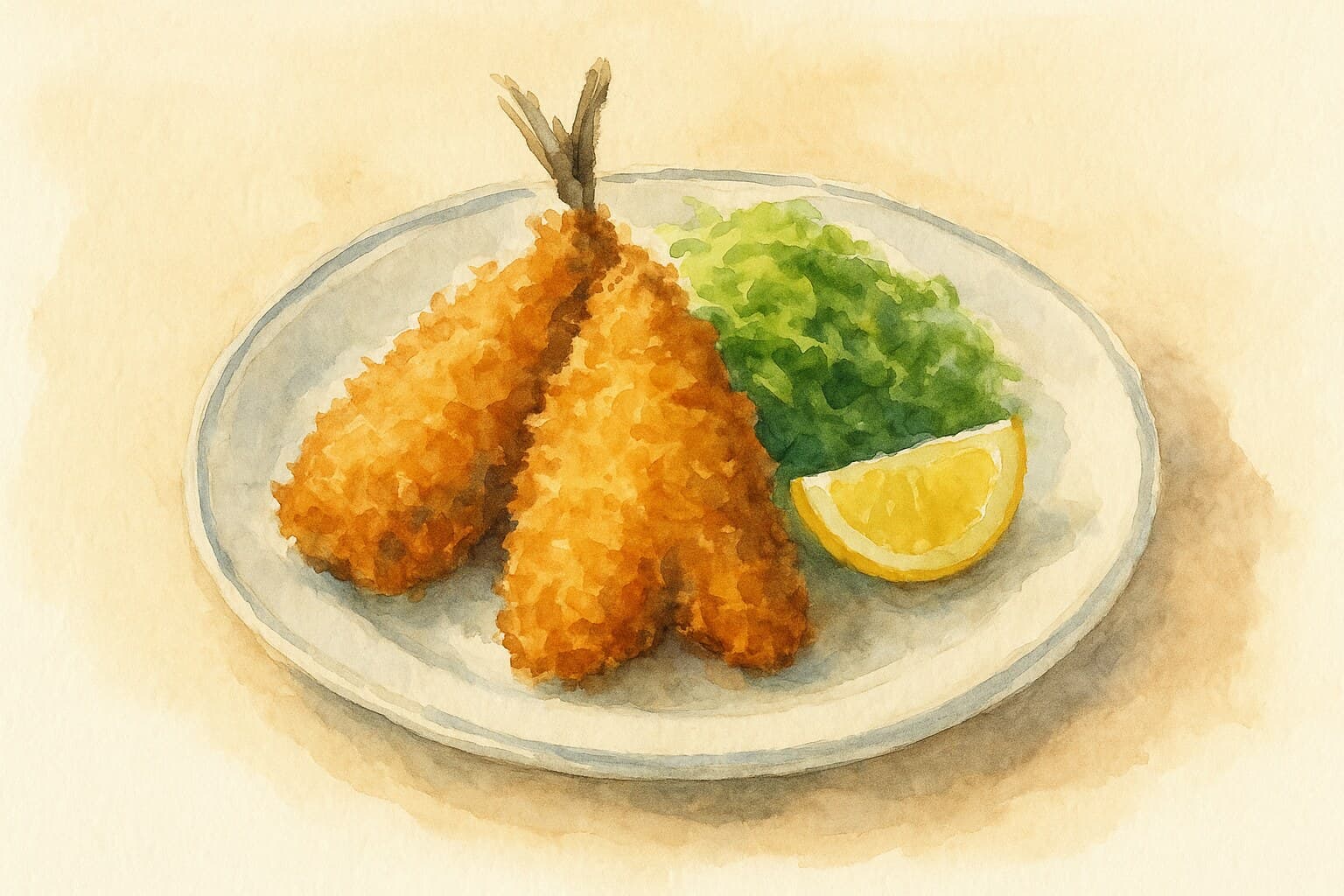
Aji Fry is a delightful Japanese dish featuring crispy fried horse mackerel fillets, perfectly seasoned and breaded.
Contents (4 sections)▾
Ingredients
- 2 horse mackerel (aji) fillets, skin-on
- 1 tsp salt
- 50 g all-purpose flour
- 1 large egg, beaten
- 100 g panko breadcrumbs
- Vegetable oil for deep frying
- Shredded cabbage, to serve
- Lemon wedges, to serve
Steps
1. Sprinkle salt evenly on the horse mackerel fillets and let them dehydrate for exactly 10 minutes. This helps draw out excess moisture, preventing the fish from becoming soggy.
2. Wipe the fillets dry with paper towels to remove excess moisture and salt, ensuring a crispier crust.
3. Set up a breading station with three bowls: one with flour, one with beaten egg, and one with panko breadcrumbs.
4. Coat each fillet in flour, then dip it into the egg, allowing excess to drip off, and finally press it into the panko breadcrumbs, ensuring an even coating.
5. Heat vegetable oil in a deep fryer or heavy pot to a precise temperature of 170-180°C. Carefully lower the breaded fillets into the hot oil.
6. Fry the fillets for exactly 4-5 minutes, turning occasionally, until the crust is set and golden brown. Avoid overcooking to keep the fish tender.
7. Remove the fried fillets from the oil and place them on paper towels to drain excess oil. Serve hot with shredded cabbage and lemon wedges.
Tools you'll want
Why this works
The salt-dehydration technique is crucial in making Aji Fry as it removes excess moisture from the fillets, which is key to achieving a crispy texture when frying. By wiping the fillets dry after salting, you ensure that the flour, egg, and panko (light, airy Japanese breadcrumbs that fry up extra crisp) adhere properly, which creates a strong, crisp crust during frying. The three-stage breading process—flour, egg, and panko—adds layers of crunch and flavor. It is important to maintain the oil temperature between 170-180°C, as frying at this range allows the crust to set quickly, preventing the fish from absorbing too much oil. If the crust breaks during frying, try lowering the temperature slightly to around 160°C and allowing the fillet to fry for an additional minute. This will help form a stronger bond and ensure the crust remains intact. This method enhances the overall dish, making it both crispy and tender, ensuring a satisfying experience with every bite. The careful attention to time and temperature is essential to replicate this traditional Japanese dish successfully.
Common mistakes
Skipping the salt-and-dry step.
Target: Salted for 10 minutes, then patted thoroughly dry before breading.
Why it matters: Surface moisture is the enemy of a crisp crust. Wet fillets steam inside the breading and produce a soft, pale coating that slides off.
What to do: Salt the fillets, let them sit, then blot away the beaded moisture and salt with paper towels before the flour stage.
Breading that falls off in the oil.
Target: A coating that stays bonded to the fish through frying.
Why it matters: If the fillet is wet, or the flour layer is skipped or uneven, the egg and panko have nothing to grip and the crust detaches in the oil.
What to do: Go flour, then egg, then panko in order. Coat evenly in flour first — it is the glue layer — let excess egg drip off, and press the panko on firmly.
Crowding the oil and dropping the temperature.
Target: Oil held at 170–180°C, with only a couple of fillets in at a time.
Why it matters: Cold fish chills the oil. Add too much at once and the temperature crashes, so the crust never sets quickly and the coating soaks up oil and turns greasy.
What to do: Fry in small batches and let the oil recover between them. A thermometer takes the guesswork out; the oil should sizzle steadily, not violently, around the fish.
Overcooking thin fillets.
Target: A golden-brown crust over fish that is just cooked through, opaque, and still juicy.
Why it matters: Aji fillets are thin and cook fast. Left in too long they dry out and toughen even as the crust looks fine.
What to do: Pull the fillets once the crust is set and deep golden, around 4–5 minutes; the fish inside finishes quickly. Rest briefly on paper towels or a rack so the crust stays crisp.
What to look for
- Before breading: the salted fillets look matte and feel dry to the touch, not wet or slick.
- Lowering into the oil: a steady, lively stream of small bubbles around each fillet — not a slow trickle (oil too cool) and not a furious boil (oil too hot).
- Doneness: the crust is even and deep golden-brown and the fillet floats a little higher and feels firm; inside the fish is opaque all the way through and still juicy.
- After draining: the crust stays audibly crisp and the surface is dry, not glistening with absorbed oil.
Get the essays in your inbox — free
Weekly notes on flavor, fermentation, and food history — the writing behind the Atlas of Flavor. No spam; unsubscribe anytime.