
Amami Keihan (Amami Chicken Rice Soup)
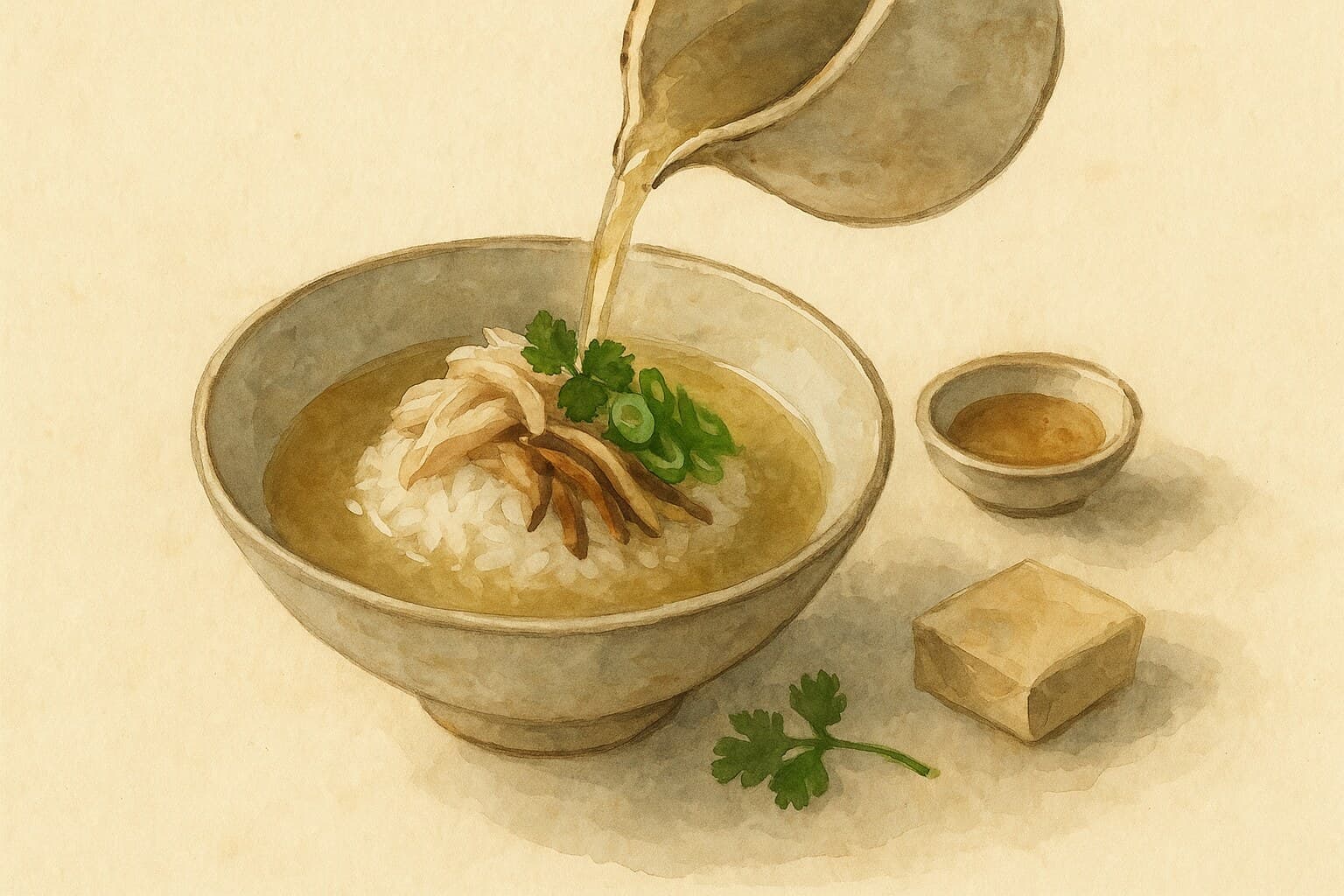
Amami Keihan is a fragrant chicken rice soup served with a clear broth poured at the table.
Contents (5 sections)▾
Ingredients
- 300 g chicken breast
- 1 L water
- 1 tsp salt
- 100 g cooked white rice
- 2 eggs, beaten
- 50 g pickled vegetables, assorted
- 2 sprigs green onion, chopped
- 1 sheet nori, cut into strips
- Soy sauce, to taste
- Mirin, to taste
Steps
In a pot, combine water and salt, bring to a gentle simmer over medium heat (around 80°C).
Add the chicken breast and poach for 12-15 minutes until fully cooked; ensure the water does not boil to keep the broth clear. Cook until the thickest part reaches 74 °C / 165 °F on an instant-read thermometer — colour, juices and time are guides, not the safety test.
Remove the chicken, let it cool, then shred it into bite-sized pieces.
Strain the broth to remove any impurities, then season with soy sauce and mirin to taste.
In another pan, scramble the beaten eggs over low heat to create thin sheets, then slice into strips.
To serve, place a portion of rice in each bowl, arrange shredded chicken, egg, pickles, and green onion on top.
At the table, pour the hot seasoned broth over the assembled ingredients, allowing the aroma to enhance the dish.
Tools you'll want
Why this works
Gently poaching the chicken (cooking it slowly in barely-simmering water, never a hard boil) allows it to retain moisture and tenderness while producing a clear broth, rich in flavor without cloudiness. This technique is vital as it preserves the aesthetic appeal and purity of the broth. Cooking at a low temperature prevents the proteins from coagulating (clumping and firming up) too quickly, which can lead to a murky broth. If the broth appears cloudy, it may be due to boiling instead of simmering; to remedy this, strain the broth through a fine mesh to clarify it. The final step of pouring the broth at the table enhances the sensory experience, as the heat releases the aromatic compounds, making the dish more inviting and flavorful. This method improves the dish and allows for personal adjustments in seasoning just before consumption, ensuring that each diner enjoys a tailored flavor.
Common mistakes
Letting the poaching water boil.
Target: A bare simmer, around 80°C, with only occasional small bubbles breaking the surface.
Why it matters: A rolling boil agitates the soluble proteins and fat the chicken releases, emulsifying them into the water (blending the fat into the liquid so it won't separate back out) and turning a clear broth cloudy. Keihan lives or dies on that clarity — the broth is poured at the table and you are meant to see through it.
What to do: Bring the water up, then back the heat down until the bubbles almost stop before the chicken goes in. If it does cloud, strain it through a fine mesh (or a mesh lined with a paper towel) to recover most of the clarity.
Slicing the chicken instead of shredding it.
Target: Hand-torn strands that follow the grain of the breast.
Why it matters: Keihan is finished by pouring hot broth over the toppings, so the chicken has to drink that broth back in. Torn strands have a ragged, open surface that soaks up liquid; clean knife slices stay dense and taste dry in the bowl.
What to do: Let the poached chicken cool enough to handle, then pull it apart along the grain into thin shreds.
Over-seasoning the broth in the pot.
Target: A broth that tastes slightly under-seasoned on its own.
Why it matters: The rice, the egg, and especially the pickles all carry their own salt, and the broth only meets them in the bowl. Season the pot to taste straight from the spoon and the assembled dish lands too salty.
What to do: Hold the broth a touch light with soy and mirin, then taste a spoonful poured over a little rice and adjust from there.
Pouring lukewarm broth.
Target: Broth brought back to a near-boil just before it goes to the table.
Why it matters: The whole point of finishing at the table is the lift of aroma when hot liquid hits the nori, scallion, and chicken — volatile aromatics (the smell molecules that float up easily) need heat to leave the bowl. Tepid broth gives you a flat, washed-out version of the same dish.
What to do: Reheat the seasoned broth until it just begins to steam hard, then pour immediately over the assembled bowl.
What to look for
- The broth before serving: clear enough to read the bottom of the pot through it, pale gold, not milky or gray.
- The poached chicken: the thickest part reaches 74°C / 165°F on a food thermometer, the meat opaque but still moist — not stringy and tight. Colour and clear juices vary and are not the safety test.
- The shredded egg: thin, dry-set ribbons, pale yellow, with no wet or runny curds.
- The finished bowl as you pour: a visible rise of steam and aroma, the rice loosening into the broth rather than sitting in a dense clump.
A note on history
Keihan traces to Amami Ōshima during the Edo period, where it was prepared to host the inspecting officials sent by the Satsuma domain that then governed the islands — chicken being a precious ingredient reserved for such occasions. In its earlier form it was eaten more like a chicken takikomi-style rice (rice cooked together with the chicken and seasonings) rather than a poured-broth dish; the now-standard practice of ladling hot chicken broth over the bowl became widespread in the Shōwa era and is today the common way it is served. It remains one of the representative local dishes of Kagoshima Prefecture.
Get the essays in your inbox — free
Weekly notes on flavor, fermentation, and food history — the writing behind the Atlas of Flavor. No spam; unsubscribe anytime.