
Kiritanpo Nabe (Akita Rice Skewer Hotpot)
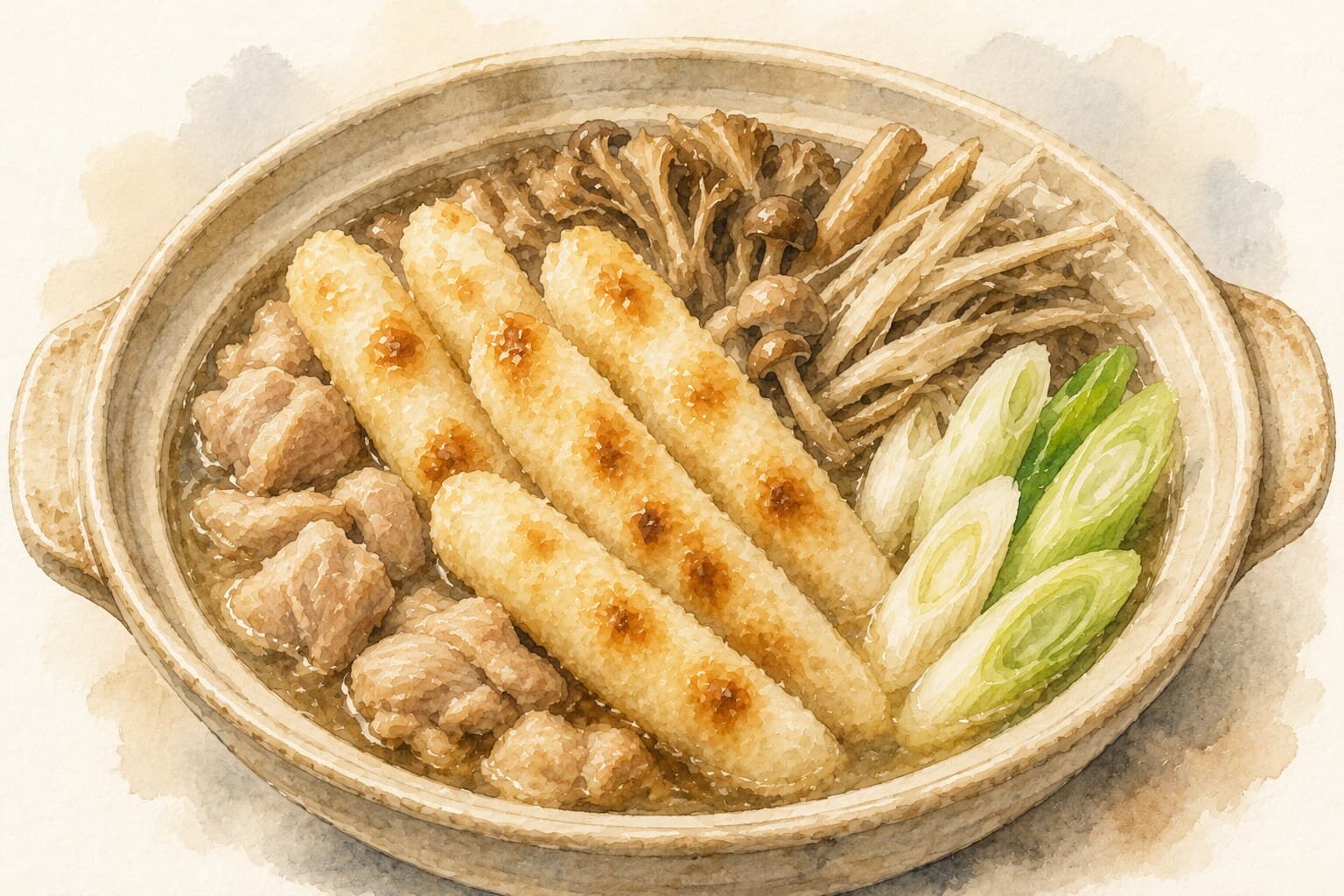
Kiritanpo Nabe is a comforting Akita hotpot featuring toasted rice skewers simmered in a rich chicken broth.
Contents (5 sections)▾
Ingredients
- 300 g fresh short-grain rice
- 1.5 liters free-range chicken broth (hinai-jidori recommended)
- 200 g chicken thigh, cut into bite-sized pieces
- 1 medium daikon radish, sliced
- 100 g shiitake mushrooms, sliced
- 100 g green onions, cut into 5 cm pieces
- 2 tbsp soy sauce
- 1 tbsp miso paste
- Salt to taste
- 1 tbsp sesame oil
Steps
Rinse 300 g of fresh short-grain rice under cold water until the water runs clear, then soak for 30 minutes.
Drain the rice and steam it for 30 minutes, until fully cooked.
While the rice is still warm, pound it using a pestle or a heavy object until it becomes smooth and sticky.
Divide the pounded rice into equal portions, mold each portion around a skewer, and toast them over an open flame or grill until golden brown.
In a large pot, bring 1.5 liters of chicken broth to a simmer over medium heat.
Add the chicken pieces and simmer for 5 minutes until they are cooked through.
Stir in the daikon, shiitake mushrooms, and green onions, then add 2 tbsp of soy sauce and 1 tbsp of miso paste. Allow to simmer for another 5-10 minutes.
Carefully place the toasted rice skewers into the pot and let them simmer for an additional 5 minutes to absorb the flavors.
Taste and adjust with salt if needed before serving hot.
Why this works
The technique of pounding the rice creates a sticky consistency, allowing it to mold onto skewers and absorb the rich flavors of the broth. Toasting the rice skewers adds a delightful depth to the dish, enhancing the overall flavor. The pounded rice acts like a sponge, soaking up the savory chicken broth, resulting in a comforting and hearty hotpot. If the rice seems too dry after pounding, you can add a splash of water to help it stick better. Similarly, if the broth is too salty, add a little water to balance the flavors. This dish showcases the harmony of simple ingredients, highlighting the quality of the hinai-jidori chicken and seasonal vegetables, making it a warm, nourishing meal perfect for any gathering.
Common mistakes
Under-pounding the rice.
Target: Pound freshly steamed rice while still hot until grains are about 50% broken and the mass is tacky and cohesive. Some whole grains should still be visible — this is the texture called hantsuki (half-pounded).
Why it matters: Kiritanpo (Akita's toasted pounded-rice skewer) is not mochi. Full pounding turns the rice into uniform, taffy-like paste that loses its bite in the broth. Half-pounding keeps the texture of recognizable rice while breaking enough grains to release surface starch — that starch is what holds the rice together on the skewer and gives the toasted shell something to brown into. Under-pounded rice falls off the skewer in the pot.
What to do: Mash with a wooden pestle or the back of a heavy spoon while the rice is hot. Stop when about half the grains have lost shape and the mass clings to the pestle without stringing like mochi.
Cold rice on the skewer.
Target: Mold the half-pounded rice around the skewer while it is still warm (above 50°C / 120°F). Wet your hands and the skewer with salted water to prevent sticking.
Why it matters: Cold rice loses the surface tackiness that lets the kiritanpo bond to the skewer; it cracks and slides off when toasted. Warm rice still has enough free moisture and softened starch on each grain to press into a smooth, even cylinder around the wood.
What to do: Pound, then shape immediately. If the rice cools before you're done, return it briefly to the steamer or microwave 30 seconds to warm through. Keep a bowl of lightly salted water nearby to wet your hands between skewers.
Boiling chicken instead of simmering.
Target: Bring chicken broth to a gentle simmer (light bubbling at the edge, occasional break across the surface — about 85–90°C) and hold the chicken there until cooked through, about 5–8 minutes per bite-sized piece.
Why it matters: A hard boil makes chicken thigh tough and stringy, and it churns the broth cloudy by emulsifying surface fat. The classic kiritanpo nabe broth depends on a clear, deep chicken broth made from hinai-jidori (Akita's native chicken breed) bones — boiling it muddles that base. Gentle simmer keeps the broth clean and the chicken tender, while still bringing the meat above the food-safe 74°C / 165°F threshold required for poultry.
What to do: Use a thermometer or watch the surface. Adjust heat so bubbles only break at the pot's edge. Probe the thickest chicken piece — it should read 74°C / 165°F minimum, with juices running clear.
Adding the kiritanpo too early.
Target: Slide toasted kiritanpo into the pot in the last 3–5 minutes of simmering, just before serving.
Why it matters: The toasted shell is the texture contrast that makes this dish — crisp outside, broth-soaked inside. Left in the pot too long, the shell dissolves, the rice goes pasty, and the broth thickens with starch into something closer to porridge. Adding at the end keeps the layered bite intact.
What to do: Have the vegetables nearly done before the kiritanpo joins. Slide skewers in, set a 3-minute timer, lift to bowls while the shell still holds shape. Ladle broth over at the table.
What to look for
- Pounded rice ready to shape: half-pounded texture, tacky to the touch, clings without stringing. If it pulls like mochi, you've gone too far. If grains are still mostly whole, pound more.
- Skewered rice before toasting: smooth even cylinder, no cracks, fully encasing the wood from end to end. Cracks open up in the heat and the kiritanpo splits.
- Toasted kiritanpo: deep golden-brown shell with darker streaks, a faint smell of roasted rice, structure firm to the squeeze. Pale = under-toasted (shell will dissolve in broth); blackened = bitter.
- Broth at simmer: clear amber-gold, bubbles only at the edge, faint chicken aroma rising as steam. Cloudy or churning = too hot, drop the heat.
- Chicken at the cut: firm and opaque, juices run clear, internal 74°C / 165°F. No pink at the bone or center.
A note on history
Kiritanpo originated in the Odate and Kazuno areas of northern Akita Prefecture, in mountain communities where matagi (traditional Akita hunters) and woodcutters needed portable, shelf-stable rice for long days in the woods. They mashed leftover rice from their mountain huts, wrapped it onto wooden sticks, and toasted it over the hearth — the resulting kiritanpo kept well and traveled well, and the toasted shell could simmer back to softness in any broth on hand (SHUNGATE: Akita's kiritanpo, LIVE JAPAN: What is kiritanpo?). The hot pot form emerged as a harvest-season celebration: after the autumn rice harvest, locals gathered to cook the new rice into kiritanpo and simmer it with hinai-jidori chicken in a communal nabe. What began as a hunter's survival food became, over centuries, the defining dish of Akita's regional identity.
Get the essays in your inbox — free
Weekly notes on flavor, fermentation, and food history — the writing behind the Atlas of Flavor. No spam; unsubscribe anytime.