
Katsu Sando
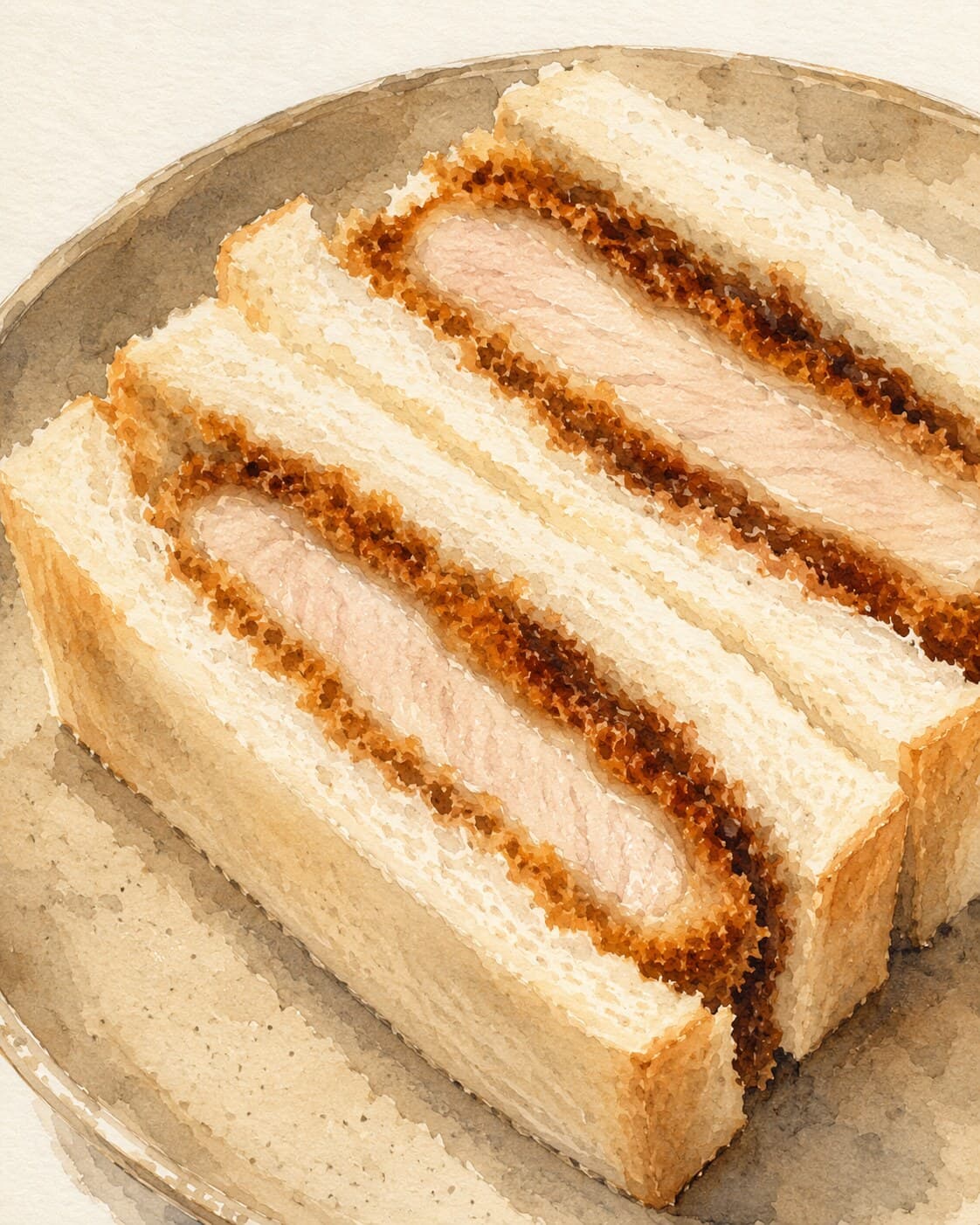
This Katsu Sando features a perfectly cooked pork loin cutlet, breaded and fried, nestled in soft shokupan milk bread.
Contents (5 sections)▾
Ingredients
- 200 g pork loin cutlet
- 1/2 cup panko breadcrumbs
- 1/4 cup all-purpose flour
- 1 large egg
- 2 slices shokupan milk bread
- 1 tbsp karashi mustard
- 2 tbsp tonkatsu sauce
- 500 ml neutral oil, for deep frying
- 30 g cabbage, shredded (optional)
Steps
1. Heat oil in a deep frying pan to 170°C. This temperature ensures the cutlet cooks evenly and develops a golden crust.
2. Season the pork loin cutlet with salt and pepper. Dredge it in 50 grams of flour, dip into 1 beaten egg, and coat with 100 grams of panko breadcrumbs.
3. Carefully place the breaded cutlet in the hot oil and fry for about 5-7 minutes, or until it reaches an internal temperature of at least 63°C, then rest for 3 minutes to retain juiciness.
4. While the cutlet rests for 3 minutes, prepare the sandwich by spreading 10 grams of karashi mustard on one slice of shokupan and 20 grams of tonkatsu sauce on the other.
5. Once the cutlet has rested for 3 minutes, place it between the slices of shokupan. If desired, add 30 grams of shredded cabbage for crunch.
6. Use a sharp knife to slice the sandwich cleanly, pressing gently to avoid squeezing the cutlet out.
Tools you'll want
Why this works
The key to a successful Katsu Sando lies in the frying technique and the quality of ingredients. Cooking the pork loin cutlet at 170°C allows the breadcrumbs to crisp up while the meat cooks through without becoming dry. To ensure there is no pink in the pork, aim for an internal temperature of 63°C, followed by a 3-minute rest; this lets it come off its peak heat, so it spills less juice into the bread when cut. If the cutlet is too thick, it might not cook evenly — in that case, pound it to an even thickness before breading. Additionally, if you find that the cutlet is browning too quickly, reduce the heat slightly to maintain an even cooking temperature. Slicing the sandwich correctly is also crucial; a sharp knife will help you make a clean cut without compressing the bread or the cutlet, preventing any mess. The combination of karashi mustard (a sharp, hot Japanese yellow mustard) and tonkatsu sauce (a thick, sweet-and-tangy brown sauce made for fried cutlets) provides a flavorful contrast that enhances the dish while the soft milk bread cushions the crunch of the cutlet, creating a delightful texture. This careful attention to temperature and timing ensures a perfect balance of flavors and textures in every bite.
Common mistakes
Frying the loin without cutting the rim of fat and sinew.
Target: Shallow nicks every 2 cm along the fat line at the edge of the cutlet.
Why it matters: A pork loin has a strip of fat and a thin band of connective tissue along one edge. Heat makes that band shrink much faster than the meat does, so it pulls the cutlet into a curl. A curled cutlet touches the oil unevenly, cooks unevenly, and — worse for a sando — will not lie flat between two slices of bread.
What to do: Before seasoning, run your knife tip through the fat edge and just into the meat, every couple of centimetres. Also pound the cutlet to an even thickness, as the recipe suggests, so the whole piece finishes at the same time.
Oil that is too hot, on a cutlet that is too thick.
Target: 170°C, held steady, for 5–7 minutes.
Why it matters: Panko browns long before the middle of the pork is cooked. At 190°C you get a dark, almost burnt crust in three minutes with a centre that has not reached the safe 63°C. At 150°C the crust never seals and the cutlet soaks up oil, turning the sandwich heavy and greasy. 170°C is the narrow window where the two clocks line up.
What to do: Use a thermometer in the oil, not a guess. Fry one cutlet at a time so the temperature does not crash, and let the oil recover between batches.
Building the sandwich while the cutlet is still steaming.
Target: The 3-minute rest the recipe calls for — used for resting, not skipped.
Why it matters: A cutlet straight from the oil is releasing a lot of steam. Trapped between two slices of soft milk bread, that steam condenses into water and the bread goes limp and grey within a minute. The rest does two jobs at once: it lets the cutlet cool off its peak heat so it sheds less juice into the bread when you cut, and it lets the surface steam escape into the air instead of into your sandwich.
What to do: Rest the cutlet on a wire rack — not on paper towel or a plate, where the underside sits in its own steam and goes soft. Assemble at the end of the 3 minutes, while it is still warm but no longer visibly steaming.
Putting the sauce on the cutlet, or using too much of it.
Target: A thin, even layer spread on the bread — karashi on one slice, tonkatsu sauce on the other, as the recipe sets out.
Why it matters: Tonkatsu sauce is mostly water. Poured onto a hot crust, it dissolves the crunch you just spent seven minutes building; the crisp shell turns to mush from the inside. Spread on the bread instead, the same sauce seasons every bite without ever soaking the crust. And karashi is a hot Japanese mustard — its heat is sharp and comes on fast, so a thin smear does far more work than a thick one.
What to do: Spread both slices right to the edges in a thin film, then lay the cutlet on. If you are adding the optional cabbage, put it against the bread rather than against the crust.
Sawing through the sandwich with a dull knife.
Target: One long, smooth draw of a sharp blade, with almost no downward pressure.
Why it matters: A dull blade cannot cut the crust, so it pushes instead. Pressing down compresses the soft milk bread into a dense band, squeezes the sauce out of the sides, and shoves the cutlet out the back — which is exactly the mess this dish is judged on. The clean layered cross-section is not decoration; it is the proof that nothing was crushed.
What to do: Use the longest sharp knife you have. Rest the blade on the sandwich, then draw it back and forth in long strokes, letting the edge do the work. Wipe the blade clean between cuts so sauce is not dragged through the bread. Trimming the crusts off first — the way sandwich shops in Japan do — also makes the cut noticeably cleaner.
What to look for
- The cutlet before frying: an even thickness across the whole piece, panko standing up loose and spiky, no shiny wet patches where the egg shows through.
- Oil at 170°C: a single panko flake dropped in sinks slightly, bobs straight back up, and is surrounded by fine, steady bubbles within about two seconds. Violent bubbling and instant browning mean it is too hot; a flake that sits still on the bottom means it is too cool.
- Mid-fry: big bubbles and a loud, busy sizzle as the pork's moisture boils off. The crust is still pale straw.
- Nearly done: the sound drops to a quieter, finer crackle and the bubbles shrink — most of the surface water has gone. The colour is moving from gold to a warm amber.
- Cooked through: an instant-read thermometer in the thickest part of the meat reads at least 63°C. Rest 3 minutes; the pork may look faintly rosy, which is normal and safe at this temperature and rest, but it must not look wet, translucent or raw.
- Ready to assemble: the crust has stopped visibly steaming and sounds hard when tapped, and the rack underneath is dry rather than beaded with condensation.
- A good cut: the bread edge stays square rather than squashed, the layers — bread, sauce, crust, meat — sit in clean parallel bands, and the cutlet ends flush with the bread instead of sliding out.
A note on history
The katsu sando is usually credited to Isen, a tonkatsu restaurant that opened in Ueno, Tokyo in 1930; its proprietress Toki Ishizaka is said to have created the sandwich in 1935. The story attached to it is a practical one: Isen's customers included geisha from the nearby entertainment district, and the cutlet was served on small, specially ordered slices of bread so it could be eaten in neat bites without disturbing their lipstick — which is also why Isen's pork was pounded tender enough to cut with chopsticks. Isen is still trading at the same site. (Sources: Wikipedia — Katsu-sando, SBS Food — "From geishas to the world: Katsu sando, then and now")
Get the essays in your inbox — free
Weekly notes on flavor, fermentation, and food history — the writing behind the Atlas of Flavor. No spam; unsubscribe anytime.