
Pancit Canton (Filipino Stir-Fried Noodles)
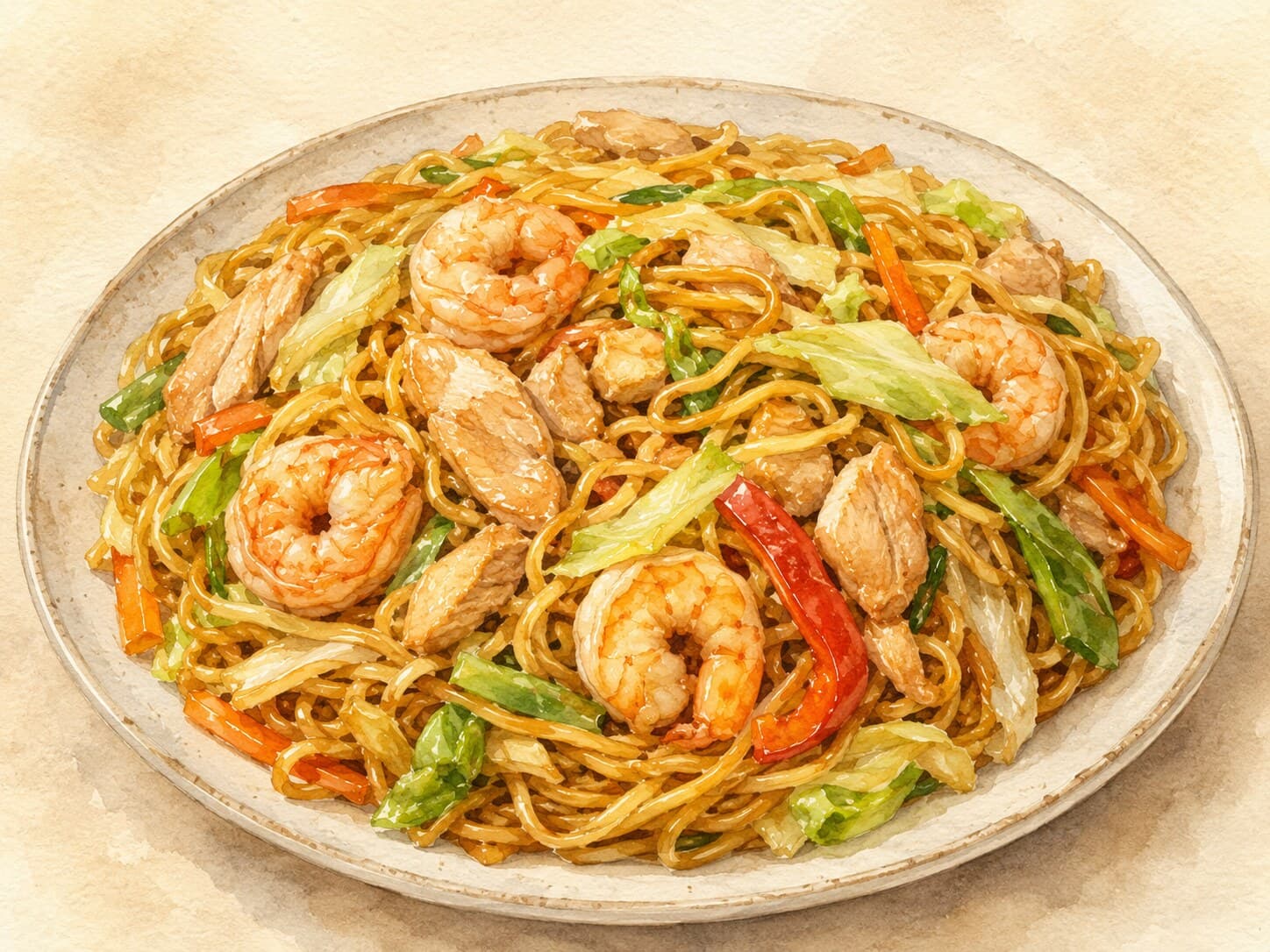
A vibrant Filipino stir-fried noodle dish that absorbs rich flavors for a delicious, hearty meal.
Contents (5 sections)▾
Ingredients
- 300 g wheat noodles
- 200 g shrimp, peeled and deveined
- 100 g cabbage, shredded
- 100 g carrot, julienned
- 100 g snow peas, trimmed
- 2 tbsp vegetable oil
- 4 cloves garlic, minced
- 1 onion, sliced
- 2 cups chicken or vegetable broth
- 2 tbsp soy sauce
- 1 tbsp oyster sauce
- Salt and pepper to taste
- Calamansi or lime wedges for serving
Steps
Soak the wheat noodles in warm water for about 10 minutes until softened, then drain and set aside.
Heat the vegetable oil in a large wok or skillet over medium-high heat. Add the garlic and onion, stirring for about 1-2 minutes until aromatic.
Add the shrimp to the wok, cooking for about 3-4 minutes until they turn pink and opaque, then remove them from the pan and set aside.
In the same wok, add the cabbage, carrot, and snow peas. Stir-fry for about 3-4 minutes until slightly tender but still crisp.
Pour in the chicken or vegetable broth, soy sauce, and oyster sauce. Bring to a simmer for about 2 minutes to build flavor.
Add the soaked noodles back into the wok and toss them in the broth mixture over high heat for about 3-5 minutes, allowing them to absorb the flavors and become tender.
Return the shrimp to the wok, mixing well, and season with salt and pepper to taste. Cook for an additional minute to heat through.
Serve hot, garnished with calamansi or lime wedges on the side.
Why this works
This technique of stir-frying noodles allows them to absorb flavors from the broth rather than being merely coated by sauce. By first sautéing the aromatics and proteins, you develop a deep flavor base that enhances the entire dish. The high heat at the end ensures that the noodles cook quickly while soaking up the seasoned broth, leading to a savory and cohesive dish. If the noodles seem too dry or not absorbing enough broth, simply add a splash of additional broth or water and continue tossing over high heat. This will help them finish cooking while still capturing the rich flavors from the stir-fry, preventing a clumpy or bland result.
Common mistakes
Pulling the shrimp before it is fully opaque, or returning it raw at the end. Target: Shrimp should be uniformly pink-white, opaque all the way through, and curled into a loose "C" — not the tight "O" of overcooked shrimp. Why it matters: Shrimp and any chicken or pork in the dish must reach safe internal cooking — translucent grey-blue shrimp is undercooked. Because shrimp finishes fast, it is easy to pull it too early on the first pass and then add it back to a wok that has lost heat. What to do: Cook the shrimp until just opaque on the first pass and remove it. Return it only in the last minute, over good heat, until uniformly opaque and curled in a loose C.
Tossing dry noodles straight into the wok. Target: Soak the dry wheat noodles in warm water until just pliable (about 8–10 minutes), then drain well; they should bend but still feel firm. Why it matters: Dry noodles tossed directly into broth absorb liquid unevenly — the outsides go gummy while the centres stay raw. A short soak starts hydration evenly so the final cook in broth finishes them through. What to do: Soak in warm (not hot) water, drain, and shake off excess water before they hit the broth.
Overcrowding a small wok. Target: Vegetables should hiss the moment they hit the pan; you should be able to see the bottom of the wok between pieces. Why it matters: A crammed wok drops in temperature, the vegetables release water, and the dish steams instead of stir-frying. Cabbage, carrot and snow peas need that high dry heat to keep snap and colour. What to do: Work in batches if needed. Get the wok screaming hot, add aromatics, then vegetables in two pushes.
Soft, broth-logged noodles instead of seasoned ones. Target: Noodles should look glossy and almost dry at the end, having absorbed the broth from within rather than swimming in it. Why it matters: Pancit canton is "seasoned from inside" — broth is meant to be drawn into the noodles, not pooled around them. Noodles in broth means watery flavor and an unattractive plate. What to do: Add broth in stages. Toss the noodles in over high heat until the liquid disappears, then taste; only add more if the noodles still feel firm in the centre.
What to look for
- Shrimp curled in a loose C, opaque pink-white right through. A tight, dense O means it has been cooked too long; translucent grey means not enough.
- Vegetables that still snap: cabbage with bright edges, carrot still bright orange, snow peas a vivid green. Drab, limp vegetables are a sign the wok lost heat.
- Noodles that are glossy and almost dry, with a faint hiss when tossed. Standing liquid in the pan at the end means too much broth or too little heat.
- A finishing aroma of garlic, soy and a fruity citrus lift from the calamansi (a small, fragrant Filipino citrus, somewhere between lime and tangerine) or lime. That citrus brightness is what tells you the dish is ready to serve — squeeze just before eating.
A note on history
Pancit refers to a family of noodle dishes the Philippines absorbed from centuries of trade with Chinese (mainly Hokkien, a southern Chinese coastal dialect group) merchants — the word itself comes from the Hokkien pian i sit, "convenient food." Pancit canton is the wheat-noodle, stir-fried branch of that family; despite the "canton" in the name, it has no direct lineage to Guangdong (Canton) cooking. Across the archipelago, pancit became a fixture at birthdays and celebrations, where long noodles signal long life — a Sino-Filipino layering of meaning that travelled with the noodles themselves (Pepper.ph, Wikipedia: Pancit).
Get the essays in your inbox — free
Weekly notes on flavor, fermentation, and food history — the writing behind the Atlas of Flavor. No spam; unsubscribe anytime.