
Giouvetsi
Giouvetsi is a hearty Greek one-pot dish featuring lamb or beef braised with orzo in a rich tomato-cinnamon broth.
Contents (5 sections)▾
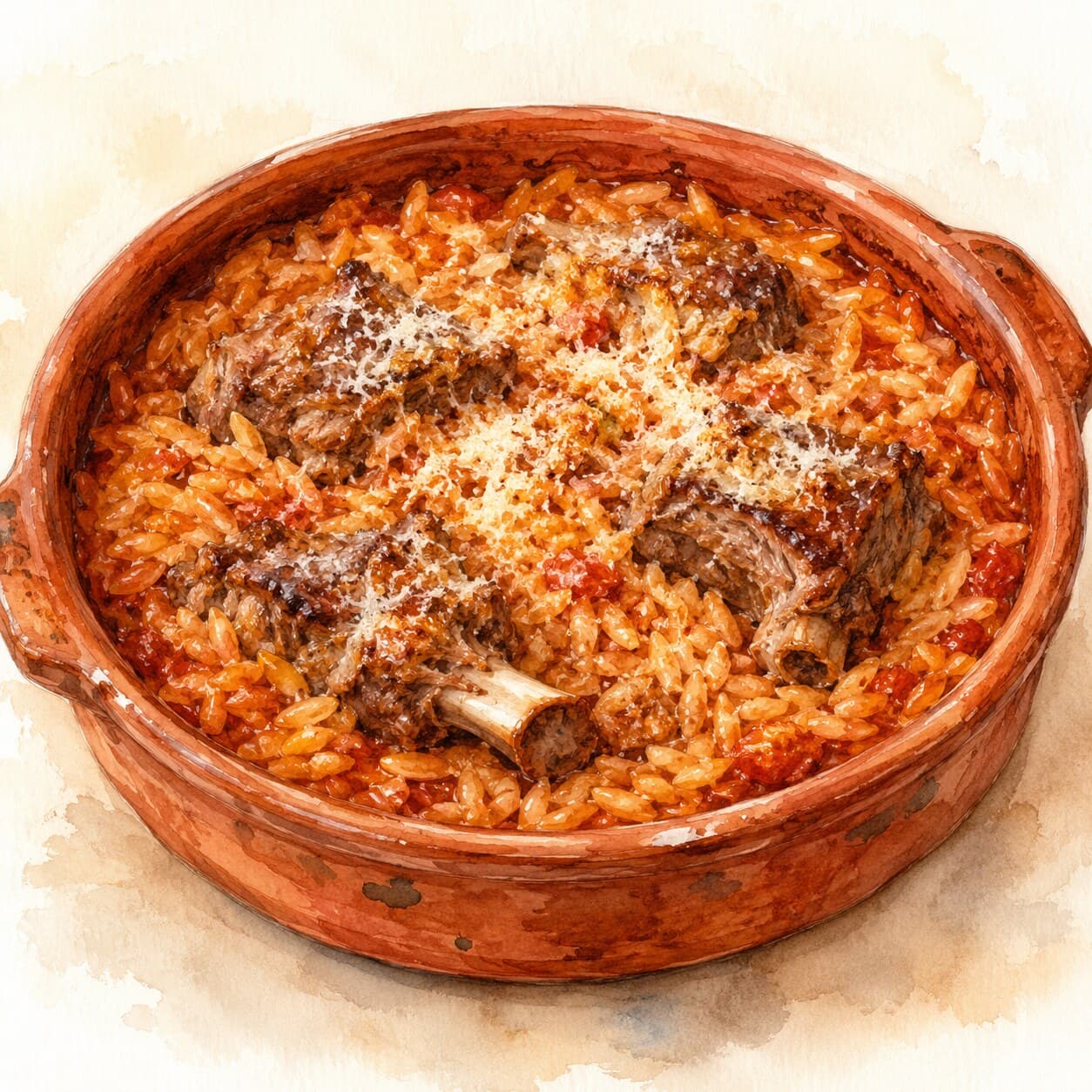
Ingredients
- 500 g lamb or beef, cut into chunks
- 300 g orzo (kritharaki)
- 1 L tomato passata
- 1 medium onion, finely chopped
- 3 cloves garlic, minced
- 2 tsp ground cinnamon
- 1 tsp ground allspice
- 2 tbsp olive oil
- 1 tsp salt
- 1/2 tsp black pepper
- 100 g kefalotyri cheese, grated
- 1 sprig fresh parsley, for garnish
Steps
Preheat your oven to 180°C (350°F). This ensures an even cooking temperature for the giouvetsi.
In a large oven-safe pot, heat olive oil over medium heat. Add the chopped onion and minced garlic, sautéing until softened, about 5 minutes.
Add the lamb or beef chunks to the pot, browning them on all sides for about 8-10 minutes. This step develops the meat's flavor.
Stir in the tomato passata, cinnamon, allspice, salt, and pepper. Bring to a simmer, then cover and reduce heat, cooking for 20 minutes to let the flavors meld.
After 20 minutes, stir in the orzo and enough water to cover the pasta by 1 cm. Bring back to a simmer.
Cover the pot and transfer it to the preheated oven. Bake for 25-30 minutes until the orzo is tender and has absorbed most of the liquid.
Remove from the oven, sprinkle grated kefalotyri cheese on top, and return to the oven uncovered for an additional 5-10 minutes until the cheese is golden and bubbly.
Let the giouvetsi rest for 5 minutes before serving. Garnish with fresh parsley.
Why this works
Giouvetsi is a classic Greek one-pot dish that brilliantly combines braising (gently cooking tougher meat in liquid, covered and low, until it turns tender) and baking techniques. The initial browning of the meat develops rich flavors through the Maillard reaction (the savory browning that happens when meat sears in a hot pan), while the subsequent simmering with tomatoes and spices creates a fragrant broth that infuses the orzo. The key is maintaining the right moisture level; if the dish seems too dry before baking, add a bit more water to ensure the orzo cooks properly without burning. Conversely, if it appears too soupy, allow it to simmer uncovered for a few minutes before transferring to the oven. This dish feeds the body and warms the soul, embodying the essence of Greek home cooking.
Common mistakes
Rushing the meat into the oven before it's nearly tender.
Target: Simmer the browned lamb or beef in the tomato-cinnamon sauce on the stovetop until it is almost fork-tender before the orzo goes in.
Why it matters: Orzo (a rice-shaped pasta) cooks through in about 25–30 minutes, but a braising cut of lamb or beef (a tougher cut meant to cook low and slow in liquid) needs far longer to break down its tough connective tissue. If raw orzo and half-cooked meat go into the oven together, the pasta turns soft long before the meat catches up.
What to do: Give the meat its full 20-minute simmer in the sauce first, and only stir in the orzo once a piece yields easily to the tip of a fork.
Not leaving enough liquid before the pot goes into the oven.
Target: Cover the orzo by a full 1 cm of water, and check the level partway through baking.
Why it matters: Orzo keeps absorbing liquid as it bakes; without enough, it turns gluey and can scorch onto the bottom of the pot in the oven's dry heat, since there's no one there to stir it the way you would on the stovetop.
What to do: Measure the water line before covering the pot, and if the top layer looks dry partway through baking, stir in a splash more hot water rather than letting it catch.
Broiling the cheese unattended.
Target: Watch closely once the kefalotyri (a firm, salty Greek grating cheese) goes back into the oven uncovered.
Why it matters: The gap between golden-and-bubbly and scorched-and-bitter is short, especially in a pot that's already been building heat for 45 minutes or more.
What to do: Check every minute or two once the cheese starts to color, and pull the pot the moment it's evenly golden rather than waiting for the timer.
Serving straight from the oven without resting.
Target: Let the giouvetsi sit off the heat for the full 5 minutes before spooning it out.
Why it matters: The sauce is still loose and at a full boil right out of the oven; a short rest lets the orzo finish absorbing the last of the liquid, so servings hold together instead of pooling on the plate.
What to do: Set a timer for the rest and hold off portioning it — the texture visibly tightens in those last few minutes.
What to look for
- Lamb or beef that shreds easily under a fork, with no raw or pink color at the center. A braise like this is safe, and at its most tender, well past 90 °C internal — if a chunk still resists the fork, it needs more time in the sauce, not more time in the oven with the orzo.
- Orzo that is tender all the way through, with no chalky bite at the core. Undercooked orzo can stay hard-centered even once the sauce looks thick; if the grains still resist, stir in a little hot water and give it a few more covered minutes.
- A sauce that clings to the orzo in a thick, glossy coating rather than pooling in a thin layer. That cling means the starch and liquid have found the right balance; a watery pool means it needs a few more uncovered minutes on the stovetop, or a longer bake.
- Kefalotyri that has melted into an even, golden layer with small bubbles at the edges, not a dark, hardened crust. That golden stage is the point to pull it from the oven — a few minutes further and the cheese turns bitter and leathery.
A note on history
The name giouvetsi is generally traced to the Turkish word güveç, referring to the earthenware pot traditionally used for slow-baking meat and vegetables. Under Ottoman rule, this style of pot and its cooking method spread across the Balkans and the eastern Mediterranean, giving rise to related dishes such as Bulgaria's and Serbia's djuvech and Turkey's own güveç, each region adapting the shared vessel to local grains, vegetables, and cuts of meat. In Greece, the term came to describe specifically the orzo-and-meat version baked with tomato and warm spices like cinnamon.
Because the dish sits at this crossroads of culinary traditions, its exact origins are difficult to pin to one point of invention; what's clearer is that it belongs to a wider family of clay-pot, slow-baked dishes that predate modern national borders in the region, tied together by cooking vessel and method rather than by any single country's claim on the recipe. It remains a fixture of Greek taverna cooking today, most often made with beef or lamb and orzo (kritharaki), and some restaurants still finish individual portions in small clay pots even when home cooks use an ordinary casserole dish.
Get the essays in your inbox — free
Weekly notes on flavor, fermentation, and food history — the writing behind the Atlas of Flavor. No spam; unsubscribe anytime.