
Moussaka
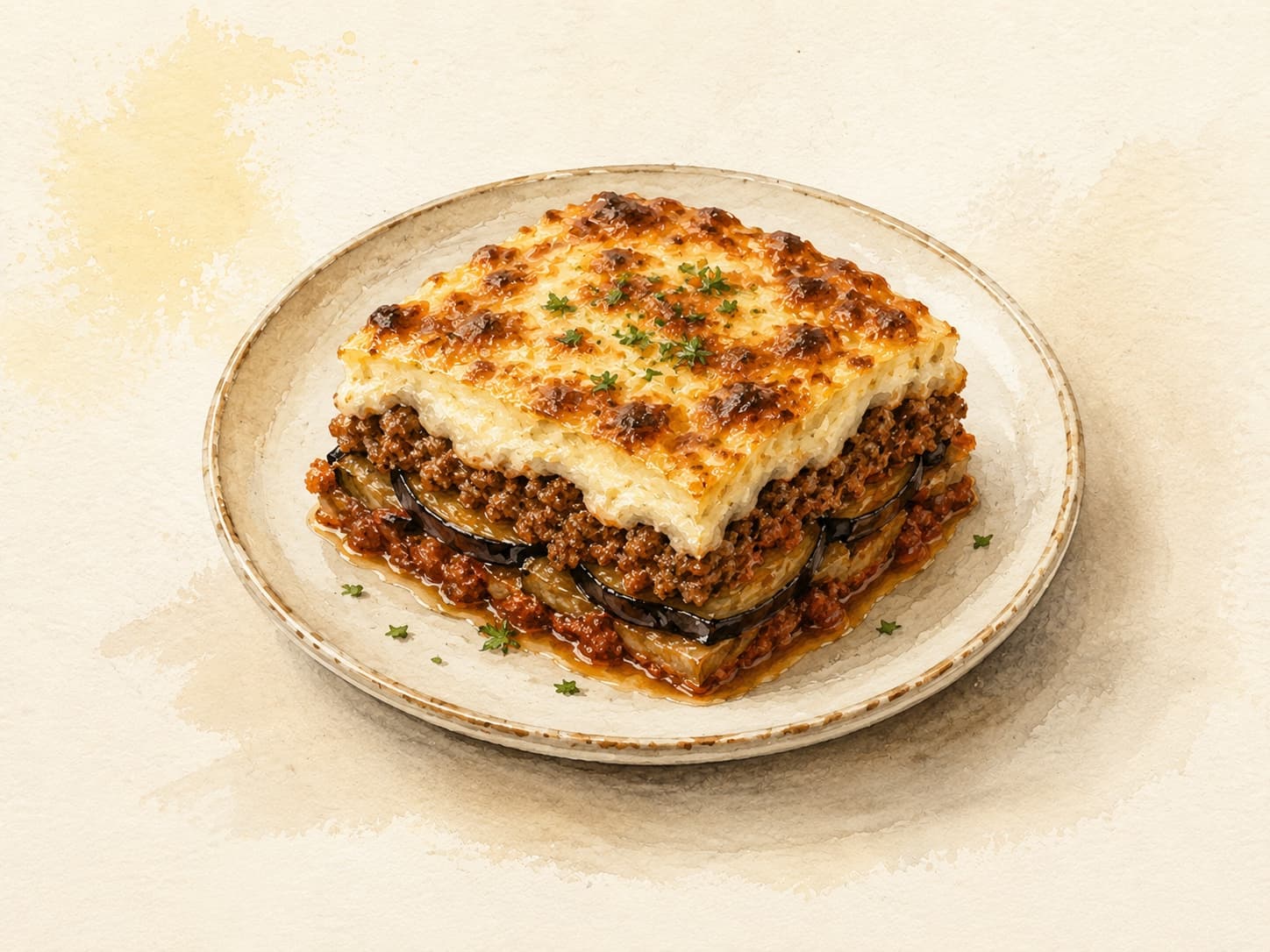
Layers of eggplant, spiced meat, and béchamel create a harmonious texture and flavor balance.
Contents (5 sections)▾
Ingredients
- 2 medium eggplants, sliced
- 1 lb ground beef or lamb
- 1 onion, chopped
- 2 cloves garlic, minced
- 1 can (14 oz) crushed tomatoes
- 1 teaspoon cinnamon
- 1 teaspoon oregano
- 2 cups béchamel sauce
- 1 cup grated cheese, such as kefalotyri or parmesan
- Salt and pepper to taste
- Olive oil for frying
- Fresh parsley for garnish
Steps
Sprinkle salt on eggplant slices and let sit for 30 minutes to remove bitterness.
Rinse, pat dry, and fry in olive oil until golden brown.
Sauté onion and garlic until soft, then add ground meat and cook through.
Stir in crushed tomatoes, cinnamon, oregano, salt, and pepper; simmer for 15 minutes.
Layer eggplant, meat sauce, and béchamel in a baking dish, finishing with béchamel and cheese on top.
Bake at 350°F for 45 minutes until golden and bubbling.
Tools you'll want
Why this works
Moussaka relies on the balance of textures and flavors. The salted eggplant absorbs moisture, reducing bitterness and enhancing flavor. Frying creates a caramelized surface, adding depth. The meat sauce's spices infuse richness, complemented by the creamy béchamel (a classic French white sauce made by thickening milk with a butter-and-flour paste), which provides a contrast to the hearty layers.
The béchamel sauce acts as a binding agent. Its creaminess melds with the other components, while the cheese on top adds a crust that enhances flavor through the Maillard reaction (the browning chemistry that develops savory aromas and color when proteins meet dry heat) during baking. Baking at 350°F ensures even cooking and allows the dish to set, creating a cohesive texture.
Layering techniques matter. Each layer must be evenly distributed to ensure consistent flavor and texture in every bite. The dish requires sufficient time in the oven to meld flavors while achieving a golden-brown exterior.
Common mistakes
Skipping the eggplant salt + degorge step.
Target: Slice eggplant 1 cm thick, salt generously, drain 30 minutes, pat dry.
Why it matters: Eggplant is 90 % water. Without dehydration, it absorbs huge amounts of oil during frying AND leaches water into the moussaka during baking — producing a watery, oily mess. The salt also draws out bitter alkaloids from older eggplants.
What to do: Salt 1 tsp per medium eggplant, rest 30 minutes on a colander, blot dry. Don't rinse.
Workarounds:
- Healthier prep: skip frying entirely — brush salted-and-dried slices with olive oil and bake at 220 °C for 20 minutes before layering.
- For maximum oil reduction, microwave salted slices 4 minutes before any cooking.
Watery meat sauce.
Target: Lamb-and-tomato sauce reduced until the fat separates and the texture is jammy — not pourable.
Why it matters: Moussaka's defining structural challenge is balancing the wet meat sauce, wet eggplant, and the creamy béchamel without the dish turning into soup. A watery meat sauce is the most common source of failure.
What to do: Cook the meat sauce uncovered after the simmer to let it reduce. The sauce should hold a shape when scooped — not flow.
Workarounds:
- Caught with watery sauce? Add 1 tbsp tomato paste and reduce hard for 5 minutes.
- For an even drier sauce, drain excess fat after browning the meat — you'll lose some flavor but tighter structure.
Wrong meat.
Target: Ground lamb, ideally with 15–20 % fat. Beef is acceptable; lean lamb is wrong.
Why it matters: Greek moussaka is a lamb-defined dish. The musky, slightly sweet character of lamb is what distinguishes moussaka from "Italian eggplant casserole." Lean meat lacks the fat that carries the spice character.
What to do: Source 80/20 ground lamb. Don't drain the fat — render it into the sauce.
Workarounds:
- No lamb? Beef + 1 tsp ground cumin + 1 tsp dried mint approximates lamb's character.
- For a lighter version, half lamb + half ground turkey with extra olive oil for body.
Wrong spices.
Target: Cinnamon stick + 2 cloves + 1/2 tsp ground allspice + 1 bay leaf in the meat sauce.
Why it matters: Greek moussaka uses Middle Eastern-influenced warm spices, not Italian herbs (no oregano, no basil). Skipping these makes the sauce read as Italian, not Greek.
What to do: Add whole spices early in the sauce, remove cinnamon stick and bay leaf before assembly.
Workarounds:
- No allspice? 1/4 tsp cinnamon + 1/4 tsp cloves + a pinch of nutmeg approximates the flavor.
- For deeper warmth, add 1 tsp ras el hanout — not traditional but defensible.
Béchamel too thin.
Target: Thick béchamel — 60 g butter + 60 g flour + 600 ml milk + 2 egg yolks + 100 g grated kefalotyri or Parmesan. Coating consistency, not pourable.
Why it matters: Greek moussaka's béchamel is enriched with egg yolks to form a custard-like top layer that sets into a golden, sliceable crust. Standard béchamel without egg is too thin and slides off.
What to do: Cook béchamel until it coats the back of a spoon thickly. Cool slightly, whisk in egg yolks off-heat. Top moussaka generously.
Workarounds:
- No kefalotyri? Pecorino Romano is closest in saltiness and sharpness.
- For an even more luxurious top, fold a whipped egg white into the béchamel just before topping — produces a soufflé-like crust.
Not resting after baking.
Target: 30 minutes rest after the oven, UNCOVERED.
Why it matters: Right out of the oven, moussaka is liquid throughout. The layers need 30 minutes to set into the clean, sliceable wedges that define the dish. Cutting early produces collapsed slop.
What to do: Bake in the morning for dinner; serve at room temperature or briefly reheated. Moussaka is often better the next day.
Workarounds:
- For dinner-party plating, bake 2 hours before. Slice when fully set, reheat individual portions in a 180 °C oven for 10 minutes.
What to look for
- Golden-brown béchamel on top.
- Bubbles around the edges of the dish.
- Well-defined layers when sliced.
- A fragrant aroma indicating well-cooked spices.
- A slight crust forming on the surface.
Chef's view
Moussaka holds a special place in Greek cuisine, often served at gatherings and celebrations. Its layers reflect the cultural importance of community and sharing. The dish showcases the use of local ingredients, emphasizing the Mediterranean diet's health benefits.
The evolution of moussaka reflects historical influences, from Ottoman to modern Greek. Each region adapts the recipe, resulting in varied interpretations. This dish exemplifies the beauty of culinary traditions evolving while maintaining their core identity.
<!-- beginner-glossed v1 -->Get the essays in your inbox — free
Weekly notes on flavor, fermentation, and food history — the writing behind the Atlas of Flavor. No spam; unsubscribe anytime.