
Briam
Briam is a traditional Greek dish featuring slow-roasted summer vegetables glazed in olive oil.
Contents (5 sections)▾
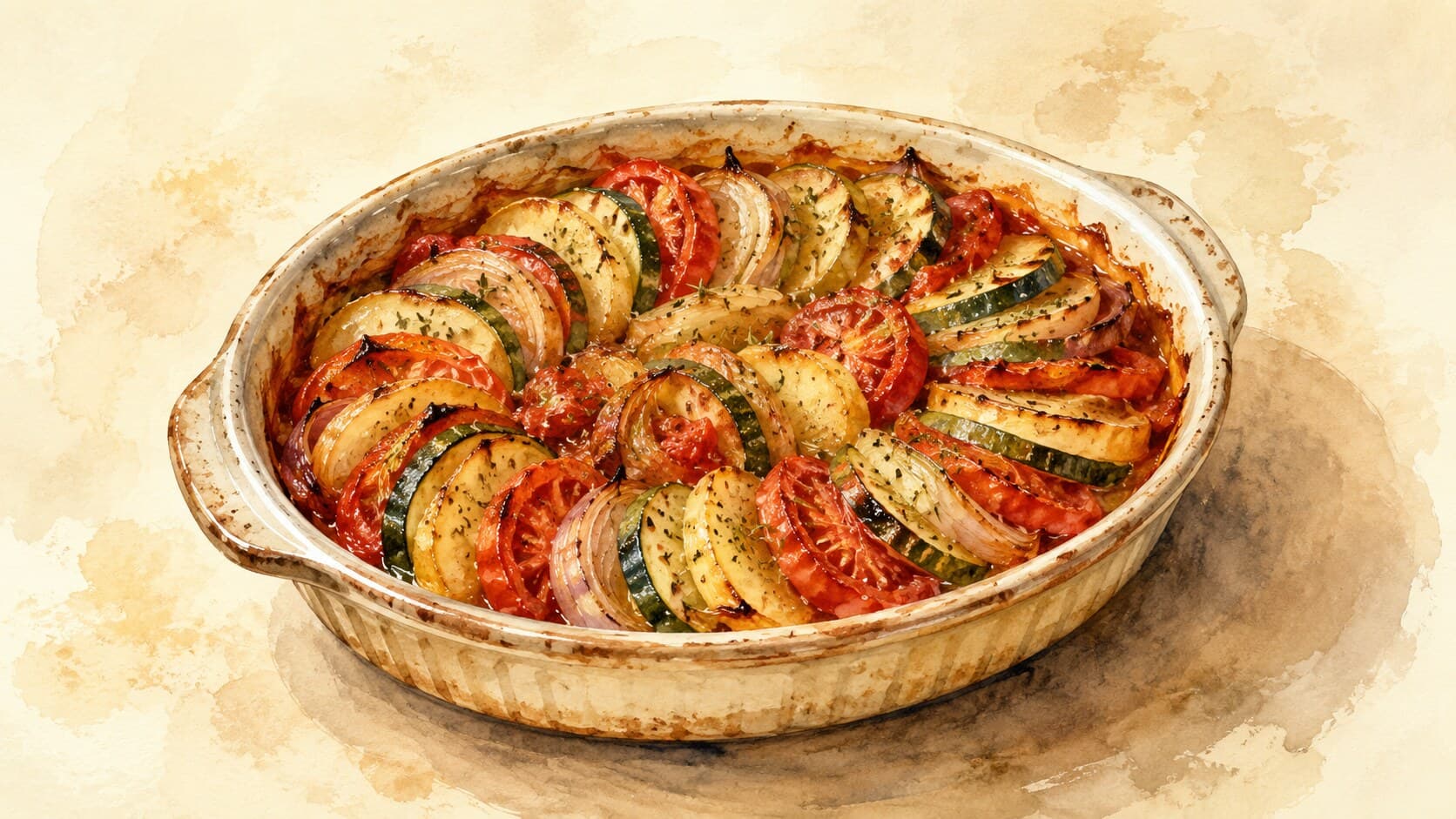
Ingredients
- 2 medium eggplants, sliced
- 2 medium zucchinis, sliced
- 3 medium potatoes, thinly sliced
- 4 medium tomatoes, sliced
- 1 large onion, sliced
- 4 cloves garlic, minced
- 100 ml olive oil
- 2 tsp dried oregano
- Salt to taste
- Pepper to taste
Steps
Preheat your oven to 180°C (350°F). This temperature allows the vegetables to roast evenly and develop a rich flavor.
In a large baking dish, layer the eggplant, zucchini, potatoes, tomatoes, onion, and garlic. Alternate the layers for an appealing presentation.
Drizzle the olive oil over the layered vegetables, ensuring they are well coated. This will help them caramelize and enhance their natural sweetness.
Sprinkle the oregano, salt, and pepper over the vegetables, adjusting to your taste preferences.
Cover the dish with aluminum foil and roast in the preheated oven for 40 minutes. This step steams the vegetables and prevents them from drying out.
Remove the foil and continue roasting for an additional 20 minutes, or until the vegetables are tender and golden brown. This final roasting allows for maximum flavor development.
Let the dish cool slightly before serving. Briam can be served warm or at room temperature, making it versatile for any meal.
Why this works
Briam showcases the technique of slow-roasting, which allows the natural sugars in the vegetables to caramelize, resulting in deep flavors and a soft texture. The olive oil adds richness and helps in the roasting process, preventing the vegetables from sticking and enhancing the overall taste. Using a covered dish initially traps moisture, ensuring that the vegetables cook evenly without drying out. If you find that the vegetables are browning too quickly, you can lower the oven temperature slightly or cover them again with foil to prevent burning. This dish is forgiving—if the vegetables seem too soft, letting them rest for a few minutes will allow some of the moisture to evaporate, improving the texture for serving. Overall, Briam is a celebration of summer produce, bringing together delightful flavors in a simple yet elegant manner.
Common mistakes
Cutting the vegetables to wildly different thicknesses. Target: Slice everything to a similar thickness — roughly 5 mm — with the dense potato cut thinnest of all. Why it matters: Each vegetable cooks at a rate set by its density and water content. Potato is starchy and dense and takes the longest; zucchini and tomato are watery and cook fast. Uneven slices mean raw, hard potato sitting next to mushy, collapsed zucchini in the same dish. What to do: Aim for even slices, and shave the potato a touch thinner than the rest so it finishes at the same time. A mandoline helps, but a steady knife is fine.
Skipping the covered stage. Target: Roast covered with foil first (about 40 minutes), then uncover to finish (about 20 minutes). Why it matters: The two stages do two different jobs. Covered, trapped steam cooks the potato through to tender (it softens the vegetables' cell walls so they turn creamy, not crunchy). Uncovered, the surface dries and browns. Skip the cover and the edges scorch long before the potato is done; never uncover and the whole thing just steams, pale and watery, with no roasted flavor. What to do: Foil on for the first stretch, off for the last. Don't rush to uncover — the potato must be fully tender first.
Being stingy with the olive oil. Target: A generous 100 ml or so, enough to coat every slice — briam belongs to the Greek ladera family, "cooked in oil." Why it matters: In this dish the oil is a cooking medium, not a garnish. It conducts heat into the vegetables, carries fat-soluble flavor, and protects the surfaces from drying to leather. Too little and the top layer dehydrates and burns while the inside stays bland. What to do: Toss the vegetables so every piece is glossy before they go in, and don't be alarmed by oil pooling at the bottom — it bastes the dish as it roasts and is part of the result.
Serving it before the vegetables are fully soft. Target: Roast until everything — especially the potato — is completely tender and the edges are browned; total time runs about an hour, sometimes more. Why it matters: Briam is meant to be meltingly soft, and undercooked potato is both unpleasant and starchy-raw. This is a slow dish; the deep flavor comes precisely from giving the vegetables time to collapse and caramelize (their natural sugars browning to sweetness). What to do: Test the potato with a knife tip — it should meet no resistance. If the top is browning before that happens, lower the heat or re-cover and keep going until it's soft.
What to look for
- The sliced vegetables before roasting: even, similar-thickness pieces, all glossy with oil — they'll cook at the same rate. Thick potato chunks or dry, un-oiled slices are a sign they'll cook unevenly.
- After the covered stage: the potato yields easily to a knife and the vegetables look softened and settled — ready to brown. If the potato still resists, keep it covered longer before uncovering.
- The finished top: edges browned and caramelized, the surface glistening, no raw-looking pale slices — fully roasted. A dry, leathery top means too little oil or too high heat.
- Overall texture: soft enough to cut with the side of a fork, the flavors merged into one — done. Firm, distinct, watery slices mean it needed more time.
A note on history
Briam belongs to the Greek ladera tradition — vegetable dishes cooked in a generous amount of olive oil, the name coming from ladi, "oil" (Neos Kosmos; Olive Tomato). Its name and form reflect the long overlap between Greek and Ottoman cooking: it is closely related to the Turkish türlü (also heard in Greece as tourlou tourlou, roughly "a mixture of everything"), with deeper roots in the Persian culinary vocabulary of roasted dishes (My Greek Dish; Souvlaki For The Soul).
Get the essays in your inbox — free
Weekly notes on flavor, fermentation, and food history — the writing behind the Atlas of Flavor. No spam; unsubscribe anytime.