
Gamjatang (Pork Bone and Potato Soup)
Gamjatang is a rich and spicy Korean pork bone soup, perfect for communal enjoyment.
Contents (5 sections)▾
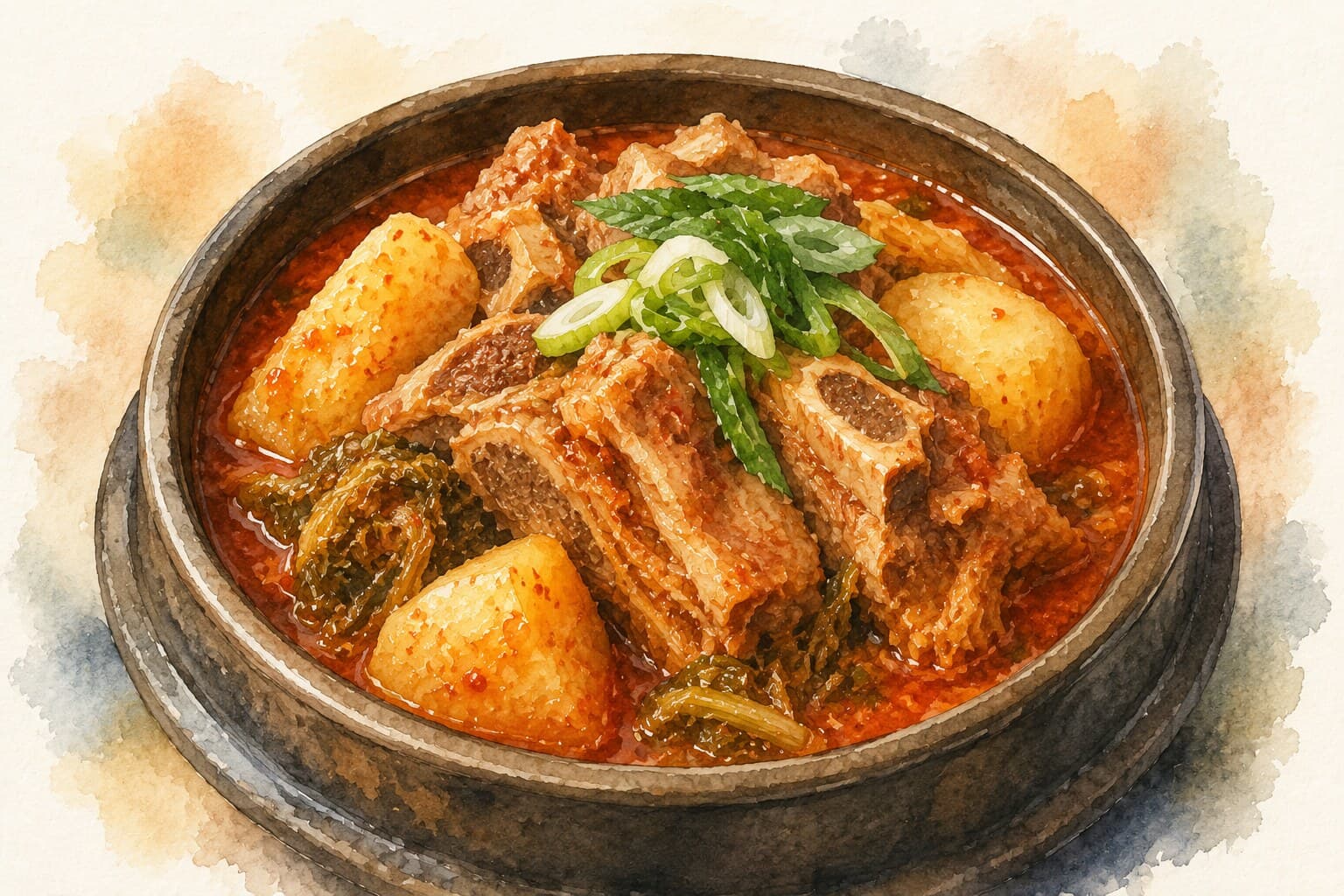
Ingredients
- 1 kg pork neck bones
- 4 medium potatoes, peeled and cut into chunks
- 1 bunch perilla leaves, roughly chopped
- 2 tbsp Korean red pepper paste (gochujang)
- 1 tbsp Korean red pepper flakes (gochugaru)
- 3 cloves garlic, minced
- 1 onion, quartered
- 2 liters water
- Salt to taste
- Pepper to taste
Steps
In a large pot, combine pork neck bones, water, and onion. Bring to a boil over medium-high heat for 10 minutes to remove impurities.
Reduce heat to low, skim off any scum, and simmer for 2 hours. This slow cooking allows the marrow to infuse the broth with flavor.
Add potatoes, garlic, gochujang, gochugaru, salt, and pepper. Continue to simmer for another 30-40 minutes until the potatoes are tender and the meat falls off the bones.
Stir in perilla leaves just before serving, allowing them to wilt slightly in the hot soup.
Why this works
The key to a successful Gamjatang lies in the long simmering of the pork neck bones, which releases collagen and creates a rich, cloudy broth. The combination of gochujang (Korean fermented red-chili paste, sweet and savory) and gochugaru (Korean coarse red-pepper flakes) introduces depth and spiciness, while the potatoes absorb flavors and add heartiness. If the broth seems too thin or lacks flavor, allow it to simmer longer, or add a bit more gochujang for intensity. The perilla leaves add a distinct herbal note, enhancing the overall experience, especially when served hot and fresh. Proper skimming of impurities at the start is crucial for achieving clean flavors in the final dish.
Common mistakes
Not blanching and rinsing the bones first.
Target: Hard-boil the pork bones for several minutes, dump that first water, then rinse the bones and start the real broth in fresh water.
Why it matters: That first violent boil drives out blood and coagulated proteins (the grey scum) from inside the bone. Skip it and those proteins stay suspended, turning the soup muddy, dull, and faintly bloody-smelling instead of clean and savory. Marrow flavor is the prize here, and you only taste it clearly against a clean background.
What to do: Boil, discard the water, rinse the bones under the tap, scrub off any clinging dark bits, then refill with clean water for the long simmer.
Boiling hard for the long cook instead of simmering.
Target: A bare, lazy simmer (small bubbles barely breaking the surface) for the 2-hour stretch.
Why it matters: Gamjatang's body comes from collagen in the spine slowly melting into gelatin (the connective tissue that turns silky and gives broth its weight). A gentle simmer dissolves it smoothly; a rolling boil instead smashes rendered fat back into the liquid as a greasy emulsion and can leave the broth harsh. Slow is what makes the meat fall off the bone, too.
What to do: Bring to a boil once, then drop the heat until the surface just shivers. Skim the fat and foam that rise in the first 20–30 minutes.
Under-cooking the pork so it won't release.
Target: Simmer until the meat pulls cleanly off the spine with chopsticks and reads tender all the way through — typically 2 hours plus the potato stage.
Why it matters: The whole point of the dish is digging soft, fully-cooked meat out of the bones. Pork spine is collagen-rich and needs long moist heat; pulled too early it is tough, clings to the bone, and is not properly done.
What to do: Test a piece before serving — it should surrender with almost no resistance. If it still grips the bone, it simply needs more time, not more heat.
Adding the gochujang and chili too early — and the perilla too soon.
Target: Season with gochujang/gochugaru in the last 30–40 minutes; stir perilla leaves in only at the very end.
Why it matters: A long hard boil dulls the bright top notes of red-pepper paste and flakes and can make the broth bitter. Perilla (a fragrant Korean sesame leaf) is delicate — boiled, its herbal lift cooks away to nothing.
What to do: Build the clean bone broth first, layer the spice in with the potatoes, taste, then drop the perilla in off the heat so it just wilts.
What to look for
- The discarded first water: grey, foamy, flecked with dark coagulated bits. That is exactly what you do not want floating in the final bowl.
- A correct long simmer: the surface barely trembles, with only the occasional bubble. A churning, rolling surface means the heat is too high.
- Broth that has given up its collagen: slightly cloudy, with body that clings to the spoon and lips that feel faintly sticky. That stickiness is gelatin — the sign the bones have done their work.
- Meat that is ready: it slides off the bone under light pressure from chopsticks, opaque and tender throughout. No pink, no rubbery grip on the bone.
A note on history
Gamjatang is a humble laborers' dish, widely linked to the dock and railway workers of the Incheon port area in the late 19th century, who wanted something cheap, hot, and filling after long shifts (Wikipedia: Gamja-tang). Its name is a running source of debate: gamja is the ordinary word for "potato," but many hold that the dish is actually named for the pork-spine bones themselves — sometimes called gamja-ppyeo — rather than the tuber floating in the bowl (The Korea Times: Gamjatang).
Get the essays in your inbox — free
Weekly notes on flavor, fermentation, and food history — the writing behind the Atlas of Flavor. No spam; unsubscribe anytime.