
Budae Jjigae (Army Base Stew)
Budae Jjigae is a hearty Korean stew featuring spam, sausage, and kimchi in a flavorful broth.
Contents (5 sections)▾
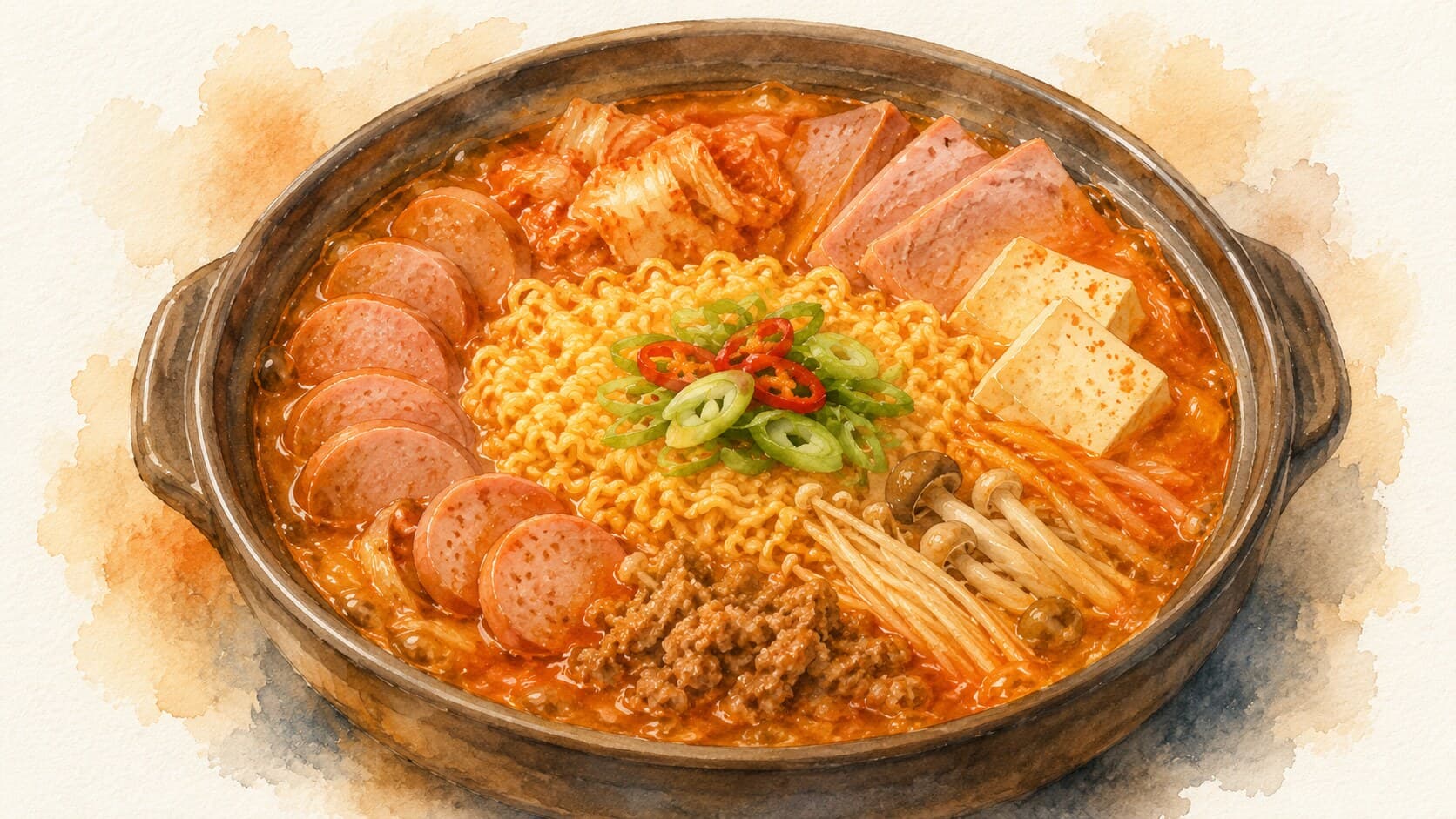
Ingredients
- 200 g spam, sliced
- 100 g hot dog sausage, sliced
- 150 g kimchi, chopped
- 500 ml water
- 2 tbsp gochujang (Korean red chili paste)
- 100 g firm tofu, cubed
- 2 servings ramen noodles
- 1 tbsp sesame oil
- 1 tsp garlic, minced
- 1 tsp ginger, minced
- 2 green onions, chopped
- salt and pepper, to taste
Steps
In a pot, heat sesame oil over medium heat. Add minced garlic and ginger, cooking for 1-2 minutes until fragrant.
Stir in the gochujang and mix well before adding water and kimchi. Bring the mixture to a simmer over medium-high heat.
After 5 minutes of simmering, add sliced spam and hot dog sausage to the pot. Let it cook for another 5 minutes.
Next, gently add the cubed tofu and stir. Simmer for an additional 5 minutes to allow the flavors to meld.
Finally, add the ramen noodles and cook for 3-4 minutes until they are tender but still springy.
Season with salt and pepper to taste, and garnish with chopped green onions before serving.
Why this works
The technique of simmering a gochujang-kimchi broth ensures that the stew is richly flavored and aromatic. Gochujang offers depth with its sweet and spicy profile, while kimchi provides a tangy kick that complements the meats. Adding spam and sausage, common in post-war Korea, introduces a savory umami that enhances the overall dish. By cooking the ramen noodles last, they remain al dente, preventing them from becoming mushy. If the broth seems too thick, just add a bit more water to achieve the desired consistency. Proper layering of ingredients also allows the flavors to develop without overwhelming any single component, making each bite a harmonious experience.
Common mistakes
Using fresh, mild kimchi instead of sour, well-fermented kimchi.
Target: Older, tangy kimchi — the kind that's started to turn sharp in the jar.
Why it matters: The whole broth leans on the acidity (sour tang) and deep funk that fermentation (the slow souring by lactic-acid bacteria) builds over weeks. Fresh kimchi is mostly crunch and chili; it can't cut the heavy salt and fat of the spam and sausage. Sour kimchi gives the stew its backbone and keeps a pot of processed meat from tasting flat and one-note.
What to do: Reach for the most aged kimchi you have. Sauté it briefly in the sesame oil first to bloom its flavor before the liquid goes in.
Pouring in all the water at once so the broth tastes thin and washed-out.
Target: Start with less liquid than you think; the meats and kimchi will release more as they cook. Top up only at the end.
Why it matters: Spam, sausage, kimchi and gochujang are the only seasoning here — there's no separate stock. Drown them in water and you dilute the salt, umami (savory depth) and chili before they ever concentrate. A tight, slightly reduced broth tastes layered; a flooded one tastes like spicy dishwater.
What to do: Build the broth a little strong, simmer, taste, and add water by the splash only if it's too intense.
Letting the ramen noodles sit and turn to mush.
Target: Noodles added in the last 3–4 minutes, served while still springy.
Why it matters: Wheat noodles keep absorbing hot broth and their starch keeps softening (gelatinizing — the starch swelling and going soft) the entire time they sit. Add them early, or let the pot idle after, and they bloat, go slack, and soak up the liquid you wanted in the bowl.
What to do: Add the noodles last, eat promptly, and if you're not serving right away, cook them separately and drop them in per portion.
Pulling the pot before the spam and sausage are fully heated through.
Target: Sliced processed meats simmered until piping hot all the way through — no cool centre.
Why it matters: Spam and hot dogs are pre-cooked, but in a stew they still need to come up to a proper serving temperature; lukewarm slices are unpleasant and, with any meat, not worth the risk. They also need a few minutes in the broth to shed some fat and salt into it, which is half of what makes the stew taste right.
What to do: Give the sliced meats a genuine simmer in the broth before the tofu and noodles go in, so they heat through and season the pot.
What to look for
- The broth once the kimchi has cooked in: deep brick-red and slightly cloudy, smelling sour and savory at once. Thin and watery means it needs more reduction or more kimchi.
- The surface as it simmers: a thin slick of orange-red fat and a steady, rolling bubble. That rendered fat carries the chili flavor; a flat, fatless surface tastes lean and harsh.
- The noodles at the moment you serve: glossy and springy, holding their shape, not bloated. If they've gone pale and soft, the pot sat too long.
- The first taste: salty, sour, and spicy landing together, with the meat's richness underneath. If one note dominates, adjust — more kimchi for tang, a splash of water to soften heat.
A note on history
Budae jjigae — literally "army base stew" — was born of scarcity after the Korean War (1950–1953). With food short, people near the U.S. military bases around Uijeongbu used surplus American processed foods — Spam, hot dogs, ham — and dropped them into a Korean base of kimchi, gochujang and chili, producing a dish that was filling and improvised from what was at hand (Budae-jjigae, Wikipedia; Food Republic). What started as survival cooking has since become a comfort food, still especially associated with Uijeongbu where it began (Military.com).
Get the essays in your inbox — free
Weekly notes on flavor, fermentation, and food history — the writing behind the Atlas of Flavor. No spam; unsubscribe anytime.