
Miyeok-guk
Miyeok-guk is a Korean seaweed soup made with dried miyeok, often prepared for birthdays and known for its umami flavor.
Contents (5 sections)▾
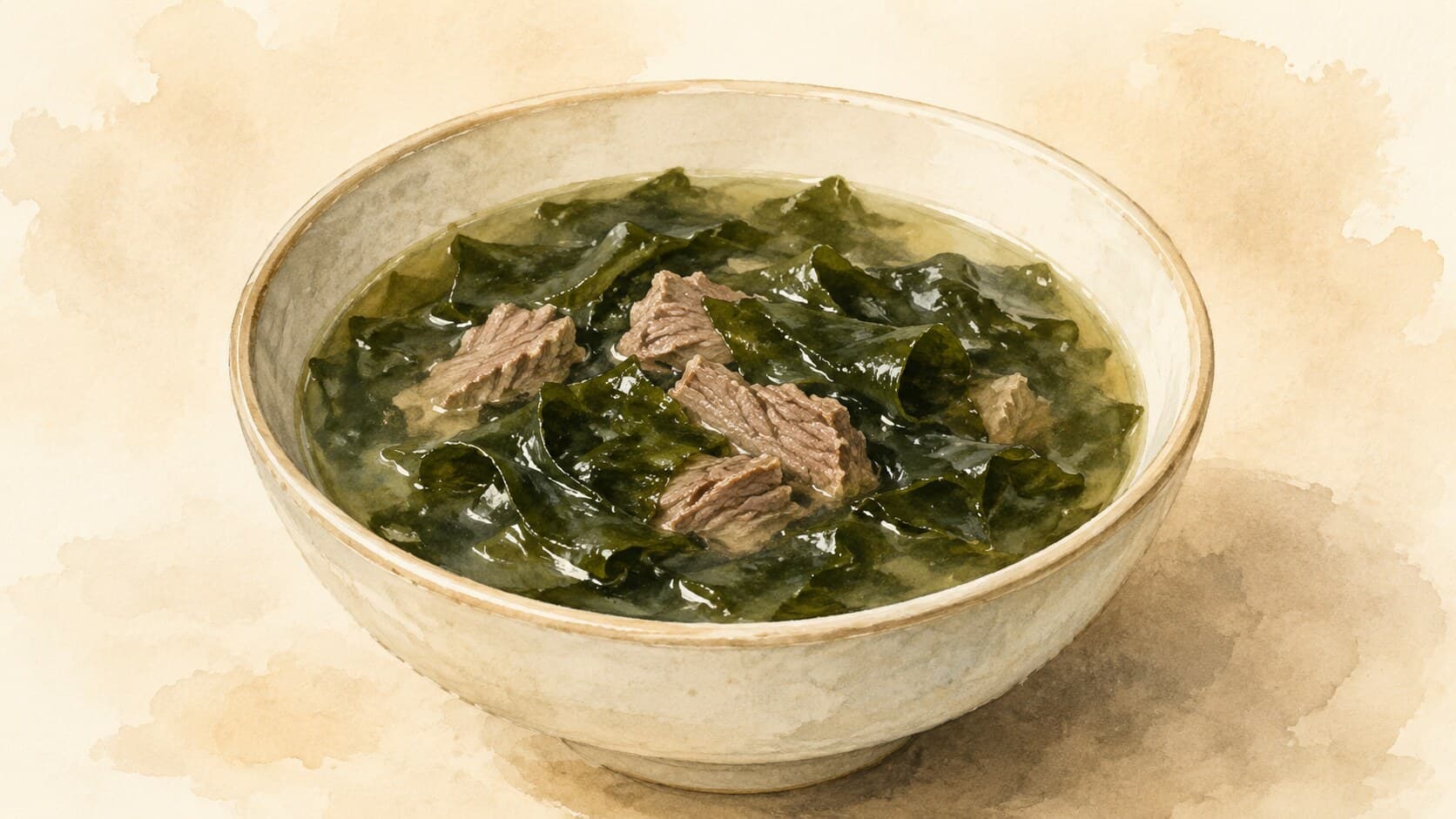
Ingredients
- 30 g dried miyeok (seaweed)
- 150 g beef (brisket or sirloin), cut into small cubes
- 1 tbsp sesame oil
- 1.5 liters water
- 2 tbsp soy sauce
- 1 garlic clove, minced
- Salt to taste
- White rice, for serving
Steps
Soak the dried miyeok in cold water for about 20 minutes until it blooms, then drain and rinse under cold water.
In a pot, heat the sesame oil over medium heat. Add the beef cubes and sauté for about 5 minutes until browned.
Add the minced garlic and sauté for another minute to release its aroma.
Add the bloomed miyeok to the pot and stir for 2-3 minutes to combine with the beef.
Pour in the water and bring to a boil. Once boiling, reduce the heat and simmer for 10-15 minutes to develop the flavors.
Stir in the soy sauce and season with salt to taste. Serve hot with white rice.
Why this works
Blooming (soaking the dried strands in cold water so they unfurl and rehydrate fully) dried miyeok rehydrates it, restoring flavor and texture. Sautéing (cooking quickly in a little hot fat to develop color and aroma) in sesame oil adds a nutty aroma. Beef or anchovy enriches the broth. If too salty, add water to balance. Simmering melds flavors, resulting in a traditional soup enjoyed on birthdays.
Common mistakes
Skipping or rushing the rehydration soak. Target: dried miyeok submerged in cold water for at least 20 minutes, until each strand has unfolded and feels supple — not crunchy at the core. Why it matters: Dried miyeok is brittle, concentrated, and slightly bitter. A rushed soak leaves stiff cores inside the strands that never soften in the pot — you end up with rubbery, chewy ribbons even after 30 minutes of simmering. The soak also releases the fishy "ocean" off-notes the seaweed picked up during drying; skipping it gives the broth a flat, slightly metallic taste. What to do: Submerge the dried miyeok in plenty of cold water (it expands 8–10× in volume — use a large bowl). Soak 20 minutes, drain, rinse once under cold running water, and squeeze gently. Cut into bite-sized lengths before it goes into the pot. If you forget and the strands are still tough after soaking, simmer them alone in the broth for 5 extra minutes before adding the beef.
Undercooking the beef. Target: beef sautéed until no pink remains on any surface — about 5 minutes for small cubes over medium heat — and then simmered for at least 10 more minutes in the soup; brisket should reach a safe interior temperature (71°C / 160°F or higher for ground/small cubes). Why it matters: This is the only safety guardrail in this dish — beef must cook through. Small cubes that still show pink at the center can harbor surface bacteria pushed in during cutting, and seaweed soup is forgiving enough that you may not notice undercooking by texture alone. What to do: Brown the beef first in the sesame oil over medium heat, stirring so every face touches the pot. Once no pink is visible, add the miyeok and broth and simmer at a gentle boil for 10–15 minutes more. If you are unsure, cut a cube in half — the center should be uniformly gray-brown.
Boiling the sesame oil hard from the start. Target: sesame oil heated only to medium — shimmering, not smoking — and the beef added before the oil gets very hot. Why it matters: Toasted sesame oil has a low smoke point and a delicate aromatic compound (the molecules that give it that nutty fragrance) that burns off at around 175°C / 350°F. Crank the heat too high and the aroma you came for is gone within the first 30 seconds — and any time you smell that sharp acrid-sesame note, the bloom is past saving. What to do: Heat the pan gently, drizzle in the oil, swirl, and add the beef before you see the first wisp of smoke. The Korean technique called gireum boggi — "oil-toasting" the seaweed briefly in the same fat — also relies on this gentle heat to draw out aroma without scorching.
Salting the broth before tasting at the end. Target: add soy sauce and salt only in the final 2 minutes of simmering, after a careful taste. Why it matters: Miyeok itself carries natural sodium absorbed from the sea, and as it simmers it releases that salt into the broth. Soup that tasted under-seasoned at the 5-minute mark may be well-balanced at the 15-minute mark — and adding salt early locks you into a broth you cannot dilute back to mildness without weakening the seaweed flavor. What to do: Simmer fully first. Then taste; add soy sauce a tablespoon at a time; taste again. Only add plain salt at the very end if the savory depth needs a final lift.
What to look for
- Strands that float gracefully in the broth, neither stiff nor falling apart. Properly bloomed and simmered miyeok has a slippery, tender body that bends under the spoon and gives a slight resistance when bitten — like cooked spinach with a backbone. Stiff or wiry strands mean undersoaking; mushy disintegrating ones mean over-simmering past about 20 minutes.
- A broth that looks clear amber, not cloudy or oily. A correctly built miyeok-guk has a translucent pale-brown broth — the sesame oil should be incorporated, not floating in a slick on top. A visible oil layer means the heat was too high during the initial sauté and the fat broke away from the rest. A milky cloudiness means the beef boiled too aggressively and released emulsified scum; skim and lower the heat next time.
- A clean nutty aroma when you lift the lid. You should smell sesame, seaweed, and beef in roughly that order — warm, oceanic, deep. A sharp acrid edge means the sesame oil overheated; flat, no-aroma broth means the seaweed was not soaked long enough or the simmer was too brief to release its glutamate (the natural umami compound that gives long-simmered seaweed broths their depth).
- A pleasant, mineral richness on the first sip — not aggressively salty. Well-built miyeok-guk tastes savory and faintly oceanic, with the saltiness pulled back so the seaweed flavor can come forward. Aggressive saltiness on first taste means too much soy sauce went in too early; add a splash of water and continue simmering 2 minutes to recover.
A note on history
In Korea, miyeok-guk is the traditional first meal for new mothers after childbirth — the high iodine and calcium content of the seaweed is believed to aid postpartum recovery and support breast-milk production. From that postpartum tradition comes the custom of eating miyeok-guk on one's birthday: a quiet acknowledgment of the mother who once ate it to recover from bringing you into the world. The link to seaweed and postpartum care reaches back at least to the Goryeo Dynasty (918–1392), with historical records noting that observers saw whales eating seaweed after giving birth and adopted the practice for humans (Wikipedia, NextShark).
Get the essays in your inbox — free
Weekly notes on flavor, fermentation, and food history — the writing behind the Atlas of Flavor. No spam; unsubscribe anytime.