
Dak Bokkeumtang
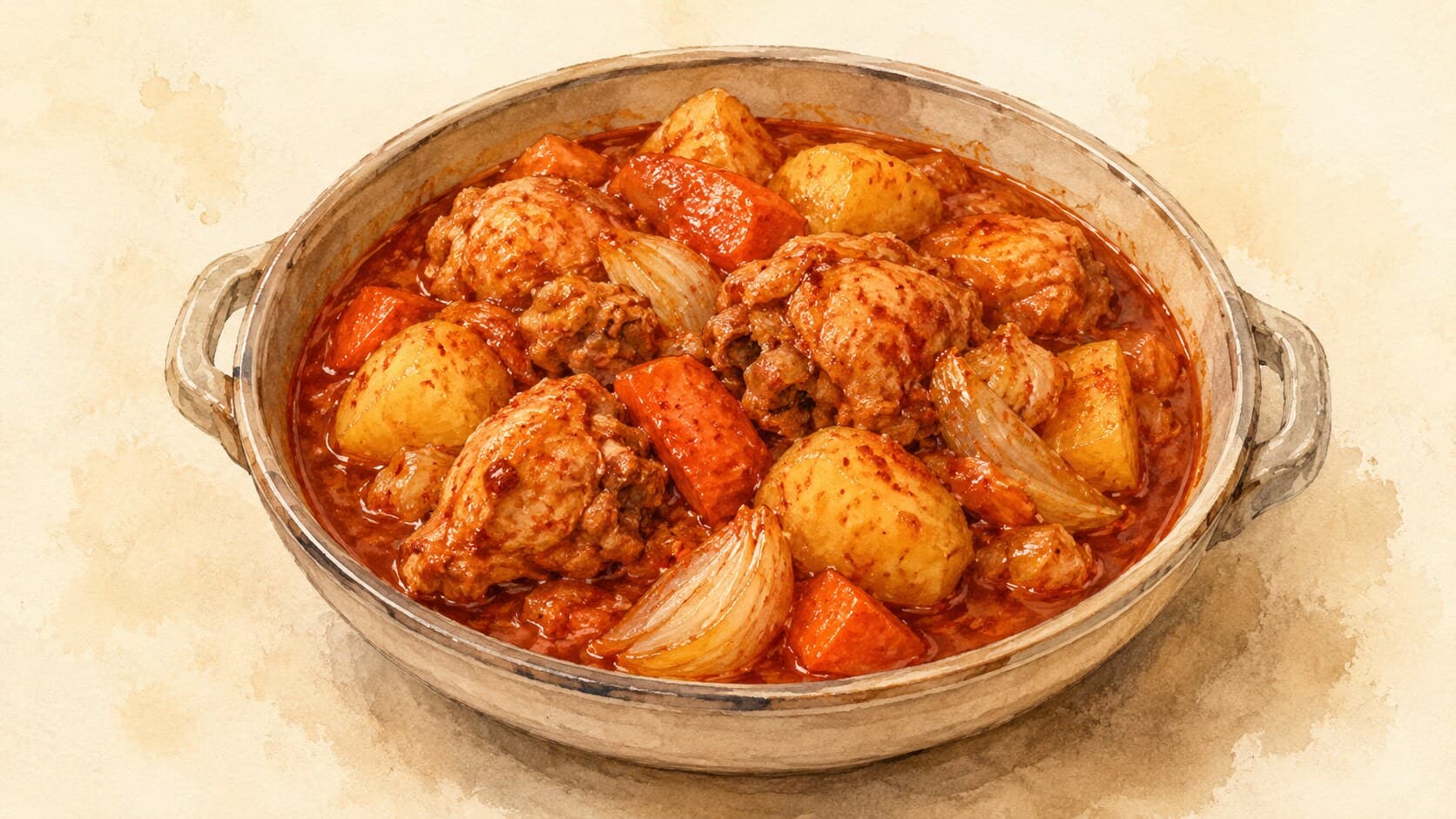
Dak Bokkeumtang is a comforting Korean spicy chicken stew simmered with vegetables and rice cakes.
Contents (5 sections)▾
Ingredients
- 1 kg bone-in chicken pieces
- 300 g potatoes, cut into chunks
- 200 g carrots, sliced
- 1 large onion, chopped
- 200 g rice cakes, soaked in water for 30 minutes
- 3 tbsp gochujang (Korean red chili paste)
- 1 tbsp gochugaru (Korean red chili flakes)
- 4 cups water
- 2 tbsp soy sauce
- 2 tbsp sesame oil
- 1 tbsp minced garlic
- 1 tsp sugar
- Salt and pepper to taste
- Chopped scallions and sesame seeds for garnish
Steps
In a large pot, heat sesame oil over medium heat. Add the bone-in chicken pieces and brown them for about 5 minutes on each side. This step enhances the flavor by creating a rich base.
Add the chopped onion and minced garlic to the pot, cooking until the onion is translucent, about 3 minutes. This releases sweetness and depth into the broth.
Stir in the gochujang, gochugaru, and sugar, cooking for another 2 minutes to activate the spices. The heat and sweetness will combine to create a vibrant sauce.
Pour in the water and soy sauce, bringing the mixture to a boil. Then reduce the heat to a simmer and cover the pot, cooking for 15 minutes. This gentle cooking allows the chicken to become tender while infusing the broth with flavor.
Add the potatoes, carrots, and soaked rice cakes into the pot. Simmer for an additional 10-15 minutes until the vegetables are tender and the chicken is cooked through. If the stew is too thick, you can add a little more water to adjust the consistency.
Season with salt and pepper to taste before serving. Garnish with chopped scallions and sesame seeds for a fresh finish.
Why this works
Dak Bokkeumtang's success lies in the layering of flavors achieved through the simmering technique. Starting with browning the chicken develops a deep, savory base. The addition of gochujang (fermented Korean chili-soybean paste) and gochugaru (Korean chili flakes) brings heat and a rich umami character to the dish. By controlling the simmering temperature, you allow the chicken to become tender without falling apart, while the vegetables absorb the flavorful broth. If the stew feels too thick after adding the vegetables, simply add a splash of water to reach your desired consistency. This dish is perfect for cold weather, providing warmth and comfort with each bite, while also teaching the key techniques of layering flavors and adjusting textures in Korean cooking.
Common mistakes
Crowding the pot so the chicken steams instead of browning.
Target: A single layer with space between pieces; brown in batches if needed.
Why it matters: That first browning is the Maillard reaction (the chemistry between proteins and sugars under dry heat that builds deep, roasted flavor and brown color). It needs the surface to stay dry and hot. Pack the pieces in tight and they release moisture that pools and boils, so the chicken turns gray and the savory base never forms.
What to do: Pat the chicken dry, give each piece room, and let it sit undisturbed until it releases easily from the pot before turning.
Scorching the gochujang and gochugaru.
Target: A brief toast — 1 to 2 minutes over medium heat, stirring constantly — just until fragrant.
Why it matters: Toasting gochujang (fermented Korean chili-soybean paste) and gochugaru (Korean chili flakes) blooms their aroma and tames raw sharpness, but both are high in sugar and burn fast. Burnt chili turns acrid and bitter, and that bitterness cannot be cooked back out.
What to do: Lower the heat before the paste goes in, keep it moving, and add the liquid the moment it smells deep and toasty.
Adding the potatoes too early — or too late.
Target: Potatoes go in with enough simmering time to cook through (about 15 minutes), but after the chicken has had a head start.
Why it matters: Potatoes do double duty: they cook to tenderness and their released starch lightly thickens the braise (the simmer in seasoned liquid) into a glossy sauce. In too early and they collapse to mush; in too late and they stay hard and chalky while the chicken overcooks waiting for them.
What to do: Give the chicken its simmer first, then add potatoes so chicken and potato finish together.
Calling it done by color instead of by doneness.
Target: Chicken cooked through — opaque to the bone, juices running clear, 74°C / 165°F at the thickest part if you have a thermometer.
Why it matters: Bone-in chicken in a red, opaque braise hides its interior — the deep color tells you nothing about whether the meat near the bone is safe. Undercooked poultry is a real food-safety risk, not just a texture problem.
What to do: Cut into the thickest piece against the bone and look for clean, clear juices and no pink, or check the temperature directly.
What to look for
- Good sear on the chicken: the surface is golden-brown and the pieces lift from the pot without sticking. If they grip the metal, they aren't ready to turn — browning isn't finished.
- Bloomed chili paste: the mixture darkens slightly and smells deep, smoky-sweet, and toasty — not raw or harsh. That shift in aroma is your cue to add the liquid.
- The braise is ready: the sauce clings to the chicken in a glossy coat rather than sitting thin and watery. Starch from the potatoes has given it body.
- Chicken is done: the meat pulls cleanly from the bone and the juices run clear, with no pink near the joint. Color of the sauce is irrelevant — judge the meat itself.
- Rice cakes (if used): soft and chewy, not gummy or hard in the center. They only need a few minutes; add them late so they don't dissolve.
A note on history
Dak-bokkeum-tang is a Korean dish of chicken cut into chunks and braised with vegetables — usually potato and onion — in a spicy seasoning built on gochujang, gochugaru, soy, and garlic (Wikipedia: Dak-bokkeum-tang). It is also widely known as dakdoritang, and the name itself has been a point of public debate: South Korea's National Institute of the Korean Language argued that the middle syllable dori was a borrowing from the Japanese tori ("bird") and promoted the purely Korean dak-bokkeum-tang instead, though some scholars counter that dori derives from a native Korean word meaning "to cut up" (Wikipedia: Dak-bokkeum-tang; Korean Bapsang).
Get the essays in your inbox — free
Weekly notes on flavor, fermentation, and food history — the writing behind the Atlas of Flavor. No spam; unsubscribe anytime.