
Bibim Guksu
Bibim Guksu is a Korean cold noodle dish served with a spicy gochujang-vinegar sauce, emphasizing noodle cooking and sauce emulsification.
Contents (5 sections)▾
Ingredients
- 200 g thin wheat noodles
- 1 tbsp gochujang
- 1 tbsp rice vinegar
- 1 tbsp sesame oil
- 1 tsp sugar
- 1/2 cucumber, cut into matchsticks
- 1 hard-boiled egg, halved
- 1 tbsp sesame seeds, toasted
- ice cubes, for serving
- salt, to taste
Steps
Cook the thin wheat noodles in boiling salted water for 4-6 minutes, or until al dente, stirring occasionally to prevent sticking.
While the noodles cook, prepare the sauce by mixing 2 tablespoons of gochujang, 1 tablespoon of rice vinegar, 1 tablespoon of sesame oil, and 1 teaspoon of sugar in a small bowl until smooth.
Once the noodles are cooked, drain and rinse them under cold water for 1-2 minutes to stop the cooking process and cool them down quickly.
In a large mixing bowl, combine the cooled noodles with the sauce and cucumber matchsticks. Toss everything together until the noodles are evenly coated.
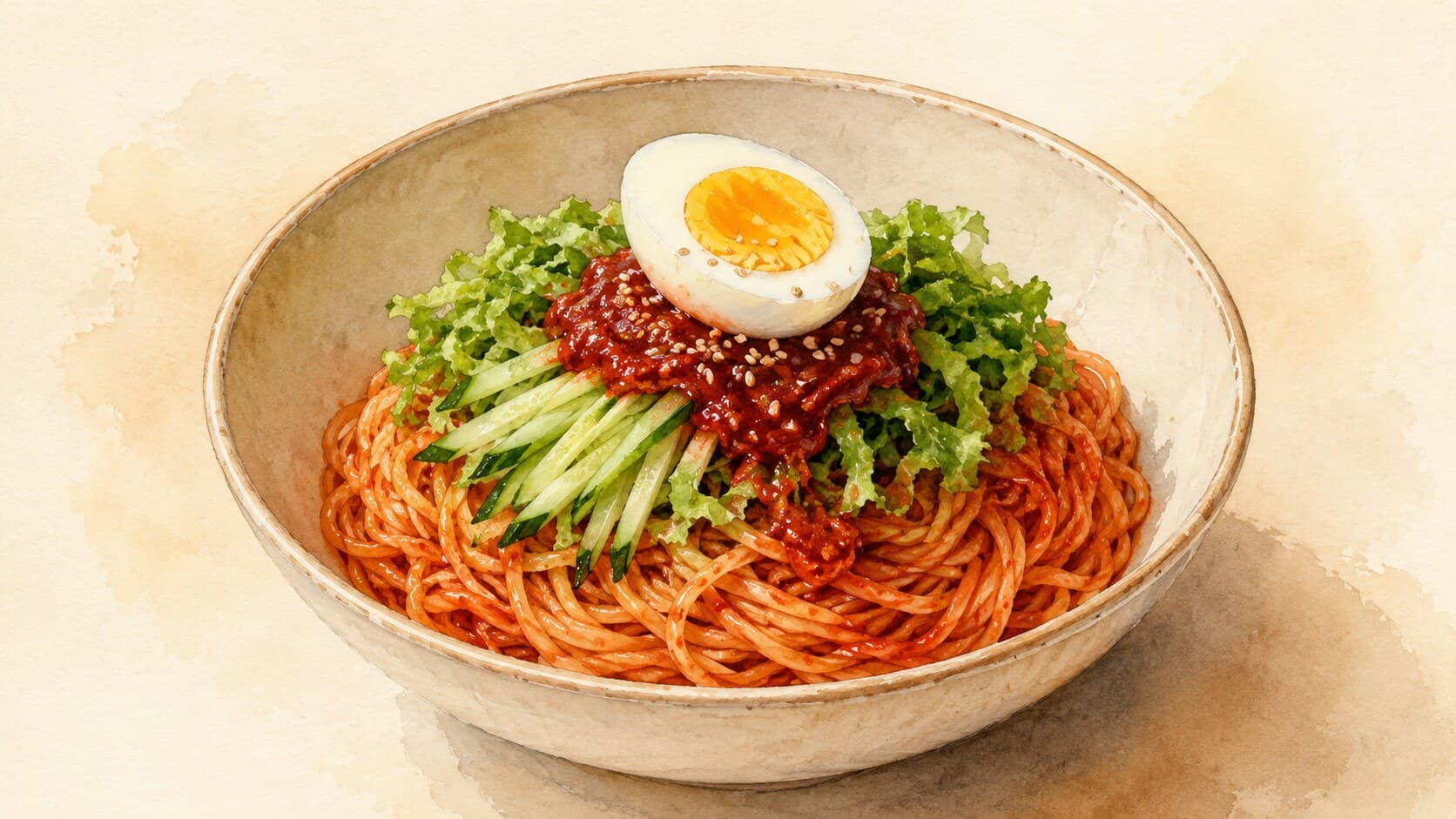
Serve the noodles in a stone bowl, topped with a halved hard-boiled egg, toasted sesame seeds, and a few ice cubes to keep it chilled.
Why this works
Bibim Guksu is a delightful summer dish that combines the chewy texture of thin wheat noodles with a spicy, tangy sauce made from gochujang (a Korean fermented red chili paste, both spicy and salty) and vinegar. The key to achieving the perfect balance is to ensure the noodles are cooked al dente (tender but with a slight firm bite at the center), which typically means cooking them for 4-6 minutes. This helps maintain their texture against the weight of the sauce. Rinsing them under cold water for 1-2 minutes halts the cooking process and cools them down quickly, making them refreshing for a summer meal. If the sauce seems too thick, add a touch of cold water or more vinegar to achieve your desired consistency. This recipe is highly customizable; you can add more vegetables like carrots or radishes for extra crunch. The dish's appeal lies in its vibrant colors and the contrasting textures of the ingredients, making it visually stunning as well as delicious. The combination of flavors and textures makes Bibim Guksu a favorite for gatherings, and its ease of preparation allows it to be enjoyed any day of the week.
Common mistakes
Overcooking the noodles.
Target: Thin wheat noodles (somyeon) cooked just to al dente (tender but with a slight firm bite at the center), usually 4–6 minutes — taste one before draining.
Why it matters: These noodles are very thin, so they tip from perfect to mushy in under a minute. Once they soften, the cold sauce makes them feel even softer, and the dish loses the chew that carries it.
What to do: Set a timer for the low end of the range, fish one noodle out, bite it. Drain the instant the center is barely firm — it will finish softening as it cools.
Skipping the cold rinse (or rinsing too briefly).
Target: Rinse and rub the drained noodles under cold running water for 1–2 minutes until they feel cool and no longer slippery.
Why it matters: Hot noodles keep cooking from their own heat, and their surface is coated in loose starch (the sticky stuff released into the cooking water) that glues the strands into a clump. Cold water stops the cooking and washes that starch away, so the strands stay separate and springy.
What to do: Rinse in a colander, lifting and rubbing the noodles with your hands until the water runs clear. A final dunk in ice water makes them tighten up and turn pleasantly chewy.
Mixing the sauce into warm or wet noodles.
Target: Noodles fully cooled and well-drained before the gochujang sauce goes on.
Why it matters: Warmth dulls the bright, spicy-sour punch of a cold-noodle sauce, and leftover rinse water thins it into a pale puddle that slides off instead of clinging.
What to do: Shake the colander hard, or pat the noodles, to get rid of clinging water. Toss with the sauce only when the noodles are cold to the touch.
Under-seasoning the sauce.
Target: A sauce that tastes assertively spicy, sour, sweet, and salty all at once before it meets the noodles.
Why it matters: Plain noodles and cold water dilute the sauce on contact, so a sauce that tastes "about right" on its own will taste flat once tossed. The balance of gochujang (heat and salt), vinegar (sour), and sugar (sweet) is the whole flavor of the dish.
What to do: Taste the sauce on its own and push it slightly past comfortable in every direction. Adjust after tossing with a splash more vinegar or a pinch of sugar.
What to look for
- Noodles at the drain: a single strand bends but still snaps with a clean bite — tender to the tooth with no raw, chalky core. That is your cue to drain immediately.
- After the cold rinse: the strands feel cool, firm, and slip apart instead of clumping — the rinse water has run clear and the surface starch is gone.
- The sauce before tossing: glossy and thick enough to coat the back of a spoon, tasting loud in every direction — spicy, sour, sweet, and salty all present at once.
- The finished bowl: every strand evenly stained red, nothing pooling at the bottom — the sauce is clinging to the noodles, not sitting under them.
A note on history
Bibim guksu belongs to Korea's long tradition of cold noodle dishes (guksu simply means noodles), which food historians trace back as far as the Goryeo era (918–1392). It is built on somyeon — very thin wheat-flour noodles — and is dressed rather than served in broth, the "bibim" prefix signalling the same "mixed" idea found in bibimbap. Its defining character comes from the combination of gochujang, red pepper, vinegar, and sugar, which gives the sauce its signature spicy, sweet-and-sour balance. (Wikipedia: Bibim-guksu, Wikipedia: Naengmyeon)
Get the essays in your inbox — free
Weekly notes on flavor, fermentation, and food history — the writing behind the Atlas of Flavor. No spam; unsubscribe anytime.