
Bibimbap
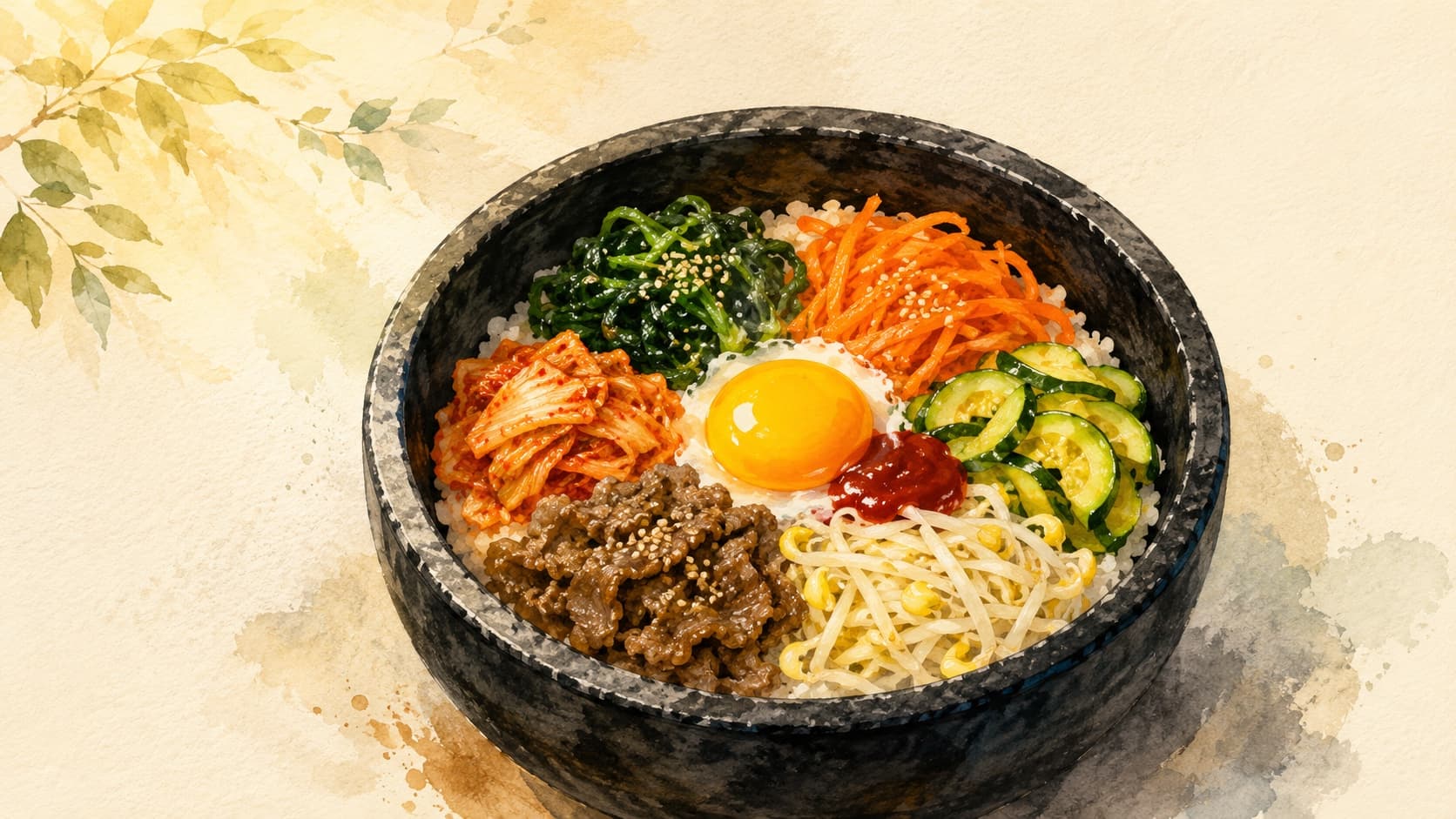
Bibimbap is a Korean dish consisting of rice topped with assorted vegetables, protein, and a fried egg, served with gochujang for added flavor.
Contents (5 sections)▾
Ingredients
- 1 cup short-grain rice
- 1 cup spinach, blanched
- 1 carrot, julienned
- 1 zucchini, julienned
- ½ cup bean sprouts, blanched
- 2 eggs
- 2 tablespoons gochujang (Korean chili paste)
- Sesame oil, for drizzling
Steps
Cook rice according to package instructions.
Blanch spinach and bean sprouts; drain and set aside.
Sauté carrots and zucchini in a skillet until tender.
Fry the eggs. For an ordinary (non-pasteurized) egg, cook until the yolk is fully set; for a soft, runny sunny-side-up yolk (traditional), use an egg pasteurized in the shell (through to the contents) — for everyone, not only high-risk diners.
Assemble rice in bowls; top with vegetables, egg, and gochujang.
Drizzle with sesame oil before serving.
Tools you'll want
- · Digital kitchen scale (gram precision)
Why this works
Bibimbap achieves its distinct flavor through the harmonious combination of ingredients. Short-grain rice provides a sticky base that holds the toppings together. Each vegetable is prepared separately to maintain its unique flavor and texture, allowing for a diverse mouthfeel. The use of gochujang (a Korean fermented chili paste, sweet-spicy and savory) introduces a spicy and slightly sweet element, enhancing the dish's overall complexity.
Cooking temperatures are crucial. Vegetables should be sautéed quickly over medium-high heat to retain their color and crispness. Eggs are best fried at a lower temperature to ensure a runny yolk, which adds richness when mixed into the rice. The final drizzle of sesame oil adds an aromatic quality that ties the dish together.
Safety — raw and runny egg: Bibimbap is finished with a raw yolk (or a runny sunny-side-up egg) stirred through the bowl, and this does not include a validated step that reliably kills Salmonella — the residual heat of even a stone bowl, the softness, and the look of the egg are not proof that it is safe. Freshness is not a safety control either; Salmonella can be inside an intact, clean, farm-fresh egg. To keep the raw or runny egg, use a shell egg pasteurized in the shell, through to the contents (heat-treated to destroy Salmonella); an ordinary egg that has only been washed, graded, or surface-sanitized — no matter how fresh — is not pasteurized through the contents. Pregnant people, infants and young children, older adults, and anyone immunocompromised should use pasteurized egg, or a fully cooked egg instead.
Common mistakes
Using long-grain rice.
Target: Short-grain Japonica rice (Korean, Japanese, or California-grown).
Why it matters: Bibimbap's structure depends on rice that clings together — the eater mixes everything aggressively at the table, and long-grain rice (Basmati, Jasmine) breaks apart into scattered grains. The dish becomes "rice salad with toppings" instead of bibimbap.
What to do: Short-grain rice, slightly drier than for sushi (about 1:1 water:rice ratio). For dolsot (hot stone bowl) bibimbap, use slightly more water and undercook by 5 minutes — the bowl finishes the cook.
Workarounds:
- No short-grain rice? Medium-grain rice (Arborio, Calrose) is the next best. Long-grain only as last resort.
- For brown rice bibimbap, increase the water by 20 % and cook 10 minutes longer.
Not heating the dolsot (stone bowl) enough.
Target: Pre-heat the empty bowl in a 250 °C oven for 15 minutes, or on a direct flame for 5 minutes.
Why it matters: The defining feature of dolsot bibimbap is the nurungji — the crisp, golden rice crust that forms on the bowl's hot wall. An under-heated bowl produces no crust, no aroma of toasted rice, and the dish loses its signature texture.
What to do: Brush the inside of the hot bowl with sesame oil before adding rice; you should hear the oil sizzle.
Workarounds:
- No stone bowl? Use a cast-iron skillet pre-heated in the oven — produces similar crust, less even.
- For a quick version, skip the dolsot entirely and serve as "regular bibimbap" — different dish, equally legitimate.
Wet vegetables that ruin the texture.
Target: Each namul (vegetable side) seasoned and pressed dry before assembling.
Why it matters: Spinach, mung-bean sprouts, and zucchini all hold water. Piled on rice still wet, they saturate the rice and turn everything into mush — destroying the texture contrast that makes bibimbap interesting.
What to do: Blanch (briefly boil, then plunge into cold water to stop the cooking) each vegetable separately, season individually with sesame oil + salt + garlic, then press out excess water by hand (wrap in cheesecloth or just squeeze gently).
Workarounds:
- For a faster prep, make 3 vegetables instead of the traditional 5 — quality over quantity.
- Spread cooked vegetables on a tray to air-dry for 10 minutes if you're short on hand-pressing time.
Underseasoning the gochujang sauce.
Target: Mix 2 tbsp gochujang + 1 tbsp sesame oil + 1 tbsp sugar + 1 tbsp rice vinegar + 1 clove minced garlic per serving. Serve on the side.
Why it matters: Plain gochujang straight from the tub is too harsh and one-dimensional. The sauce needs to be built — sweet, acid, fat, aroma — to actually integrate everything when mixed.
What to do: Make the sauce ahead and let it rest 10 minutes for flavors to meld.
Workarounds:
- No gochujang? Mix 2 tbsp Sriracha + 1 tsp white miso + 1 tsp sugar — approximation but workable.
- For milder spice, add 1 tbsp Korean plum syrup or honey to balance the chili heat.
Skipping the raw egg yolk.
Target: One room-temperature egg yolk per serving, placed in the center at assembly.
Why it matters: The yolk is bibimbap's emulsifier. When mixed, it coats the rice and vegetables, binding everything into a cohesive whole. Without it, the dish feels like separate components.
What to do: A raw yolk has no Salmonella kill step — freshness and the stone bowl's residual heat are not safety controls (see the safety note above). To keep the raw or soft yolk, use a shell egg pasteurized in the shell, through to the contents; otherwise cook the egg through. High-risk diners should use a pasteurized egg or a fully cooked egg.
Workarounds:
- Concerned about raw egg? Use a pasteurized-in-shell egg (safe raw or soft), or cook the egg to a fully set yolk — a merely runny fried yolk is still undercooked egg, not a safe substitute.
- For a vegan version, use 2 tbsp tahini + 1 tsp lemon juice — same role, different flavor.
What to look for
- Bright colors from fresh vegetables.
- A perfectly runny yolk on the egg.
- A fragrant aroma from sesame oil.
- A cohesive layering of ingredients in the bowl.
Chef's view
Bibimbap reflects the essence of Korean cuisine through its balance of flavors and nutrition. Traditionally, it served as a way to use leftover ingredients, showcasing the creativity of home cooks. This dish embodies the philosophy of harmony in Korean cooking, where each component contributes to a greater whole.
The layering technique enhances aesthetics and allows for each bite to be customized. Diners mix the ingredients according to personal preference, making bibimbap a communal experience. Its history dates back centuries, evolving into a comfort food that resonates with both locals and visitors alike.
<!-- beginner-glossed v1 -->Get the essays in your inbox — free
Weekly notes on flavor, fermentation, and food history — the writing behind the Atlas of Flavor. No spam; unsubscribe anytime.