
Beef Rendang (Indonesian Dry Curry)
Beef Rendang is a rich and flavorful Indonesian dry curry that transforms beef chuck into a tender, spiced delight.
Contents (5 sections)▾
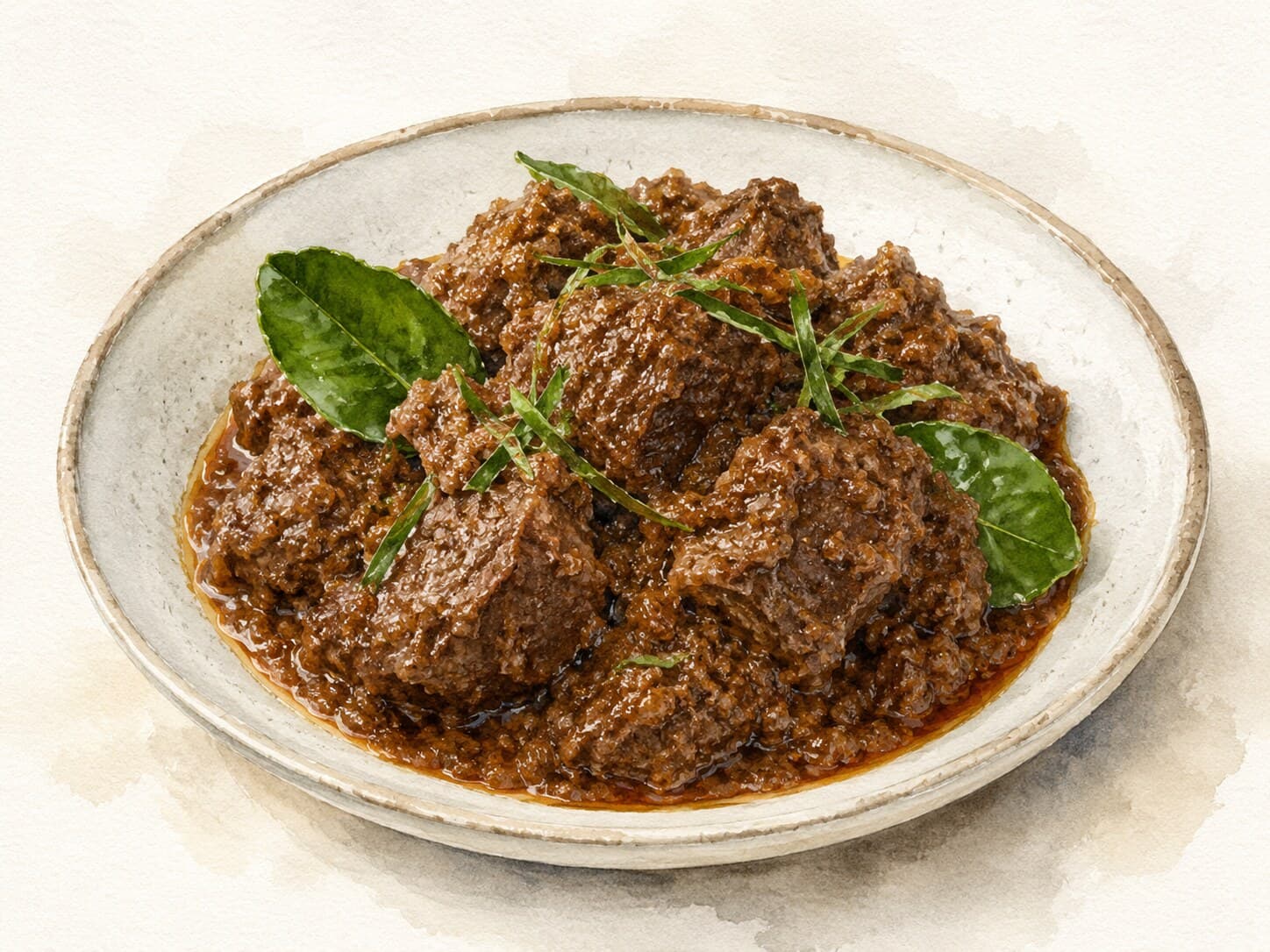
Ingredients
- 1 kg beef chuck, cut into 5 cm pieces
- 400 ml coconut milk
- 2 tbsp vegetable oil
- 2 tbsp rendang spice paste
- 2 stalks lemongrass, smashed
- 4 kaffir lime leaves, torn
- 2 pieces galangal, sliced
- 1 tbsp tamarind paste
- 1 tsp sugar
- Salt to taste
Steps
In a large pot, heat the vegetable oil over medium heat. Add the rendang spice paste and sauté for 2-3 minutes until fragrant.
Add the beef chuck pieces to the pot, stirring to coat them in the spice paste. Cook for 5 minutes until the meat is browned on all sides.
Pour in the coconut milk, then add the lemongrass, kaffir lime leaves, galangal, tamarind paste, sugar, and a pinch of salt. Bring to a gentle simmer.
Reduce the heat to low and cover the pot. Simmer for about 3 hours, stirring occasionally. The liquid will gradually reduce.
Once the liquid has evaporated, continue to cook for another 10-15 minutes, stirring frequently, allowing the beef to fry in its own oils until it turns dark brown and caramelized.
Why this works
This recipe relies on a slow simmer to transform the beef chuck into a tender, flavorful dish infused with complex spices. The initial stage involves cooking the beef in coconut milk enriched with aromatic spices, allowing the meat to absorb the flavors fully. As the cooking process continues, the liquid reduces, and the beef begins to fry in its own rendered fat (the fat that has slowly melted out of the meat during the long cook), creating a richly caramelized exterior. This transition is crucial; if the heat is too high, the meat may toughen instead of tenderizing. Keep a close watch and adjust the temperature as necessary—if it seems too dry before the meat fries, you can add a splash of water or coconut milk to prevent burning. The end result is a deeply flavored Beef Rendang that embodies the essence of Indonesian cuisine.
Common mistakes
Stopping while there's still a pool of sauce.
Target: Cook until the liquid is gone and the meat is sizzling, dark, and frying in its own oil — roughly 2.5–3 hours total, the last 10–20 minutes almost dry.
Why it matters: Rendang is not a stew. The long simmer is what breaks down the tough collagen (the connective tissue that makes chuck chewy) into soft gelatin (the silky, melted form that keeps the meat tender and moist), and the final dry-frying stage is where the coconut milk's fat splits out and toasts the spice paste and meat — that toasting is the deep, almost roasted flavor that defines rendang. Stop early and you have a wet, pale curry, not rendang.
What to do: Keep going past the point where it looks "done." When the sauce thickens to a paste, lower the heat and stir often so the meat browns in the released oil without catching.
Heat too high during the long cook.
Target: A bare, lazy simmer — small bubbles, not a rolling boil — for the first two-plus hours.
Why it matters: Collagen needs time at a gentle temperature to melt into gelatin. Rush it on high heat and the muscle fibers squeeze out their moisture and seize before the collagen has softened, leaving the beef dry and stringy instead of tender. The reduction should happen slowly as a side effect of long cooking, not be forced.
What to do: Keep it low and covered for the long phase. Only raise the heat for the final dry-fry, and only while stirring.
Letting it scorch in the final dry-frying stage.
Target: Dark mahogany brown and glossy with oil — not black, not bitter.
Why it matters: Once the water is gone, the temperature climbs fast and the sugars in the coconut milk and spice paste can go from beautifully caramelized to burnt in a minute or two. Burnt spice paste turns the whole pot bitter, and there is no fixing it.
What to do: Stay at the stove for the last stretch, stirring constantly and scraping the bottom. If it browns faster than you can manage, pull the heat down. A splash of water or coconut milk buys you a moment if it threatens to catch.
Treating "tender" as the only doneness cue for the beef.
Target: Beef that is both fall-apart tender AND fully cooked through — a long braise easily reaches a safe internal temperature, so let texture be your guide here.
Why it matters: With large chunks of beef, undercooked centers stay tough as well as unsafe. The good news is that 2–3 hours of simmering takes the meat well past doneness; the texture you're chasing (soft, yielding, shreddable) only appears once the collagen has fully melted, which is comfortably beyond the safe point.
What to do: Cook until a piece pulls apart easily with two forks. If a chunk still resists, it simply needs more time in the pot — keep simmering.
What to look for
- The paste smells toasted, not raw, before the beef goes in: sautéing the spice paste until it's fragrant and slightly darkened cooks off the raw, harsh edge and blooms the aromatics in oil. Raw-smelling paste means it needs another minute or two.
- Oil beading and pooling at the surface near the end: this is the coconut fat splitting out as the water evaporates. It's the signal that you've moved from "simmering" into "frying," and the real browning is about to happen.
- Color deepening from pale tan to dark mahogany: rendang darkens steadily as it reduces and fries. A rich brown is the target; sandy or grey-brown means it needs more time and reduction.
- The meat shreds with gentle pressure: a fork or spoon edge should sink in and pull the beef apart with almost no resistance. Firmness anywhere means more time at a low simmer.
A note on history
Rendang comes from the Minangkabau people of West Sumatra, Indonesia, where it grew out of practical need as much as taste: the long, slow cook and heavy spicing were a way to preserve meat in a hot climate before refrigeration, giving the dish a long shelf life (ScienceDirect — "Rendang: The Treasure of Minangkabau"). West Sumatra's place on old trade routes brought spices like cinnamon and star anise that the Minangkabau folded into local ingredients (Tasting Table). The dish traveled with the Minangkabau merantau tradition — the custom of leaving home to seek fortune elsewhere — which is part of how rendang spread across the region and beyond.
Get the essays in your inbox — free
Weekly notes on flavor, fermentation, and food history — the writing behind the Atlas of Flavor. No spam; unsubscribe anytime.