
Mie Goreng
Mie Goreng is a quick and flavorful Indonesian stir-fried noodle dish made with egg noodles and kecap manis.
Contents (5 sections)▾
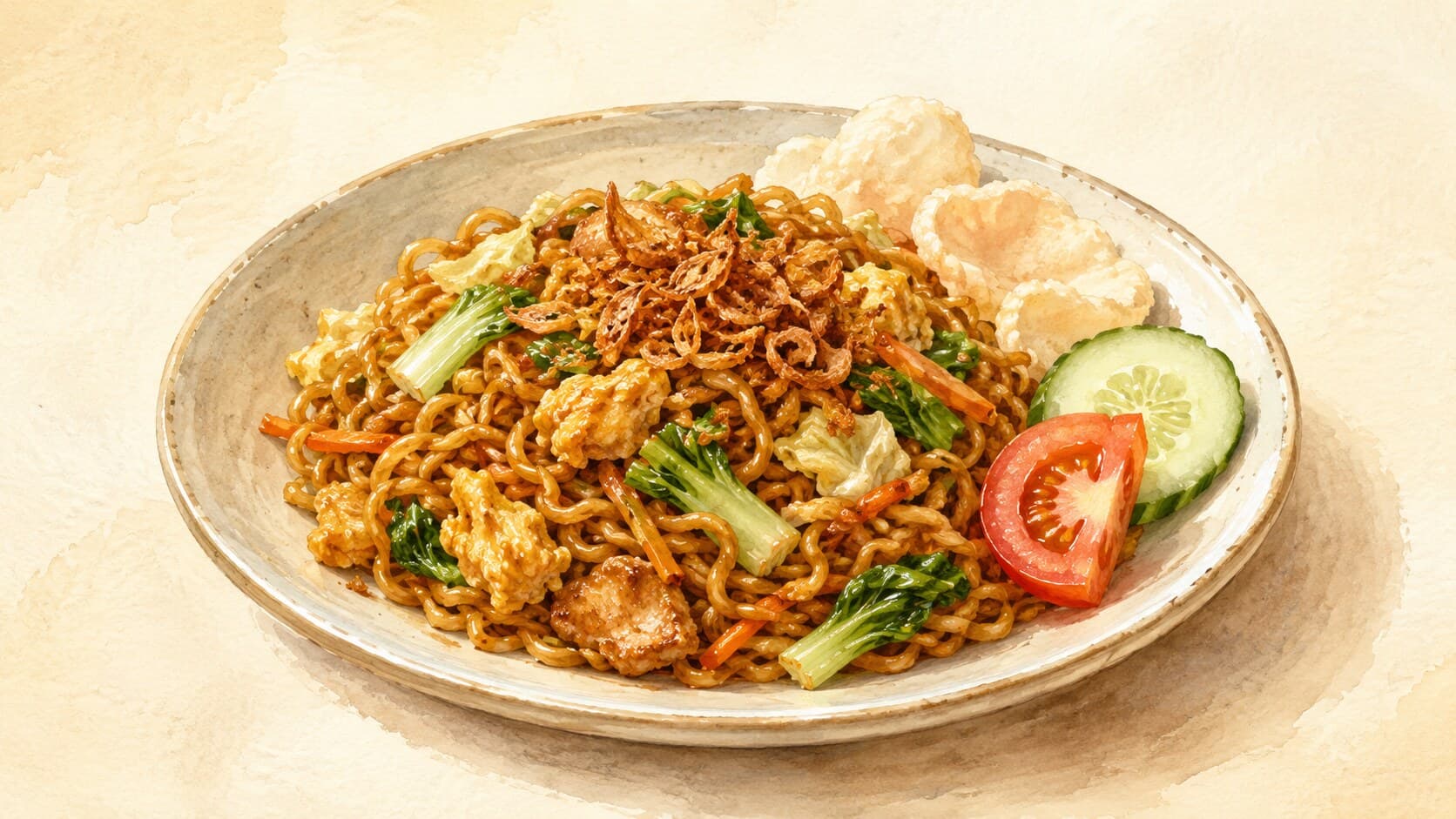
Ingredients
- 200 g pre-cooked egg noodles
- 2 tbsp kecap manis
- 1 tbsp sambal
- 2 cloves garlic, minced
- 2 shallots, thinly sliced
- 100 g cooked chicken, shredded
- 2 spring onions, chopped
- 1 tbsp vegetable oil
- kerupuk (crackers) for serving
- salt to taste
Steps
Heat the vegetable oil in a wok over medium-high heat for about 1 minute until shimmering.
Add the minced garlic and sliced shallots, and stir-fry for 30 seconds until fragrant.
Add the cooked chicken and stir-fry for another 2 minutes to heat through.
Add the pre-cooked egg noodles, kecap manis, sambal, and salt, tossing well for about 3-4 minutes until everything is combined and heated through.
Finally, mix in the chopped spring onions, and stir-fry for another minute. Serve immediately topped with kerupuk.
Why this works
The combination of pre-cooked egg noodles and quick stir-frying technique allows for a speedy preparation without sacrificing flavor. Kecap manis, a sweet soy sauce, provides a rich depth, while sambal (a Southeast Asian chili paste, usually from fresh red chilies with garlic and salt) adds heat. Stir-frying at a high temperature creates 'wok hei' (the smoky, slightly charred aroma that develops when food briefly touches a very hot wok), the desirable smoky flavor characteristic of many Asian stir-fries. If the noodles seem too clumpy, adding a splash of water or more kecap manis can help loosen them. Remember, overcooking the garlic can lead to bitterness; hence, quick frying is essential. This dish's balance of sweet, spicy, and savory flavors makes it a perfect weeknight meal that can be adjusted based on available pantry staples.
Common mistakes
Adding kecap manis to a cold pan. Target: put the sauce in only after the noodles are sizzling in hot oil, when you can hear a sharp hiss the moment it lands. Why it matters: kecap manis (Indonesian sweet soy sauce — thicker and darker than regular soy, with palm sugar) needs heat to caramelize. Dropped into a tepid pan, the sugars dissolve into the noodles uniformly but never develop the glossy, slightly sticky lacquer that defines the dish. What to do: keep kecap manis aside in a small bowl. Heat the pan until shimmering, add noodles, toss for 30 seconds, then pour the sauce in a circle around the edge of the pan so it hits the hottest metal first.
Burning the garlic in pursuit of "fragrant." Target: garlic and shallot in oil for 20–30 seconds, golden but not brown. Why it matters: garlic releases its sweet aromatic compounds in the first half-minute. After that, the sugars in the garlic burn and turn bitter — and once garlic is bitter, the entire dish carries that note. What to do: have everything else ready before the aromatics go in. The moment they smell sharp, the noodles follow within seconds.
Cooking everything raw — chicken or prawn — together with the noodles in one pile. Target: raw chicken or prawn fully cooked before noodles touch the pan; egg fully set, no runny streaks. Why it matters: in a wet, sauce-coated noodle mass, the protein at the center never gets the direct heat it needs to reach safe temperature. Pink chicken or translucent prawn at the center is a real food-safety issue. What to do: if starting from raw, sear chicken or prawn first until opaque and firm, remove, then proceed with aromatics → noodles → sauce → return the cooked protein.
Continuous stirring without letting noodles touch the pan. Target: spread the noodles flat across the pan, let them sit for 15–20 seconds, then toss; repeat. Why it matters: wok hei (the toasted, slightly smoky note) comes from brief contact between noodles and very hot metal. Constant stirring means no surface ever gets hot enough for that flash; you get sweet glazed noodles, but they taste of sauce and nothing else. What to do: toss, spread, wait, toss again. Three or four cycles is enough.
What to look for
- Garlic and shallot just turning straw-gold, sharp aroma in the air — pull the next ingredient in immediately; another ten seconds and they'll be bitter.
- A thin, glossy lacquer coating each strand, not a puddle at the bottom of the pan — the kecap manis has caramelized rather than just diluted into the noodles.
- Darker patches scattered across the noodles where they touched the hot wok — these spots are the caramelization that creates the toasted note.
- Spring onions tossed in at the very end and still bright green when you plate — long heat dulls the color and the fresh sharpness; they're a finishing element, not a stir-fry component.
A note on history
Mie goreng — literally "fried noodles" in Indonesian — descends from Chinese chow mein, brought by Chinese immigrants to the Indonesian archipelago and gradually reshaped through Muslim-friendly substitutions (no pork) and local sauces. The defining ingredient is kecap manis, the thick palm-sugar-sweetened soy sauce that gives Indonesian cooking its distinctive dark sweetness; layered with fried shallots and sambal, the dish became one of Indonesia's most recognizable street foods. It is now ubiquitous from night markets to home kitchens. Sources: Wikipedia: Mie goreng, RecipeTin Eats: Mie Goreng.
Get the essays in your inbox — free
Weekly notes on flavor, fermentation, and food history — the writing behind the Atlas of Flavor. No spam; unsubscribe anytime.