
Vegetable Broth
Discover the art of making a rich, flavorful vegetable broth from scratch using a gentle extraction technique.
Contents (4 sections)▾
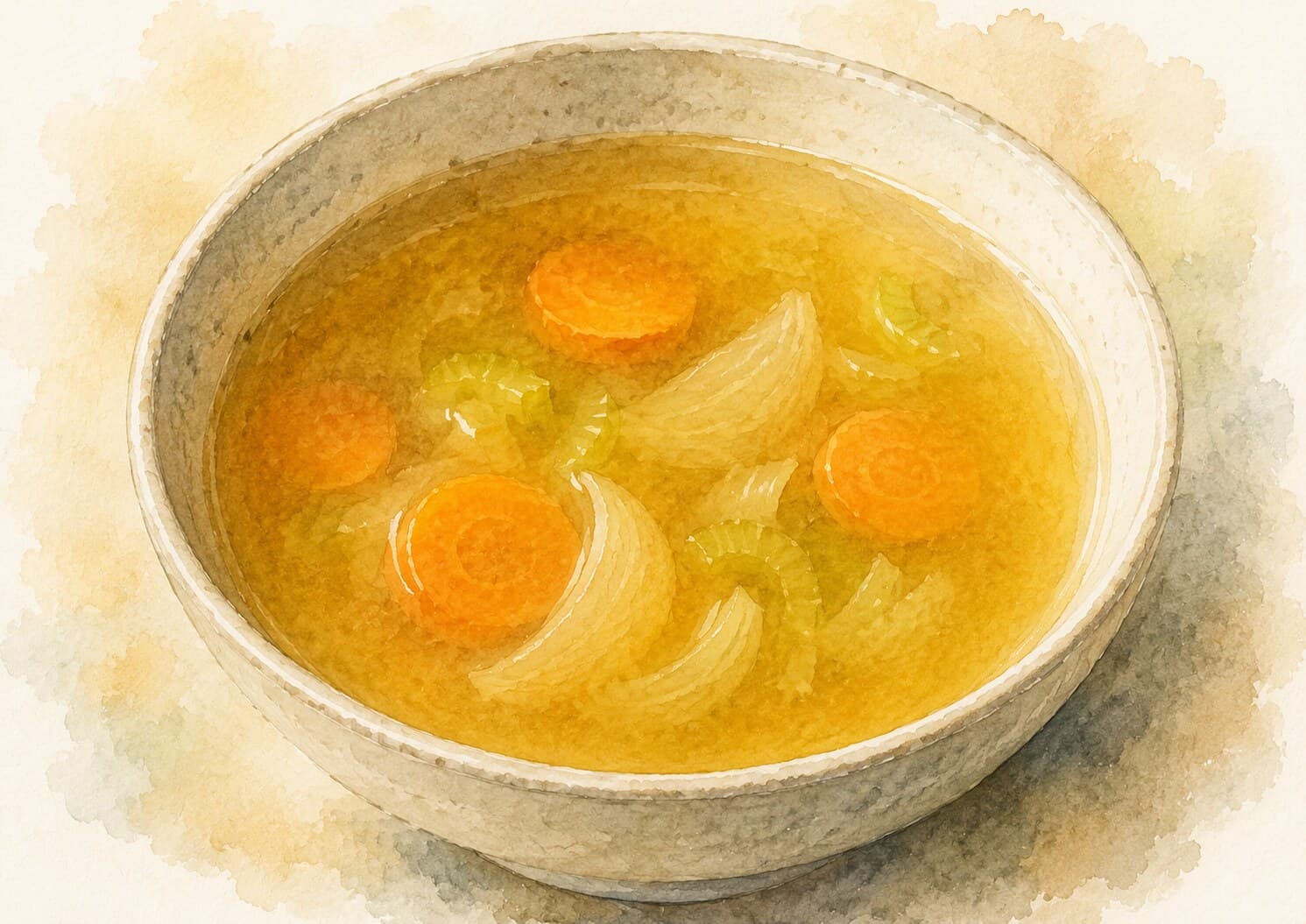
Ingredients
- 1 large onion, chopped
- 2 medium carrots, chopped
- 2 stalks celery, chopped
- 100 g mushrooms, sliced
- 2 liters water
- 1 tsp salt, to taste
- 1 bay leaf
- 5 black peppercorns
Steps
In a large pot, combine the chopped onion, carrots, celery, and mushrooms. Sauté over medium heat for about 5 minutes until the vegetables are softened, which helps to release their natural sweetness.
Add water, salt, bay leaf, and peppercorns to the pot. Bring the mixture to a gentle boil over medium-high heat, then reduce the heat to low, allowing it to simmer uncovered for 15 minutes. This slow cooking draws out the flavors.
After 15 minutes, taste the broth and adjust seasoning if necessary. If the broth tastes too weak, continue to simmer for an additional 5-10 minutes to deepen the flavor.
Strain the broth through a fine mesh sieve, discarding the solids. Cool the broth promptly, then refrigerate it and use within 4–5 days, or freeze it for longer storage.
Why this works
Gentle extraction is key to creating a flavorful vegetable broth, as it allows the natural sweetness of the vegetables to develop without becoming bitter. The technique begins with sautéing the vegetables, which caramelizes their natural sugars (browns them gently so they taste sweeter and nuttier) and enhances their flavors. When combined with simmering (cooking in liquid kept just below a boil, with only small, lazy bubbles), this method releases the essence of the vegetables into the broth. If the broth seems too weak at first, continuing to simmer can concentrate the flavors further. Conversely, if it becomes too strong, simply adding more water can balance the taste. This approach to broth-making ensures a rich, aromatic base for soups, sauces, or any dish requiring a flavorful liquid.
Common mistakes
Salting heavily at the start.
Target: A light hand with salt early, with final seasoning adjusted at the end.
Why it matters: An uncovered broth concentrates as it simmers and reduces, so salt that tasted right at the beginning can end up too strong. The broth is also a base for other dishes that will be seasoned again later.
What to do: Season lightly to begin, then taste and adjust once the flavor has developed — the recipe's own step. If it does turn too strong, a splash of water brings it back into balance.
Boiling hard or covering the pot.
Target: A gentle, uncovered simmer.
Why it matters: A rolling boil agitates the vegetables and clouds the broth, and a covered pot traps everything in without letting it reduce and clarify. The gentle uncovered simmer draws out clean flavor and keeps the liquid bright.
What to do: Bring it up to a boil briefly, then drop to low so it barely simmers, and leave the lid off as written.
Over-simmering the vegetables.
Target: Just long enough to extract their sweetness — roughly the 15 minutes specified, a little longer only to deepen flavor.
Why it matters: Pushed too far, soft vegetables break down and muddy the broth, and delicate aromatics (the fragrant vegetables and herbs added mainly for their smell and flavor) can turn dull or faintly bitter rather than sweet and clean.
What to do: Taste as you go. Simmer to good flavor, then strain promptly rather than leaving the vegetables sitting in the hot liquid indefinitely.
Letting the strained broth sit out to cool slowly.
Target: Broth cooled promptly, then refrigerated and used within 4–5 days (or frozen).
Why it matters: A big pot of warm broth left at room temperature stays in the temperature range where bacteria multiply for far too long. Cooling it quickly keeps it safe to store.
What to do: Strain, then cool it down fast — divide into shallow containers or set the pot in an ice-water bath — before moving it to the fridge, exactly as the recipe directs.
What to look for
- The vegetables after the initial sauté: softened and glossy, smelling sweet as their sugars start to release — not browned or scorched.
- During the simmer: small, lazy bubbles and a steady savory aroma, the liquid taking on color without churning.
- When it's ready: a clean, rounded, vegetal sweetness — the broth tastes of the vegetables rather than of raw water.
- After straining: a clear, lightly colored liquid free of floating debris, ready to cool.
Get the essays in your inbox — free
Weekly notes on flavor, fermentation, and food history — the writing behind the Atlas of Flavor. No spam; unsubscribe anytime.